The Fujifilm X-M5 covers everything from its standout features to its lack of stabilization. What this tiny camera can actually do and where it falls short.
Constant overthinking turns you inside out. Even a simple task like picking a photo can become a whole quest. It’s exhausting when your friend takes hundreds of shots, and you can barely choose three. Think you’re too picky? Change your tactics: give yourself a break and think: maybe it’s the camera? Explore the features of the Fujifilm X-M5 in detail and make your choosing process much easier. Who knows, maybe then you’ll be able to find more than twenty perfect shots.
Your AI-Powered Photo Editor for MacOS and Windows
Don’t feel like reading the whole breakdown? We’ve pulled together a quick summary below.
Key Takeaways
- Video Value: Getting a 6.2K open-gate video for under $800 is basically a steal. It offers professional-grade video specs in a price bracket where you usually find much more basic cameras.
- The “Anti-Backache” Camera: This is Fujifilm’s lightest and smallest X-series model. It’s designed for the “smartphone generation”—people who want professional quality but refuse to carry a heavy, clunky “black box” around their neck.
- Instant Aesthetic: Forget spending your whole evening color-grading. This dial lets you bake that ‘cinematic feel’ right into your files while you shoot.
- Modern Brains, Retro Body: The camera is smart enough to track humans, animals, and cars with ease.
- Mobile-First Workflow: “No laptop? No problem. It’s made for creators who want to shoot and share immediately. You can get your files to your phone in seconds and get them online.
- Honest flaws: Small camera, small price. Should you expect at least something? If you can live with using the screen and maybe a gimbal or stabilized lenses
Overview of the Fujifilm X-M5

The Fujifilm X-M5 is regarded as the lucky model of the original X-M1 from 2013. It is said it was a naming jump to reflect Fujifilm’s current fifth-generation platform. The smallest and lightest camera belongs to the X Series lineup. Pleasant price and the XC 15-45mm f/3.5-5.6 OIS PZ kit lens can satisfy your preferences.
| Specification | Detail |
| Sensor | 26.1 MP APS-C X-Trans CMOS 4 (BSI) |
| Processor | X-Processor 5 |
| Video Resolution | 6.2K/30p (open gate), 4K/60p, 1080p/240p |
| ISO Range | 160-12,800 (expandable 80-51,200) |
| Burst Rate | 20fps (electronic), 8fps (mechanical) |
| Pre-Capture | — |
| Continuous Shooting | 8fps (mechanical), 20fps (electronic), 30 fps (1.25x crop) |
| AF Points | 117 areas, AI subject detection |
| AF Sensitivity | — |
| Card Slots | 1× SD / SDHC / SDXC (UHS-I) |
| Screen | 3.0″ fully articulating touchscreen, 1.04 million dots |
| Battery life | NP W126S (~330 shots/~440 in Eco mode) |
| Dimensions | 111.9 × 66.6 × 38 mm |
| Weight | ~355 g (body only) |
| Price | $799 body |
| Release date | November 14, 2024 |
The XM5 Fujifilm is a tiny camera with some ‘grown-up’ power. It took the concept of their original 2013 model, skipped three generations, and squeezed a modern processor into a body that’s barely bigger than your smartphone.
Design and Build Quality
From the second you pick it up, the X-M5 has this distinct, analog soul. The design actually makes you want to add noise to photo to give your shots some grit and escape that overly-polished digital feel. For a camera at this price point, the build is impressively solid—the dials have a nice weight to them, and the buttons are actually clicky. It’s surprisingly comfortable too; even if you have larger hands, it doesn’t feel like you’re fumbling with a toy during a long shoot.
- A dedicated film simulation plate gives immediate access to 8 preset film simulations plus 3 custom user slots.
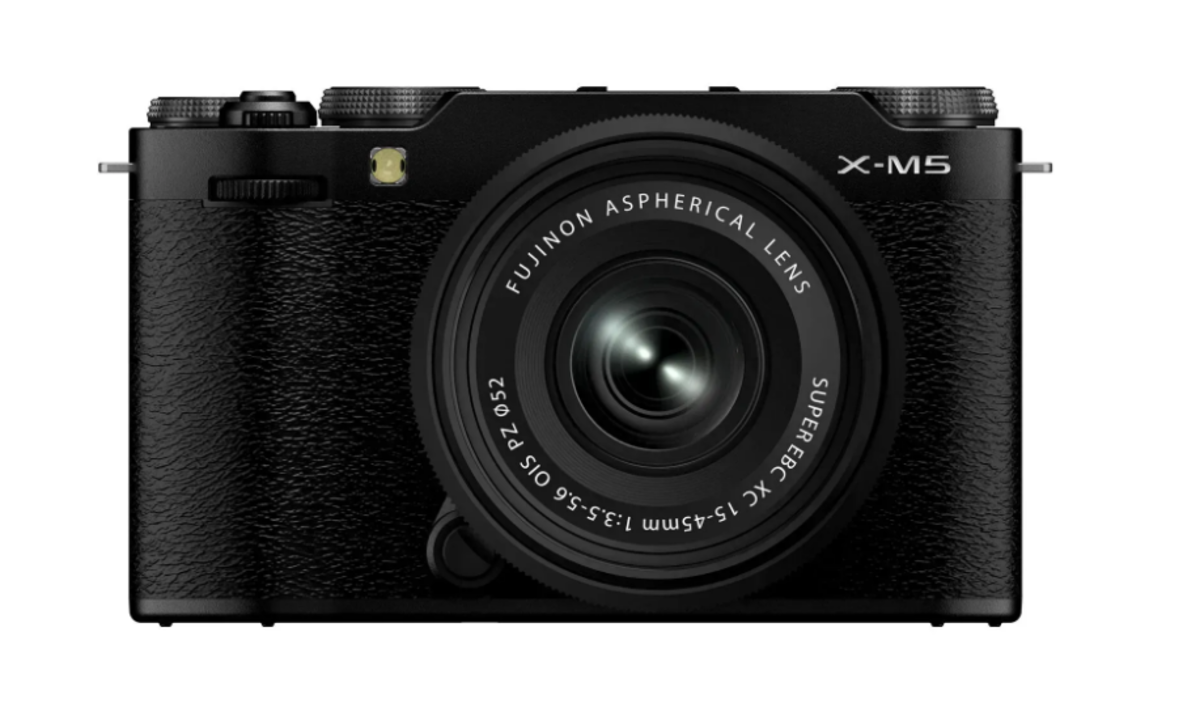
- Mode dial: PSAM, Auto, 4 custom settings, Filter, Video, and a dedicated Vlog mode.
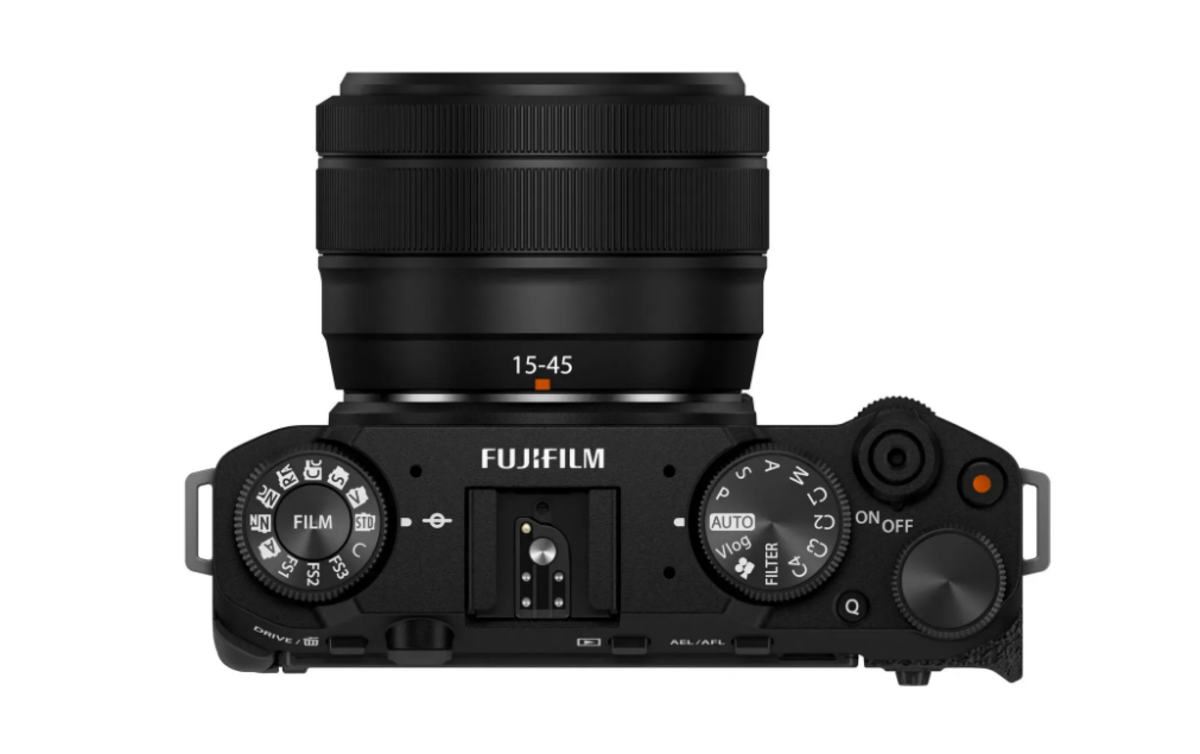
- A fully articulating 3.0″ touchscreen is an easy option to compose images.
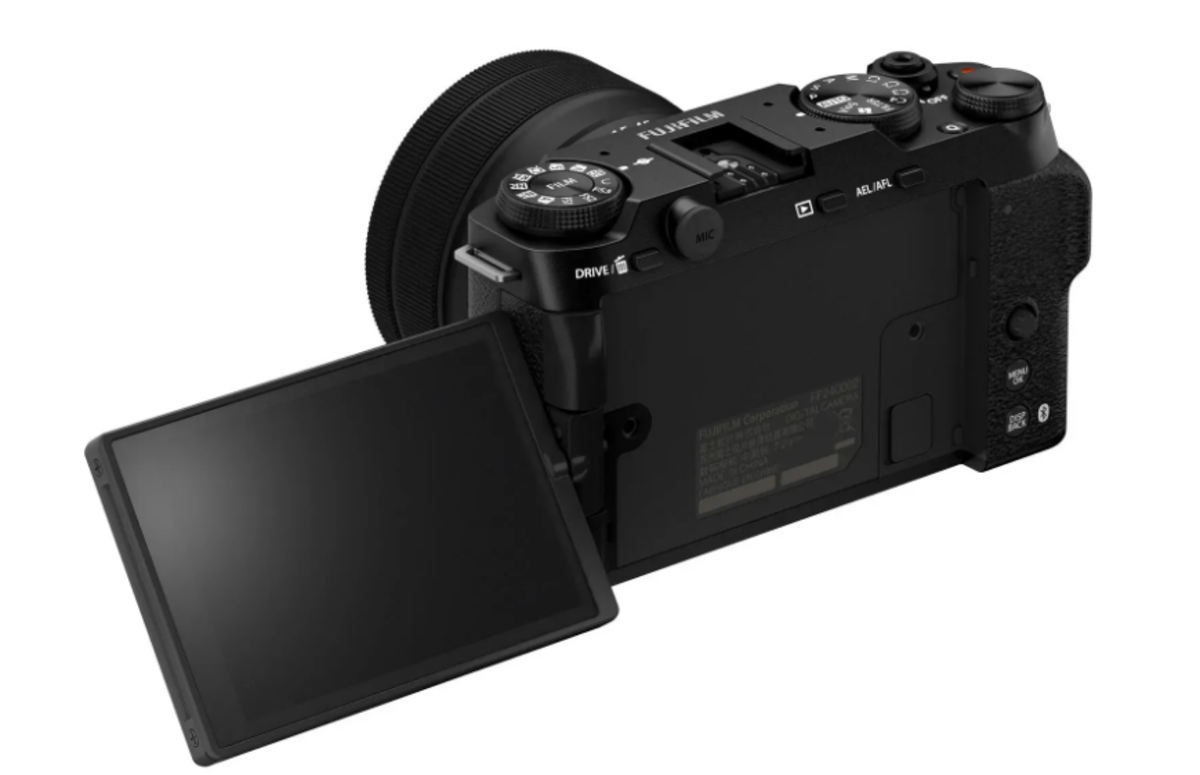
- Port placement helps you keep wires clear of the flip-out screen.
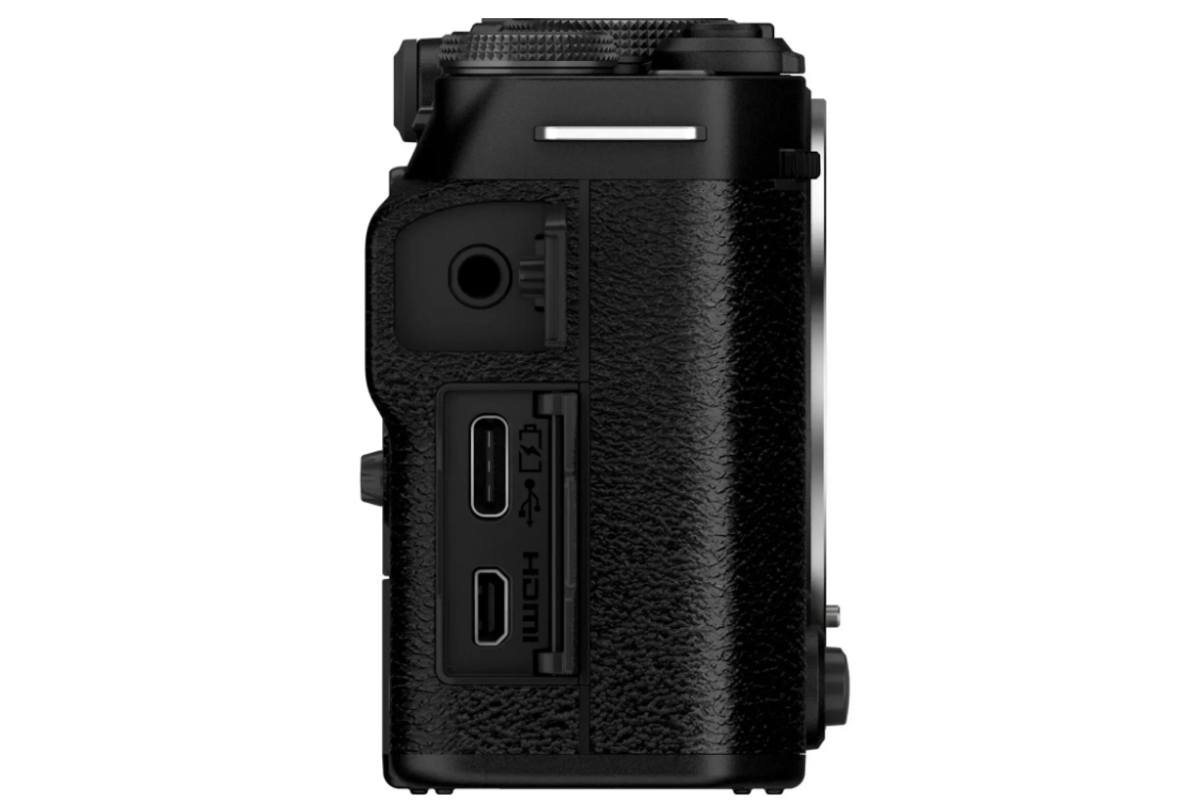


The placement of the mic jack cover is so convincing that several people actually mistook it for a miniature viewfinder during their first look at the camera. Practical or not, it makes the XM5 Fujifilm aesthetic as a camera.
Strengths and Weaknesses

Do you still think you’re picky? So what catches your eye first—the wins or the trade-offs? When it comes to video, the X-M5 punches way above its weight. Getting 6.2K/30p open-gate at this price is a steal, especially when you add 4K/60p and that insane 240p slow motion. With three built-in mics for four-channel audio, it’s a legit hybrid tool that doesn’t just treat video as an afterthought.
What really makes it fun to use is the dedicated Film Simulation dial. Instead of digging through menus to find your favorite look, you just flick the dial to swap between 20 different color styles. Everything is backed by the X-Processor 5, which handles the heavy lifting for the AI autofocus, tracking people, animals, and cars without much fuss. Even the heat management is surprisingly solid—you can record 6.2K for over an hour straight, and usually, the battery will give out long before the camera even starts to get warm.
Where there is much light, the shadow is deep. Will these quirks push you away or just leave you in doubt?
- No electronic viewfinder. 1.04 million-dot try to compose solely on the LCD screen in case it becomes difficult in bright sunlight.
- IBIS. Digital stabilization was created for minor camera movement. Yet handheld video can look shaky without an OIS lens.
- Autofocus inconsistency in video. AF remains reliable. Although video autofocus can drift or shift to the background before reacquiring the subject.
- Battery life. 330 shots under standard use is below the mirrorless category average of around 393. For extended video sessions (~45 minutes of 4K/60p), a second battery is valuable.
No design is devoid of nuances. Einstein always liked to say, “In the middle of difficulty lies opportunity.” Thus, the camera’s limitations make it more accessible to beginners who feel a bit “lost” in the process.
Exclusive Tools of Endless Possibilities in One Editor
Comparing the X-M5 to Other Models
One more option to view its strengths and weaknesses from a different perspective. Comparing applies to both Fujifilm’s own models and other brands. Which features can win this rivalry?
Fujifilm X-M5 vs. Sony ZV-E10 II

Both cameras miss the viewfinder of a more compact design. Sony holds the upper hand in autofocus reliability during movement. At the same time, it comes at a higher price and lacks Fujifilm’s distinctive “color soul.”
Sometimes, Sony’s colors seem a bit sterile for people. The X-M5 Fujifilm with its 6.2K open-gateprovides a much richer canvas to edit color in photo. The corn keeps its natural tones and the cinematic look.
Fujifilm X-M5 vs.Fujifilm XS20

For an extra $500, Fujifilm X-S20 adds the light and fixes the shadows. You get the IBIS and the battery life that the X-M5 lacks. Could it be a problem? Going with the X-M5 frees up enough cash to pick up an extra lens and Luminar. That’s a much better investment than just blowing the whole budget on a pricier body.
Fujifilm X-M5 vs. Fujifilm XT30 II

A kind of choice between the base and innovation. The X-T30 II offers the tactile joy of an electronic viewfinder (EVF) and classic dials. Although it’s probably too old when it comes to video specs.
Fujifilm X-M5 vs. Canon EOS R10

The R10 has a way better grip than the X-M5. So that feels secure in your hand. It also sticks to a much more neutral look compared to Fuji’s stylized colors. To fix the gap between a standard shot, many creators look to post-processing. You may find yourself missing the filmic depth without it. Luminar AI uses realistic colors to replicate that sought-after atmospheric texture.
Unleash Your Creativity with Luminar Neo's Auto Photo Editor
User Experience and Handling
The feature you’ll likely remember most is the film simulation dial. The camera is perfect for mobile-first work. Save time: transfer your files to a phone before you go home after a long photo session. Stop being stuck at a computer all night. Pick the color you want while you’re actually taking the photo. Then throw the files onto your phone. You’re basically done before you even walk through your front door. It saves you from that huge pile of unedited files waiting for you at home.
Key Considerations Before Buying

Before you pull the trigger on the Fuji XM5, you need to be honest about what you’re actually going to do with it. If vlogging or hybrid content is your main thing, this camera is almost a no-brainer. However, you’ve got to decide if you can live with flaws. For someone who mostly shoots photos, the lack of a viewfinder is a massive pain, and since there’s no IBIS, your handheld video will need some help from a stabilizer.
You also have to factor in the battery—if you’re planning on long shooting days, you’re going to be swapping spares more often than you’d probably like. It’s a specialized tool, so just make sure it specializes in the things you actually care about. As well as RAW files, they have solid potential for work. Usually, they lend themselves to automatic photo editors. These tools will help optimize the post-shoot workflow.
Final Verdict and Recommendations
The Fujifilm XM5 specifications are a great opportunity to show what a compact camera can do for today’s creators. Of course, there are drawbacks like the missing viewfinder and IBIS. Anyhow, they seem minor once you understand the camera’s core focus. So, are you preparing for a photoshoot? How many photos will you choose after?