Explore the biggest astronomical events of 2026, including meteor showers, eclipses, bright planets, and lunar encounters. Use this night sky calendar and photography guide to plan your next observing session.
The night sky events of 2026 include meteor showers, two dramatic August eclipses, bright planets, and several close-looking encounters between the Moon and other celestial objects. Some of the year’s headline events have already passed, but the final months still offer strong opportunities for observation and photography.
This astronomy calendar for 2026 separates completed events from those still ahead as of September 8. Visibility and exact timing depend on location, weather, light pollution, and time zone, so confirm local circumstances shortly before every observing session.
Don’t feel like reading the whole breakdown? We’ve pulled together a quick summary below.
Key Takeaways
The remaining major meteor-shower peaks of 2026 are the Orionids on October 21–22, Leonids on November 16–17, and Geminids on December 13–14.
September highlights include Venus at peak brilliance on September 18 and the Harvest Moon near Saturn on September 26.
The total solar eclipse of August 12 and deep partial lunar eclipse of August 27–28 have already occurred.
Meteor-shower dates refer to peak nights and may shift by calendar date in different time zones.
Eclipse visibility is regional; an event happening globally does not mean it can be seen from every location.
Photographing the Sun requires a purpose-made solar filter over the front of the lens whenever any part of the Sun remains visible.
Long exposures, a stable tripod, manual focus, and restrained editing are the foundations of natural-looking astrophotography.
Astronomical Events 2026 at a Glance
Date
Event
Status as of September 8
General viewing note
January 3–4
Quadrantid meteor shower peak
Passed
Best from northern latitudes under dark skies
April 22–23
Lyrid meteor shower peak
Passed
Visible from both hemispheres, generally stronger in the north
May 5–6
Eta Aquariid meteor shower peak
Passed
Usually favors the Southern Hemisphere
July 30–31
Southern Delta Aquariid peak
Passed
Best from southern and tropical latitudes
August 12
Total solar eclipse
Passed
Totality crossed northern Russia, Greenland, Iceland, northern Spain, and a small part of Portugal
August 12–13
Perseid meteor shower peak
Passed
Excellent dark-sky conditions around the New Moon
August 27–28
Deep partial lunar eclipse
Passed
Visible from much of the Americas and parts of Europe and Africa
September 18
Venus at peak brilliance
Upcoming
Low in the western sky shortly after sunset
September 19
International Observe the Moon Night
Upcoming
A global opportunity to observe and photograph the Moon
September 22
September equinox
Upcoming
Start of astronomical autumn in the north and spring in the south
September 26
Harvest Moon near Saturn
Upcoming
Saturn visible to the unaided eye; Neptune requires optical aid
October 21–22
Orionid meteor shower peak
Upcoming
Watch after midnight from a dark location
November 16–17
Leonid meteor shower peak
Upcoming
Best viewed away from artificial light
December 13–14
Geminid meteor shower peak
Upcoming
One of the strongest annual meteor showers
These are global astronomical events, but not all will be visible from every country. For Moon and planet encounters, the apparent distance and best observing time also vary with location.
Exclusive Tools of Endless Possibilities in One Editor
September 14–20: Follow the Moon toward Antares and the Milky Way
During this period, the Moon moves through the evening sky near the reddish star Antares and the Teapot-shaped group of stars in Sagittarius. From a dark site, the area above the Teapot’s spout points toward the bright central region of the Milky Way.
For photography, work shortly after twilight while the landscape still retains some detail. If the Moon is bright, expose for its highlights or use it as a compositional element rather than expecting a highly detailed Milky Way in the same single exposure.
September 18: Venus at Peak Brilliance
Venus reaches the brightest point of its current evening appearance. Look low above the western horizon soon after sunset. A clear horizon is essential because the planet sets relatively quickly.
A wide environmental composition is usually more compelling than extreme digital zoom. Place Venus above a recognizable skyline, tree, ridge, or building and expose while the remaining twilight provides color in the sky.
September 19: International Observe the Moon Night
This annual event encourages people around the world to observe the Moon and learn about lunar science and exploration. It is also an accessible photography opportunity because the Moon can be photographed from a city, balcony, garden, or dark-sky location.
If you are working without a dedicated camera, our guide explains how to photograph the night sky with an iPhone. For the Moon itself, avoid relying on maximum digital zoom; support the phone, lower exposure, and include foreground context when fine lunar detail is beyond the camera’s reach.
September 22: September Equinox
The September equinox marks the beginning of astronomical autumn in the Northern Hemisphere and spring in the Southern Hemisphere. It is not a one-night visual spectacle, but it is useful for seasonal photography planning as daylight length and the position of sunrise and sunset continue to change.
September 26: Harvest Moon near Saturn and Neptune
The Harvest Moon rises near Saturn, creating a clear pairing visible without special equipment. Neptune completes a wider apparent triangle but is too faint for unaided viewing and requires binoculars or a telescope under suitable conditions.
Photographers can frame the rising Moon and Saturn above a distant foreground. Use a longer focal length if you want them to appear more prominent, and plan enough distance from the foreground subject to create the compressed look associated with large-Moon landscape images.
Meteor Showers Still to Come in 2026
Orionids: October 21–22
The Orionid meteor shower is produced by debris associated with Halley’s Comet. Meteors can appear across the sky even though their paths seem to trace back toward the constellation Orion.
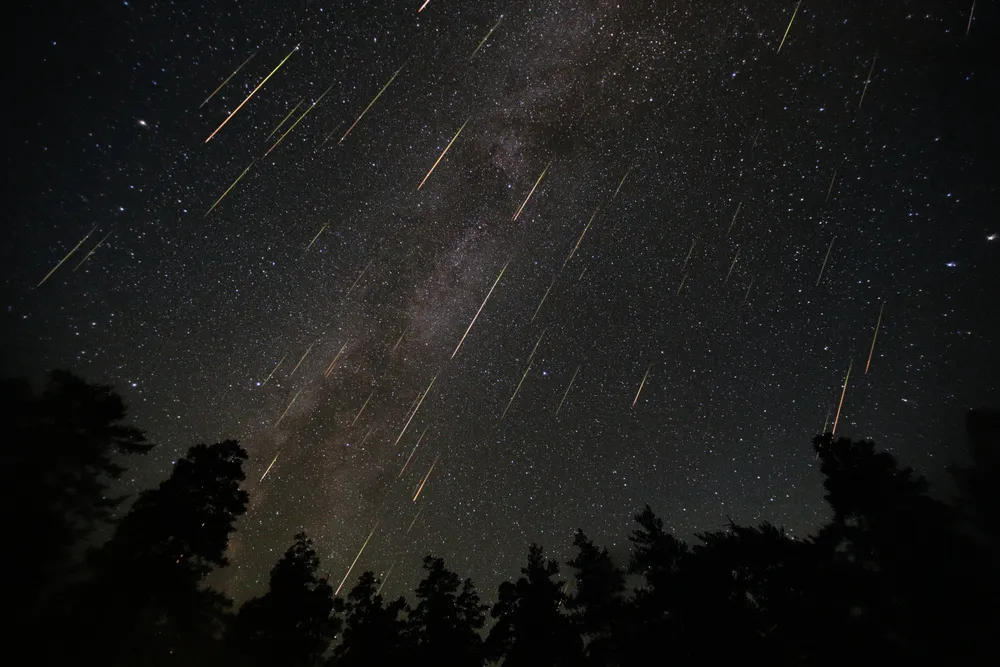
For the strongest chance of recording one, use a wide lens, compose a large section of sky, and shoot repeated exposures rather than trying to react after seeing a meteor. Keep the camera running long enough to build a sequence.
Leonids: November 16–17
The Leonids are associated with Comet Tempel-Tuttle. Activity varies from year to year, so avoid treating every Leonid peak as a predicted meteor storm. Under normal conditions, patience, darkness, and a broad field of view matter more than magnification.
Geminids: December 13–14
The Geminids are among the most reliable major annual meteor showers. Their source is the asteroid-like object 3200 Phaethon rather than a typical comet. Cold December conditions in the Northern Hemisphere make battery management and condensation control especially important.
Arrive early, allow your eyes to adapt for about 30 minutes, and look across a broad area of sky rather than staring directly at the radiant. The radiant indicates the apparent direction from which meteors originate, but longer streaks often appear farther away from it.
Major 2026 Celestial Events That Have Already Happened
August 12: Total Solar Eclipse
The total solar eclipse crossed parts of northern Russia, Greenland, Iceland, Spain, and a small corner of Portugal. A partial eclipse was visible across a much wider region, including parts of North America, Europe, and northwestern Africa.
This event replaces the old article’s incorrect April 8 entry, which described the North American total solar eclipse of 2024 rather than a 2026 event.
August 12–13: Perseid Meteor Shower
The 2026 Perseids peaked close to the New Moon, providing unusually dark conditions. The shower occurs annually as Earth passes through debris left by Comet Swift–Tuttle.
August 27–28: Deep Partial Lunar Eclipse
During this eclipse, about 93% of the Moon’s diameter entered Earth’s dark central shadow at maximum. It was visible from much of North and South America and parts of Europe and Africa. Unlike a solar eclipse, a lunar eclipse is safe to observe directly without protective eyewear.
Elevate Your Photography with Our Advanced Software
Comets are less predictable than annual meteor showers. Their brightness can change, and a comet expected to become visible without optical aid may remain faint or break apart. For that reason, this guide does not promise specific naked-eye comet appearances months in advance. Add a comet only after checking current observations from a professional or established amateur astronomy source.
The phrase planetary alignment is also used loosely online. Planets may appear grouped along the ecliptic from Earth’s perspective without forming a physically meaningful straight line in space. Apparent groupings can still be worth observing, but the article should describe which planets are visible, when, and from where instead of calling every grouping a rare alignment.
How to Find ISS Passes
International Space Station passes are location-specific. A useful pass must occur above the observer’s horizon while the station is sunlit and the ground below is dark enough to see it. That means there is no single worldwide ISS date to place in an annual calendar.
Check a current satellite-tracking service shortly before the session and confirm:
the start time for your exact location;
the direction in which the ISS will appear;
its maximum elevation above the horizon;
the direction and time at which it will disappear.
For a trail photograph, use a stable tripod, a wide composition, and either one long exposure or a sequence of shorter frames that can be combined later.
How to Photograph Meteor Showers
Recommended Starting Setup
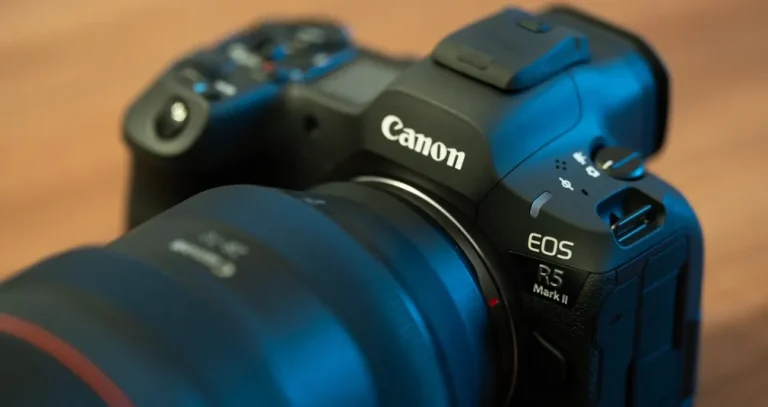
Camera with manual exposure and manual focus
Wide-angle lens with a relatively bright maximum aperture
Stable tripod
Intervalometer or built-in interval shooting
Fully charged batteries and spares
Large, freshly formatted memory card
Headlamp with a red-light mode
Warm clothing and weather protection
Camera Settings
Use these values as a starting point, not a fixed recipe:
Setting
Starting point
Why
File format
RAW
Preserves more tonal and color information for editing
Exposure mode
Manual
Prevents the camera from changing brightness between frames
Aperture
Near the lens’s widest usable setting
Collects more light during a short exposure
Shutter speed
About 10–20 seconds
Captures faint meteors while limiting obvious star movement with many wide lenses
ISO
Approximately 1600–6400
Depends on lens speed, sky darkness, camera, and exposure time
Focus
Manual, checked on a bright star
Autofocus often fails in darkness
White balance
Fixed value
Keeps a sequence consistent; it can be refined when editing RAW files
Take a test frame and inspect actual star sharpness at high magnification. The traditional “500 rule” is only a rough estimate; modern high-resolution cameras often reveal trailing sooner, so shorten the exposure when needed.
Composition
Do not point the camera at empty sky without considering the foreground. A mountain, tree, road, building, tent, or reflected sky can establish location and scale. Leave enough sky for meteors to appear, but keep the lower part of the frame visually intentional.
Shoot a Sequence
Individual meteors are unpredictable. Continuous shooting gives you a much better chance than making a few isolated exposures. A sequence also provides options for a time-lapse or clearly labeled composite showing multiple meteors from the same session.
How to Photograph the Moon and Planets
The Moon is much brighter than a star-filled landscape. Begin with a low ISO, a relatively fast shutter speed, and an aperture that gives the lens good sharpness. Review the histogram and preserve highlight detail.
For planets, a standard camera lens usually records bright points rather than surface detail. Meaningful planetary detail requires a telescope, suitable camera connection, accurate tracking, and often video-based stacking. Do not promise close-up results from a phone or ordinary zoom lens.
When a bright planet appears close to the Moon, a wider composition with landscape context is often the most achievable photograph.
Solar Eclipse Photography Safety
Never look at or photograph the uneclipsed or partially eclipsed Sun without appropriate protection.
Use certified eclipse glasses for direct viewing whenever any bright part of the Sun is visible.
Regular sunglasses are not safe for solar viewing.
A camera, binoculars, or telescope needs a purpose-made solar filter securely mounted over the front of the optics.
Do not place eclipse glasses over the viewfinder or use them as a substitute for a lens filter.
Keep the optical viewfinder covered or avoid looking through it unless the system is correctly filtered.
During totality, observers inside the path may remove protection only for the brief period when the Sun is completely covered; protection must be restored before any bright solar surface reappears.
If you cannot verify the equipment and procedure, observe through an official livestream or attend an event run by an experienced astronomy organization.
Your AI-Powered Photo Editor for MacOS and Windows
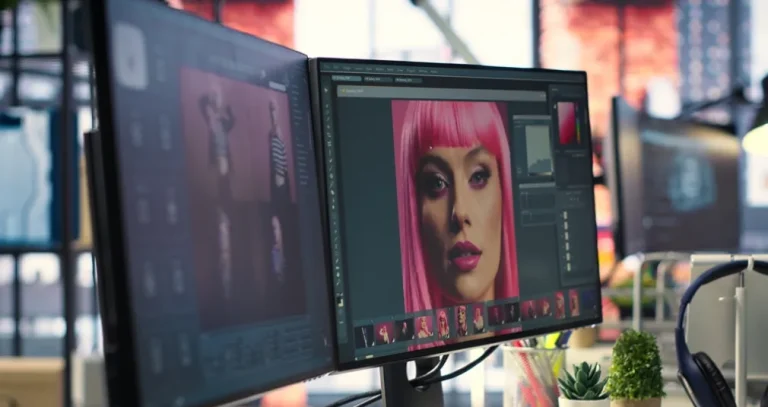
Editing astrophotography is mainly about controlling noise, preserving star color, and creating enough contrast to reveal the sky without making it look artificial. With Luminar, use a restrained workflow:
Correct lens issues and white balance. Remove unwanted color casts while preserving natural variation between stars.
Balance exposure. Lift the sky carefully and keep foreground shadows believable.
Reduce noise. Apply Noiseless AI only as strongly as necessary; excessive reduction can erase faint stars and texture.
Refine contrast selectively. Darken a bright horizon or increase local contrast in the Milky Way without crushing the black point.
Check sharpening at 100%. Stars should remain small points, not develop bright halos.
Export for the intended use. A web image needs different dimensions and sharpening from a large print.
Sky replacement belongs to creative compositing, not documentary astronomy. If you use Sky AI, label the result as a composite and match the direction of light, perspective, reflections, and depth. Do not use a replaced sky to claim that a real celestial event was visible from a particular place.
Final Thoughts
The last months of the 2026 night sky calendar still offer several accessible events, from brilliant Venus and the Harvest Moon to the Orionid, Leonid, and Geminid meteor showers. Successful observation begins with checking local timing, weather, moonlight, and visibility rather than relying on a global date alone.
For photographers, preparation matters as much as settings. Choose a dark and safe location, arrive early, test focus, protect batteries from cold, and let the camera record a sequence. Then edit gently so the final image preserves the character of the sky you actually witnessed.
Frequently Asked Questions
What astronomical events are still coming in 2026?
As of September 8, notable upcoming events include Venus at peak brilliance on September 18, the Harvest Moon near Saturn on September 26, the Orionids on October 21–22, the Leonids on November 16–17, and the Geminids on December 13–14.
What is the best meteor shower left in 2026?
The Geminids on December 13–14 are usually among the strongest annual showers. Actual visibility will depend on local weather, light pollution, moonlight, and the observer’s latitude.
Can I photograph a meteor shower with a phone?
A phone with manual or dedicated night controls may record bright meteors from a dark location, especially when mounted securely and set to capture repeated frames. A camera with a wide, fast lens provides more control and generally better results.
Do I need a telescope to photograph astronomical events?
No. Meteor showers, constellations, the Milky Way, Moon landscapes, and bright planetary pairings can be photographed with standard camera equipment. Detailed images of planets usually require a telescope and a more specialized workflow.
Can Luminar add stars or replace a missed astronomical event?
Luminar can be used for creative sky composites, but an added event should not be presented as documentary photography. For a real astronomical image, use editing to refine exposure, color, contrast, and noise while preserving the recorded scene.
Subscribe to know first
Our delivery owl will bring you our best deals and news about Skylum news.