Planning a Valentine’s Day trip? Find romantic getaway ideas for beach days, snowy mountains, and city breaks, plus simple ways to capture the moments you share.
Valentine’s Day is a natural excuse to plan a trip for two. Whether you picture a quiet beach, a snowy mountain resort, or a lively European city, traveling together can turn the holiday into a collection of memories worth photographing.
The best destination depends on the kind of experience you want. Some couples prefer slow mornings by the sea, while others would rather explore historic streets, ski together, or spend an evening at a cozy restaurant.
To help with the planning, here are romantic Valentine’s Day destinations across different types of travel, along with photography ideas for documenting the experience.
Don’t feel like reading the whole breakdown? We’ve pulled together a quick summary below.
Key Takeaways
Choose a destination based on the type of experience you both enjoy.
Beach destinations work well for relaxed days, sunsets, and outdoor portraits.
Winter resorts offer snow-covered landscapes, cozy interiors, and mountain photography.
Romantic cities combine architecture, food, culture, and plenty of photo opportunities.
Early morning and golden-hour light can create softer travel portraits.
Candid moments often tell the story of a trip better than posed photographs.
A lightweight camera or smartphone is usually enough for documenting a romantic getaway.
Photo editing can help refine exposure, color, composition, and distracting details after the trip.
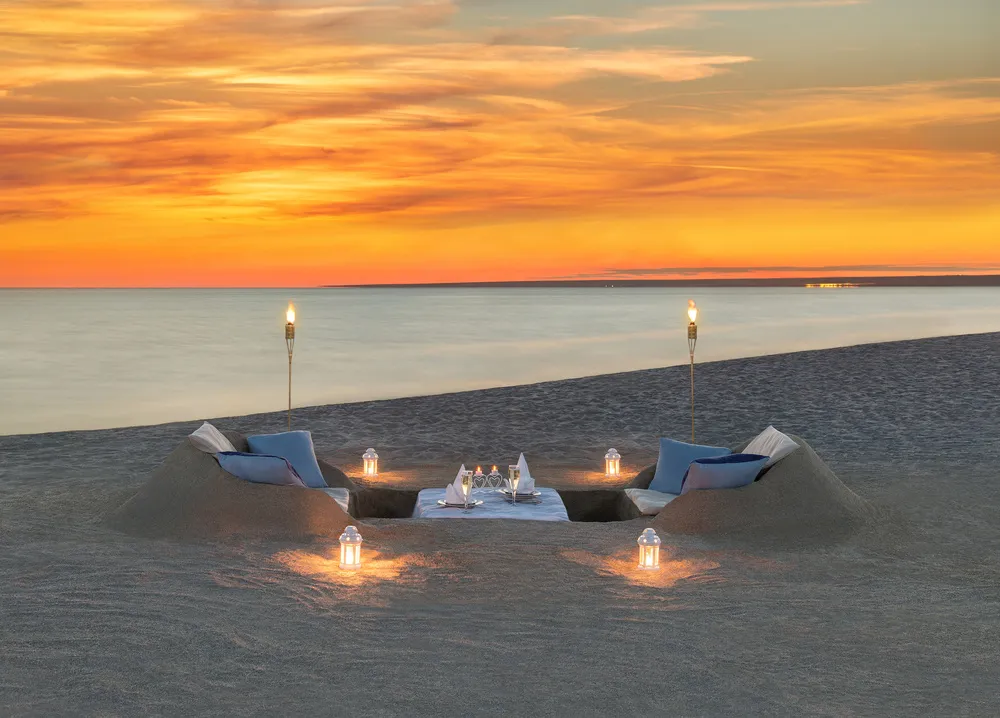
For couples who want warm weather and a slower pace, a beach getaway can be an appealing Valentine’s Day option. Sunsets, turquoise water, palm trees, and outdoor dinners provide plenty of opportunities for travel photography.
Bora Bora, French Polynesia
Bora Bora is known for its turquoise lagoon, mountainous interior, and overwater accommodation. The combination of water, dramatic skies, and distinctive architecture creates plenty of opportunities for landscape and couple photography.
Try photographing from a low angle near the water or using reflections during sunset.
Santorini, Greece
Santorini combines whitewashed architecture, volcanic landscapes, and views across the Aegean Sea. Its villages provide opportunities to photograph both the couple and the surrounding scenery.
For less crowded photographs, consider exploring early in the morning before the busiest hours.
Tulum, Mexico
Tulum combines Caribbean beaches with archaeological sites and tropical landscapes. It can work well for couples who want a trip that includes both relaxation and cultural exploration.
Photographing the ruins against the surrounding vegetation can create a stronger sense of place than taking only beach portraits.
Maui, Hawaii, USA
Maui offers beaches, volcanic landscapes, forests, and coastal roads. The variety makes it possible to combine different types of travel photography during one trip.
Sunrise and sunset are particularly useful for portraits when the direct light is softer.
Bali, Indonesia
Bali offers beaches, rice terraces, temples, forests, and distinctive local architecture. Couples can combine relaxed coastal photography with images that document the island’s landscapes and culture.
When photographing people or ceremonies, be mindful of local customs and restrictions.
Amalfi Coast, Italy
The Amalfi Coast is known for steep coastal landscapes, colorful towns, and views over the Mediterranean. Positano, Amalfi, and Ravello offer very different perspectives for photography.
Rather than photographing only famous viewpoints, look for smaller streets, balconies, stairways, and everyday scenes.
Cinque Terre, Italy
The villages of Cinque Terre sit along the rugged Ligurian coast and are connected by hiking paths and rail links. Their colorful buildings and steep terrain provide strong visual elements for travel photographs.
A telephoto lens can be useful for compressing the layers of buildings and coastline from a distant viewpoint.
Fiji
Fiji offers tropical beaches, clear water, and opportunities for snorkeling, diving, and outdoor adventures. It can suit couples who want a quieter island experience combined with nature photography.
Underwater or shoreline photographs can add variety to a traditional collection of vacation portraits.
Romantic Winter Getaways
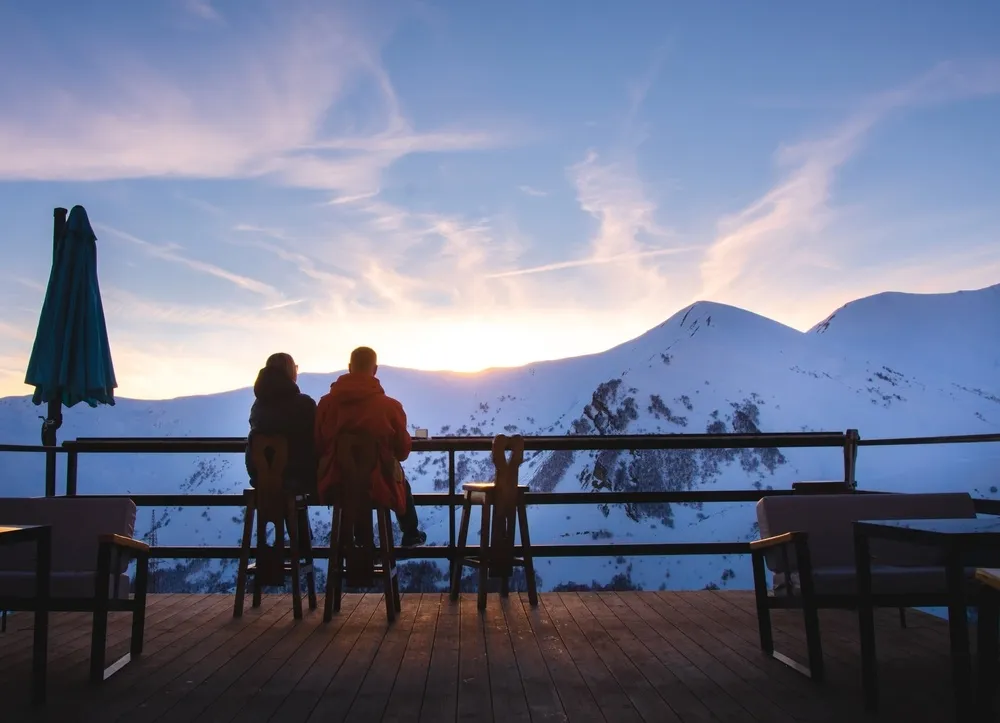
Not every Valentine’s Day trip needs palm trees and warm weather. Winter destinations can provide snow-covered landscapes, mountain views, fireplaces, and atmospheric town centers.
Aspen, Colorado, USA
Aspen combines skiing, mountain scenery, restaurants, and a range of accommodation options. Snow-covered streets and mountain landscapes can provide a very different visual style from a tropical vacation.
For outdoor portraits, watch for soft light on overcast days when the snow acts as a natural reflector.
Whistler, British Columbia, Canada
Whistler is surrounded by the Coast Mountains and offers skiing, snowboarding, snowshoeing, and winter scenery. The pedestrian-friendly village also provides opportunities for evening street photography.
Bring extra batteries if you’re photographing outdoors for extended periods in cold weather.
Banff, Alberta, Canada
Banff National Park offers dramatic mountain scenery, frozen or snow-covered lakes, forests, and winter trails. The landscape can easily become the main subject of your photographs.
Use a person in the foreground to communicate scale when photographing large mountain scenes.
Lake Louise, Alberta, Canada
Lake Louise is surrounded by the Canadian Rockies and offers a range of winter activities. The frozen lake and snow-covered peaks can create clean, graphic compositions.
A wide-angle lens is useful for including the entire landscape, while a standard or telephoto lens can isolate details in the mountains.
Quebec City, Canada
Old Quebec combines historic architecture, narrow streets, winter scenery, and European-inspired urban landscapes. It is particularly interesting for couples who want city photography rather than a traditional ski vacation.
Look for warm window light contrasting with blue evening shadows outside.
Zermatt, Switzerland
Zermatt offers views of the Matterhorn, alpine architecture, winter sports, and mountain trails. The village itself can be as interesting to photograph as the surrounding peaks.
A telephoto lens can help isolate the Matterhorn from surrounding landscapes when weather conditions allow.
St. Moritz, Switzerland
St. Moritz is a well-known Alpine resort surrounded by mountains and lakes. Winter sports, snowy landscapes, and elegant architecture provide a variety of subjects.
Try photographing during blue hour when artificial lights begin to appear against the fading daylight.
Cortina d’Ampezzo, Italy
Located in the Dolomites, Cortina combines dramatic mountain scenery with Italian food and alpine architecture. The distinctive rock formations can create strong backgrounds for environmental portraits.
Exclusive Tools of Endless Possibilities in One Editor
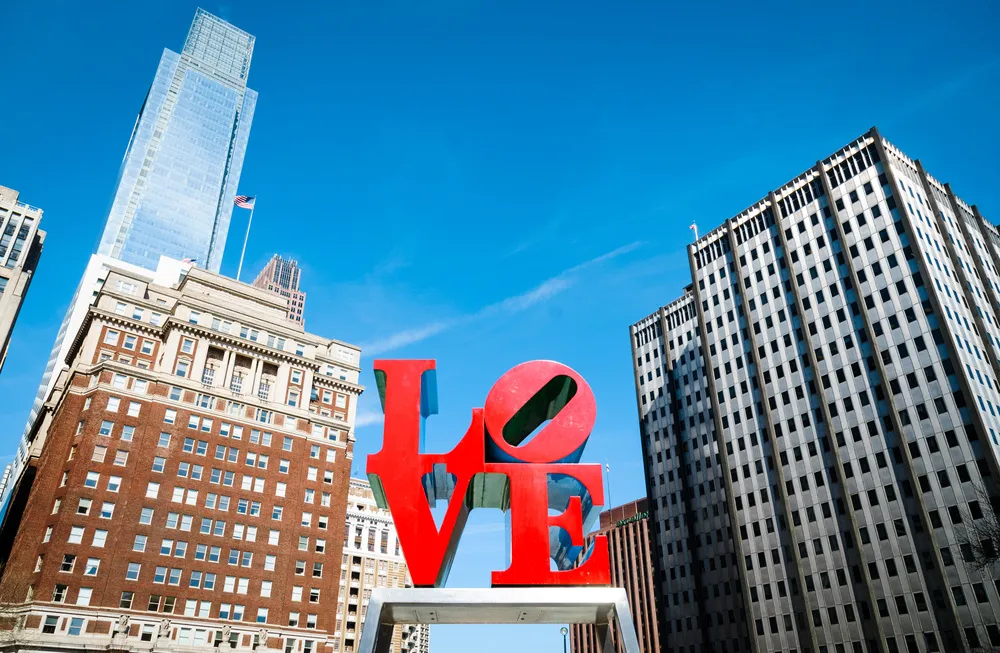
A city trip gives couples plenty to photograph without requiring a packed itinerary. Architecture, cafés, museums, street scenes, and evening lights can all become part of the story.
Venice, Italy
Venice’s canals, bridges, historic buildings, and narrow streets make it one of the most recognizable destinations for romantic travel photography.
Instead of photographing only gondolas, explore quieter streets and small bridges. Reflections in canals can also create interesting compositions.
Verona, Italy
Verona is associated with the story of Romeo and Juliet and offers historic architecture, public squares, and views across the city.
The city’s connection with Shakespeare’s characters is part of its tourism identity, but there is much more to photograph beyond the famous sites.
Kyoto, Japan
Kyoto combines temples, traditional architecture, gardens, narrow streets, and seasonal landscapes. It offers opportunities for both urban and nature photography.
When photographing temples, gardens, or cultural sites, check the local rules about photography before taking pictures.
Vienna, Austria
Vienna offers grand architecture, historic cafés, museums, parks, and classical music venues. The combination of elegant interiors and streets can create a varied travel photo collection.
Try photographing architectural details instead of relying only on wide city views.
Prague, Czech Republic
Prague’s historic center includes Gothic, Baroque, and medieval architecture, along with the Charles Bridge and Prague Castle.
Early morning can provide softer light and fewer people around some of the city’s most photographed locations.
Buenos Aires, Argentina
Buenos Aires combines European-influenced architecture with neighborhoods known for tango, colorful street life, cafés, and distinctive local culture.
Photographing movement during a tango performance can add energy to a collection dominated by static travel portraits.
Florence, Italy
Florence is particularly appealing to couples interested in art, architecture, and food. The historic center offers Renaissance buildings, piazzas, galleries, and views over the Arno River.
For a panoramic city photograph, consider photographing from an elevated viewpoint around sunset.
Dubrovnik, Croatia
Dubrovnik combines a historic walled city with Adriatic views and distinctive Mediterranean architecture. Its stone streets and coastal scenery work well for both wide landscape images and intimate travel portraits.
Look for viewpoints that show the relationship between the Old Town and the sea.
New York City, USA
New York offers a completely different kind of romantic getaway. Couples can photograph Central Park, neighborhood streets, skyline views, museums, cafés, and nighttime city scenes.
Use reflections in shop windows, puddles, or glass buildings to create more layered compositions.
How to Photograph a Romantic Getaway
The destination is only part of the story. How you photograph the trip can make the final collection feel much more personal.
Photograph the Journey, Not Just the Destination
Don’t wait until you reach the famous landmark.
Photograph:
Packing before the trip
The train or plane journey
Coffee in the morning
Hotel details
Walking through unfamiliar streets
Meals and local dishes
Small souvenirs
Your partner looking at a view
Evening walks
Quiet moments between activities
These photographs often create a stronger narrative when viewed together.
Use Candid Moments
Not every photograph needs both people looking at the camera.
Ask your partner to walk naturally, look around, talk to you, or interact with the environment. You can photograph the moment rather than directing every pose.
A longer focal length can be useful when you want to give your subject some space.
Look for Soft Light
Early morning and late afternoon often provide softer directional light than the middle of the day.
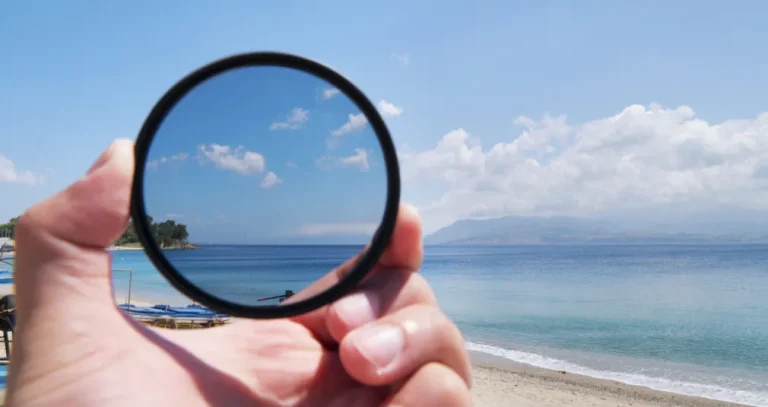
Cloudy weather can also work well for portraits because clouds diffuse direct sunlight.
If you’re photographing at midday, look for open shade or use the surrounding architecture to control harsh light.
Include the Environment
A romantic travel portrait doesn’t have to be a close-up.
Step back and include the mountain, beach, historic street, or skyline. This creates an environmental portrait that shows not only who was there but also where the memory happened.
Try Reflections
Water, windows, mirrors, polished tables, and wet streets can all create reflections.
Instead of treating reflections as a technical problem, look for ways to incorporate them into the composition.
Don’t Forget Night Photography
Cities and resorts can look completely different after sunset.
A tripod can help with static night scenes, while a faster shutter speed is useful when you want to photograph people moving through the frame.
For handheld shots, stabilization and a wider aperture can also be useful, depending on your camera and lens.
Your AI-Powered Photo Editor for MacOS and Windows
Travel photographs rarely need heavy editing. Small adjustments can often make a bigger difference.
Start with:
Exposure
White balance
Highlights and shadows
Contrast
Color
Cropping and straightening
Noise reduction
Sharpening
If the horizon is tilted or distracting elements appear in the background, correcting those details can make the composition easier to read.
With Luminar, you can make these adjustments and use AI-powered tools when appropriate. For example, GenErase can remove unwanted objects from a photograph.
While Light Depth can help adjust how light is distributed across a scene.
For travel portraits, keep skin tones and the original atmosphere of the location in mind. The goal is usually to enhance the memory rather than make the destination look completely different.
You can also explore photo filters when you want to create a consistent visual style across a collection of travel photographs.
Valentine’s Day Photo Ideas for Couples
Once you’ve chosen your destination, try photographing the trip as a small visual story.
Some ideas include:
A morning photograph — coffee, breakfast, or a quiet view from the room.
A walking shot — photograph your partner from behind as you explore.
A location portrait — include a recognizable landmark or landscape.
A candid moment — capture laughter, conversation, or a spontaneous reaction.
A food photograph — document a memorable local meal.
A sunset portrait — use warm evening light for a simple couple’s portrait.
A night scene — photograph city lights or a quiet evening walk.
A detail shot — hands, tickets, flowers, jewelry, or a small souvenir can help connect the photographs into a story.
Final Thoughts
A Valentine’s Day trip doesn’t have to follow a particular formula. The most memorable destination is often the one that matches the way you both want to spend your time.
A tropical beach, snowy mountain village, historic European city, or energetic metropolis can all provide a beautiful setting. What matters for photography is paying attention to light, composition, details, and the small moments between the major attractions.
Take photographs throughout the journey, not just at the famous landmarks. Then, when you’re home, edit the collection consistently and keep the adjustments connected to the atmosphere you experienced.
The result can be more than a set of vacation pictures — it can become a visual record of the trip you shared.
FAQ
Where should couples travel for Valentine’s Day?
Choose a place that fits what you both enjoy. A beach is ideal for a relaxed trip, a mountain resort suits couples who want winter activities, and a city break offers restaurants, culture, and plenty to explore on foot.
Is it better to travel on Valentine’s Day or over the nearest weekend?
Traveling on February 14 can make the date feel special, but the nearest weekend may give you more time together. Check accommodation prices and availability for both options before booking.
How can we take better photos together while traveling?
Look for soft light in the early morning or before sunset, and take a mix of portraits and candid shots. A small tripod and camera timer can help you get photos together without asking someone else to take them.
Do we need a camera for a romantic getaway?
No. A smartphone is enough for most travel photos. Good light, a clean background, and a moment that feels natural will make more difference than the device you use.
Subscribe to know first
Our delivery owl will bring you our best deals and news about Skylum news.