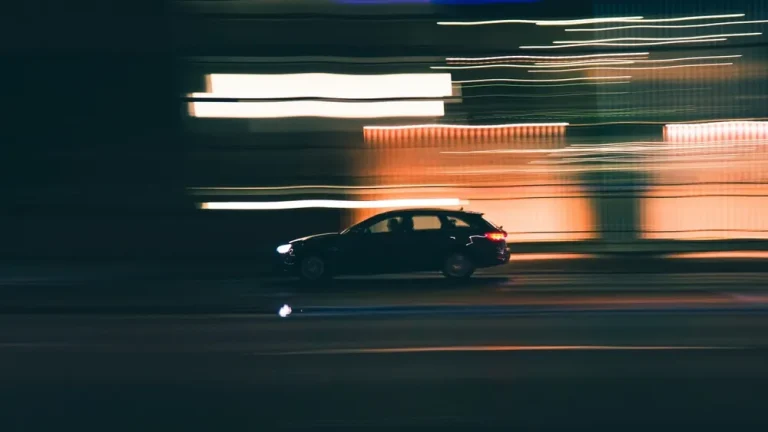
Use diagonals to enliven your photos, fill them with energy, and draw the viewer into the frame.
There are times when the picture is technically right but aesthetically does not work: the eye cannot see a path, skids over the information, and soon leaves the photograph. It is at this juncture that the diagonals prove to be a powerful tool that will enhance the idea of the author by their mere existence. It is possible to change the shooting point or turn the camera slightly to make even a railing a strong visual accent.
Diagonal composition photography is a method that beginners can use to learn to control scenes without memorizing dozens of pages of theory or spending weeks in practice. You can add depth and energy with only a few clicks by selecting the angle and movement direction, without altering the input data. Archimedes explained, “Provide me with a base, and I will make the world move and the same can be said about photography, only by incorporating diagonals.
Don’t feel like reading the whole breakdown right now? Here’s a tighter, more practical summary of what actually changed.
Explore the Next Generation of Generative Tools
Key Takeaways
- Diagonals give the viewer a path. The guide frames them as narrative lines that lead from a “start” point to a visual climax, separating the main subject from background noise.
- Start with one dominant diagonal, then move the camera and subject to fit it. The text suggests practical moves like shooting lower/closer so a sidewalk edge, railing, or shadow becomes the guiding line.
- Control where the line ends. Watch where the diagonal points and place the subject on its trajectory so diagonal leading lines photography reads instantly, without explanation.
- Avoid “drawn” diagonals and diagonal clutter. If the line runs corner-to-corner, shift your shooting point; if there are too many diagonals, change angle or crop to leave only one main line.
- Use intersections to create natural accents. The guide highlights that diagonals work best when they intersect another line, and the main object sits near that intersection point.
- For skyline/architecture, manage perspective conflict, especially with wide angles and low viewpoints that make verticals converge. If the geometry feels too chaotic, raising the camera can help create a cleaner dominant diagonal.
- Settings matter for sharp diagonal edges. The text recommends 1/125 for static shots, 1/250-1/500 for movement, f/5.6-f/8 for urban detail, ISO up to 200 in sun (400-800 cloudy, 1600+ evening), and shooting RAW for maximum detail and later work with the composition AI tool.
Final Verdict: Pick one strong diagonal, move your viewpoint until it leads cleanly into the subject, then refine with a small rotation/crop in post—it’s the fastest way for beginners to make scenes feel intentional.
The Role of Diagonals in Visual Storytelling
The diagonal element of the frame is a narrative line that sets the scene’s mood. It starts at a certain point (the beginning) and then moves down to another corner (the climax) so that the viewer can understand where the main objects are and what is just background.
Practical Tips for Using Diagonals Effectively

To achieve a controlled result with diagonals, first select a single line that will draw the eye to the main subject. Then adjust the position of the camera and the subject to fit this line, rather than the other way around. A few small movements on set are usually more effective than trying to “save” the composition in post-production:
- shoot lower or closer so that the edge of the sidewalk, railing, or shadow becomes a clear direction;
- watch where the line leads and place the object in its trajectory so that diagonal leading lines photography can be read without prompts;
- align the diagonal with the vertical of the facade or the horizon, then a natural accent appears at the point of intersection;
- if the line starts exactly from corner to corner, shift the shooting point one step to the side so that the frame does not look drawn;
- when there are too many diagonals, change the angle or crop and leave one main one.
After shooting, quickly check the photo using the diagonal method: imaginary 45° lines will tell you whether the eyes, face, or detail are in the strong zone. This is useful even when there is a tilt-shift photo in the picture, because the effect should not distract attention from the subject.
Enhancing Composition with Diagonal Lines

Diagonal lines change how a composition is perceived because they set the direction and unite the space into a clear path. When a diagonal connects the foreground to the main subject, it adds depth even in a simple scene. The line should lead to the subject, not cut the frame in half without meaning, so the camera’s location affects the result just as much as the subject itself.
After shooting, it is useful to open the image in a photo editor and turn on the grid or guides. A slight rotation and a more precise crop often transform a random tilt into a controlled composition. If there are several diagonals, it is better to leave one dominant one and remove the competition at the edges of the picture, so that the movement of the gaze becomes clear and predictable.
Your AI-Powered Photo Editor for MacOS and Windows
Capturing Dynamic Skyline Photos Using Diagonals

Photographs of urban architecture are inextricably linked to precise geometry, which is why diagonal lines photography definition is most relevant here. The presence of a clear line instills a certain thought in the viewer’s mind, forcing them to see something more than just a few buildings standing next to each other in the photograph. This effect is easier to achieve when the diagonal line emerges from a real object in the city, such as an overpass or a roof slope, and leads straight to the focal point.
Pay attention to perspective when shooting: a wide angle and the choice of a low-lying object as the finish line make the verticals converge. In this case, the diagonals begin to conflict with the image’s content, disrupting the viewer’s sense of perfection. In some cases, this works to your advantage, but if you want to take professional photos, it is worth raising the camera higher, thereby creating a dominant diagonal.
The other lines will support the main line, creating a complex structure instead of segmenting the frame. Looking at diagonals photography examples, it is immediately apparent that scenes in which straight lines intersect and the main object is nearby attract attention.
Optimal Camera Settings for Sharp Diagonal Shots

We have already mentioned that for a clear diagonal line, you need to find a good place to draw the eye. There are countless options for what this could be: a face, a road sign, the corner of a building, or a car on the road. However, for the effect to work well, you will need to select the appropriate camera settings beforehand.
For static shots, keep the shutter speed at 1/125. If there is a dynamic object in the frame, handshake can cause slight blurring, which increases along the diagonals. To avoid this, increase the exposure value to 1/250 or even 1/500.
Then set the aperture for the desired depth of field. In most urban scenes, f/5.6-f/8 provides stable detail, but if this seems insufficient, feel free to experiment. Regarding the sensor’s light sensitivity, it’s not recommended to set the ISO above 200 on a sunny day. Otherwise, white spots will appear in the photo. In cloudy weather, 400-800 will be enough, and for shooting the city in the evening, the sensitivity will have to be increased to 1600 or higher.
The file format must be RAW. This will enable you to preserve as much detail as possible and, as a result, provide the image using the composition AI tool during post-processing.
Creative Applications of Diagonal Methods in Photography
Many photography techniques revolve around the effective use of diagonal lines. The most famous of these, the “Gollad angle,” involves deliberately tilting the camera to increase the diagonal.

It can be used in street photography to accurately convey a city’s liveliness or to emphasize a person running. If you’ve seen “Harry Potter” or the “Batman” movies, you’ve probably seen it at least a few times, so try googling it.
The second common trick for creating volume is linear perspective.

It is very easy to integrate into a scene: you need to find two parallel lines that visually converge at a single point at a great distance. You can check its effectiveness for yourself by watching scenes from the movie “The Shining” in the hotel corridors.
And the last technique worth mentioning is the principle of rhythmic diagonals.

The idea is to use repeating slanted lines to create a visual rhythm that directs the viewer’s gaze. Remember the scene in Wallace’s office from “Blade Runner 2049”, when light falls in slanted stripes, drawing the viewer’s attention to the character’s silhouette in the distance.
Regardless of the style you choose, using an editor to leverage your strengths is a fundamental requirement for photographers in 2026. With Luminar on your phone, take a photo and edit it on the spot! With just a few taps, correct composition errors or remove an object that appeared in the frame at the last moment.
Final Thoughts on Mastering Diagonal Photography Skills
Using diagonal lines helps to set the focus without having to work extensively with layers in the photo. It is suitable for users without expensive equipment and doesn’t require months of practice to master.
Take a few references in the form of moments from your favorite movies or the works of other photographers, and then head out onto the street. Spend less than 50% of the battery charge on your camera before the photos are good enough to publish.