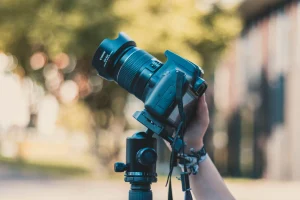
See why the Fujifilm X100VI is such a popular small camera. We look at the specs and how it works for photographers in the real world.
The Fujifilm X100VI arrived in early 2024 and sold out like hotcakes. People bought into the idea of a compact camera with a fixed lens and a steep price tag. Now that the first wave of hype has died down and cameras are finally back in shops, it’s time to find out whether it is as good as people say. In this article, we examine what drove this demand and identify the real limits of the X100VI.
Don’t feel like reading the whole breakdown? We’ve pulled together a quick summary below.
Elevate Your Photography with Our Advanced Software
Key Takeaways
- High-Res Sensor: The 40.2MP chip gives you plenty of room to crop your images and keeps them sharp, which helps since you can’t zoom in with the lens.
- Steady Handheld Shots: The new 6-stop stabilization (IBIS) lets you take clear photos in low light without a tripod—a huge step up from older models.
- Classic Feel: It keeps the retro film-camera look with manual dials and a hybrid viewfinder that lets you switch between a glass view and a digital screen.
- Weather Protection: The body is tough, but you must add an extra filter and adapter if you want it to stay safe in the rain.
- Compact but Pricey: At $1,599, it’s a big investment for a pocket camera, especially with a 450-shot battery that might run dry on a long day.
- Fixed Focus: The 35mm-equivalent lens is the soul of this camera. If you don’t like that specific view, all the tech in the world won’t make you love the results.
Overview of the Fujifilm X100VI

The X100 series has been on the market for ten years. Every generation sticks to its standards and presents compactness, a fixed lens, and classic ergonomics. Still, the sixth version pulled ahead and became the most unique yet.
Inside the Fuji X100VI is a 40.2-megapixel sensor that produces very detailed images. This gives more freedom when cropping and lets you print photos in a large format. Processing is handled by the X-Processor 5, which also runs the stabilization (IBIS)—a feature the previous X100V lacked.
Key Features and Specifications
What caused such a stir? The resolution of the video? Before you keep looking at praised reviews, be sure to check the specs yourself. Usually, some points (like needing an adapter for rain protection) aren’t always visible behind five-star feedback.
| Specifications | Details |
| Sensor | 40.2MP X-Trans CMOS 5 HR |
| Processor | X-Processor 5 |
| Lens | 23mm f/2 (35mm equivalent) |
| Image Stabilization | 6-stop IBIS |
| Viewfinder | Optical/Electronic Hybrid |
| Video | 6.2K up to 15fps, 4K up to 60fps |
| Battery Life | Approx. 450 shots per charge |
| Weather Sealing | Yes (with filter adapter) |
| Weight | 521g with battery and card |
| Price | ~$1,599 |
| Release date | February 2024 |
Other people’s words and numbers on paper can still be unconvincing. They don’t show how the camera sits in your hand. You have to test it in different conditions yourself. Don’t limit yourself when using filters or Luminar editing. Some say polishing ruins a photo, while for others, it’s a missing puzzle piece.
Exclusive Tools of Endless Possibilities in One Editor
Lens Performance and Image Quality

The 23mm f/2 glass hasn’t changed; of course, it behaves in a unique way here. At f/2, the light softness at the edges adds a mood that is hard to copy with software. Stopping down to f/4 or f/5.6 lets you see sharp for architecture, the best of the lens specs.
This view is a great match for travel because it feels natural to how we see. You have an opportunity to crop your shots to get a closer look. The resolution is so high, similar to using a zoom lens. This provides plenty of freedom when you edit travel photos, as you can fix the framing or highlight specific textures while the image stays clean.
Low-Light Capabilities and Stabilization
Six stops of IBIS stabilization let you shoot handheld with slow shutter speeds. Before, with the X100V, you had to rely only on how steady your own grip was. The camera handles noise well up to ISO 3200. You can shoot at 6400 or 12800, though that takes longer in post-processing. Grain could become too obvious; a raw photo editor cleans every millimeter of the shot. Either way, the f/2 lens and IBIS let the X100VI feel much more confident on dark streets than any other compact.
Design, Ergonomics, and Customization

Fujifilm’s beauty standards still show a neat rectangular body, manual dials for shutter and exposure, and that hybrid viewfinder. On the other hand, the adapter might let you down, and heavy rain without a protective filter could harm the camera. The grip is thin on purpose. It will feel strange at first without a deep handle, so your hand has to adjust in a few days. You can also set up all buttons and the quick menu for yourself so you don’t waste time searching for settings.
Comparing the X100VI with Other Models

Now the X100VI can be called by today’s popular word “niche.” There are almost no serious compacts left, except for the Ricoh GR IIIx. That camera is very similar to Fujifilm models and is the only one worth comparing.
| Feature | Fujifilm X100VI | Ricoh GR IIIx |
| Sensor resolution | 40.2MP | 24.2MP |
| Lens | 23mm f/2 | 26mm f/2.8 |
| IBIS | Yes (6-stop) | Yes (4-stop) |
| Viewfinder | Hybrid OVF/EVF | None |
| Weather sealing | Yes (with adapter) | No |
| Price | ~$1,599 | ~$999 |
| Weight | 521g | 262g |
The Ricoh GR IIIx costs $600 less and weighs half as much. The Fujifilm X100VI, instead, boasts a great viewfinder and a sensor with a huge reserve of detail. This helps a lot if you want to use Sky AI to decorate a night sky or a dull background.
Practical Use Cases and Photography Styles

The X100VI is built for globetrodding. It fits in a jacket pocket and stays low-key, unlike bulky systems with extra lenses. The fixed lens makes you move more and find better angles, which improves your skills over time.
- Use the optical viewfinder to see people before they enter your frame.
- Keep the shutter speed low at sunset and trust the stabilization.
- Change film styles to get a specific look right in the camera.
- Move closer for portraits to get a soft background.
- Keep the camera in a pocket to stay ready for any moment.
- Test the flash in bright sun to see how well it works.
This camera is perfect for street photography. The silent shutter lets you take shots in a quiet cafe, and nobody will look your way. When you edit, Luminar AI helps adjust the light or the vibe of your travel shots. It won’t work for races or birds far away, but for daily stories, it’s exactly what you need.
Your AI-Powered Photo Editor for MacOS and Windows
Final Thoughts and Recommendations

The Fujifilm X100VI digital camera offers manual controls and high-quality images in a compact body. $1,599 might seem like a lot, and you are responsible for watching the battery. In case a 35mm focal length doesn’t suit you, no megapixels will make you love Fujifilm X100VI photos. You will have to adapt to the camera’s abilities and play with the difficulty of photography. This is steady advice, though most people forget how long it takes to fully learn new gear.