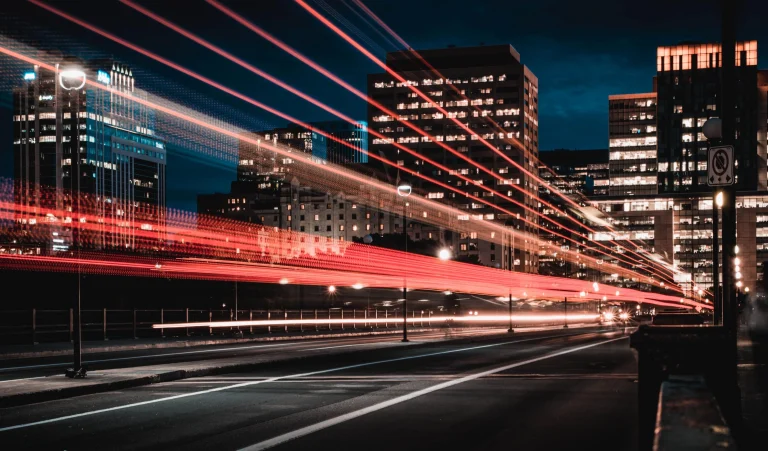
Looking for inspiration this September? Try simple photo ideas that capture early autumn’s warm light, changing colors, and seasonal moments.
September brings changing colors, softer sunlight, cooler mornings, and the first signs of autumn. It is a great time to experiment with fall photography, whether you prefer landscapes, close-ups, wildlife, or portraits.
You don’t need an elaborate setup for many of these ideas. A nearby park, forest trail, lake, farm, or even your own backyard can provide plenty of opportunities to photograph the season. The key is to pay attention to light, color, texture, and the small changes that make early autumn look different from summer.
Here are creative September photo ideas to try with your camera or smartphone.
Don’t feel like reading the whole breakdown? We’ve pulled together a quick summary below.
Key Takeaways
- Use early-morning and late-afternoon light to emphasize the warm colors of September.
- Photograph individual leaves and natural textures from different distances and angles.
- Look for calm water to create reflections and symmetrical compositions.
- Include seasonal activities such as harvesting, hiking, picnics, and walks in your images.
- Fog, backlighting, and low-angle sunlight can add atmosphere without complicated equipment.
- For portraits, use the surrounding foliage as a natural background and choose clothing that complements the environment.
- When photographing wildlife, patience and a longer lens are usually more useful than trying to get close.
- During editing, adjust color and contrast carefully so autumn tones remain believable rather than overly saturated.
Exclusive Tools of Endless Possibilities in One Editor
September Photo Ideas for Nature
1. Capture Golden Hour Light
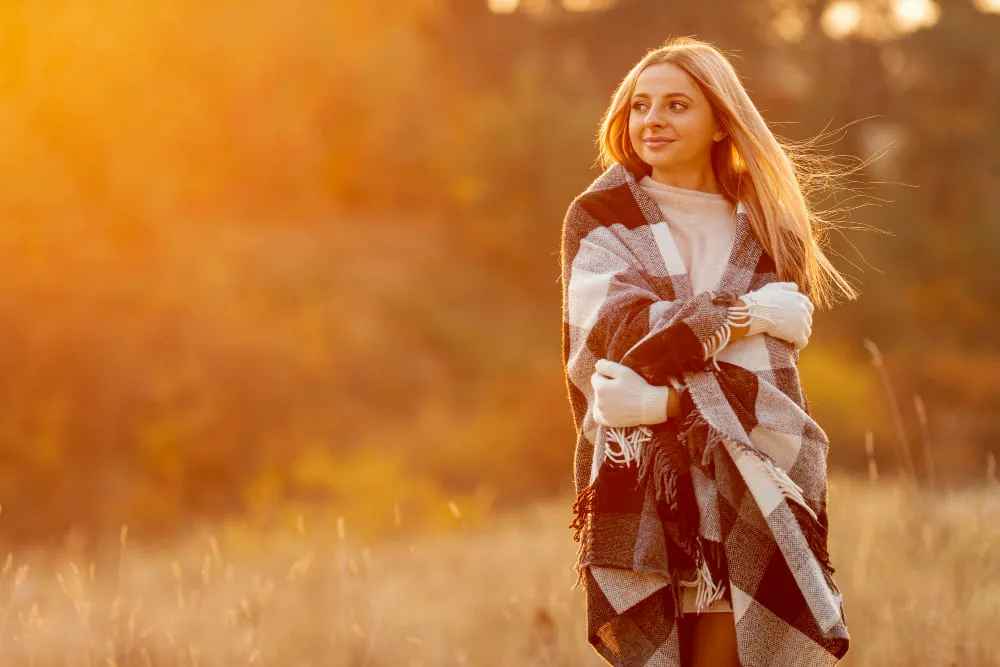
The low sun during the hour after sunrise and before sunset creates warm, directional light that can emphasize autumn colors and textures. Trees, grasses, and fallen leaves can look especially different when illuminated from the side or behind.
Try photographing the same scene at different times of day. Side lighting can reveal texture, while backlighting can make translucent leaves glow.
If you don’t have ideal light when you’re shooting, Luminar includes a Golden Hour tool that can add a warmer, softer effect during editing. It is best used subtly so that the direction and intensity of the light still look believable.
2. Get Close to Fall Foliage
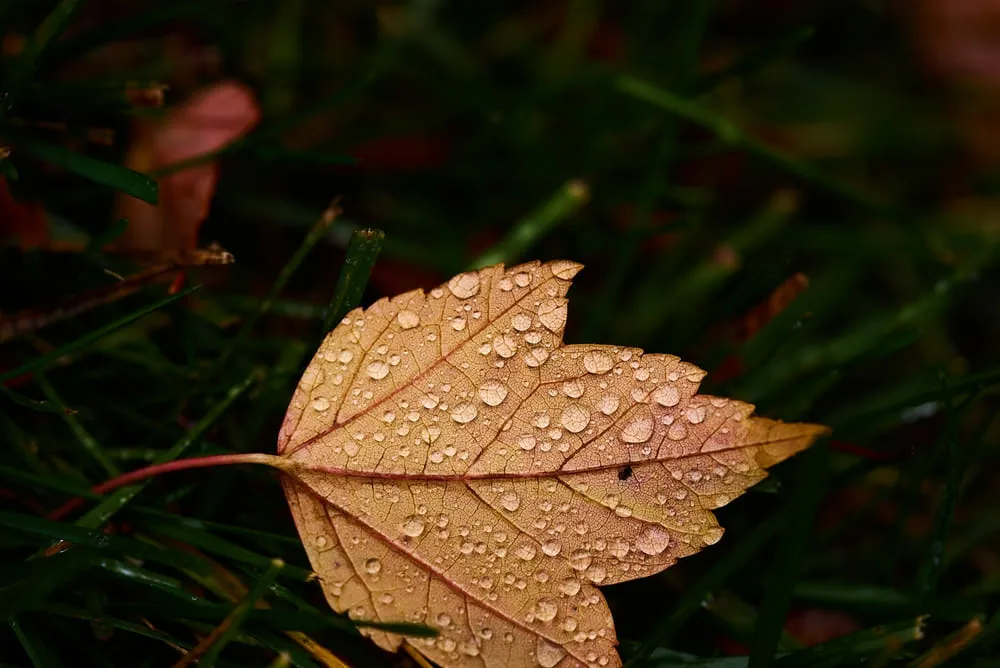
You don’t always need a wide landscape to photograph autumn. Pick one interesting leaf and look closely at its veins, edges, texture, and color variations.
A macro lens is useful for detailed close-ups, but you can also use a standard lens or smartphone camera. Try photographing the leaf against a simple background so its shape and texture remain the focus.
For another approach, photograph several leaves together and look for repeating shapes, contrasting colors, or patterns created by overlapping foliage.
33 Best Friend Photoshoot Ideas
Learn more3. Photograph Reflections on Water
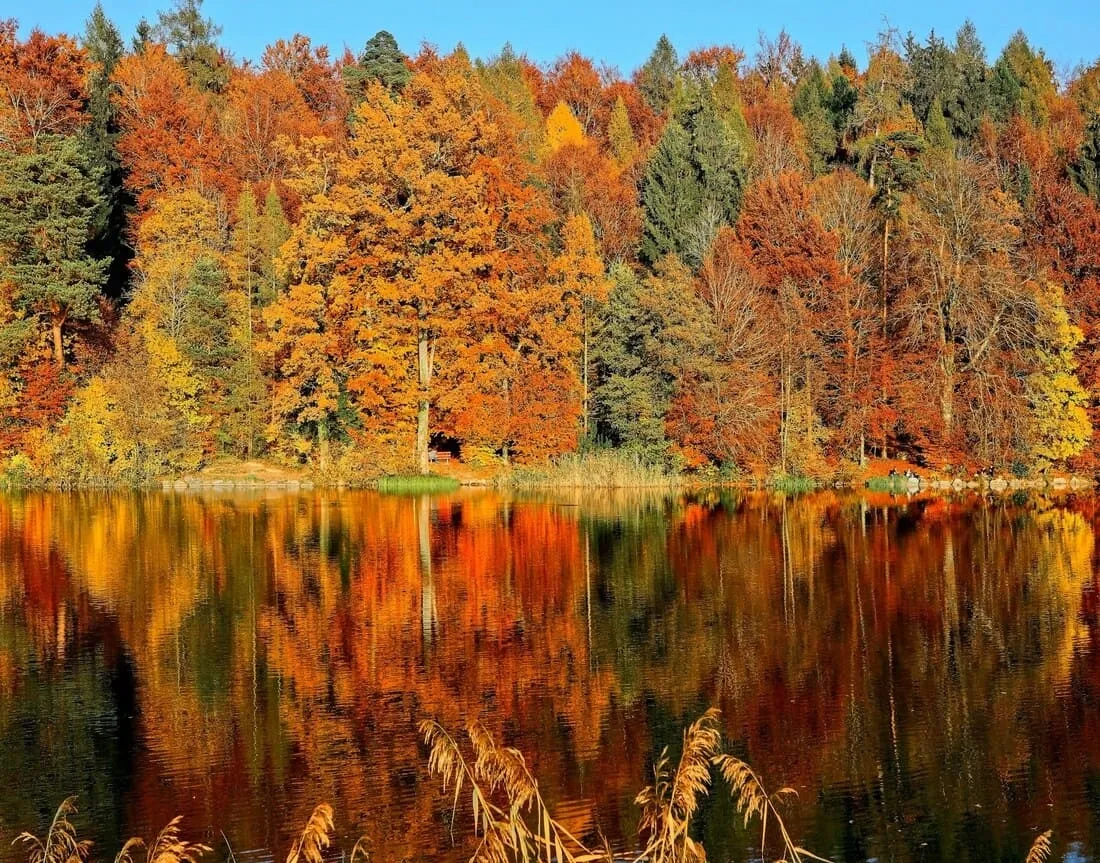
Calm lakes and ponds can reflect colorful trees almost like a mirror. Visit early in the morning, when the water may be calmer, and look for a composition that balances the landscape with its reflection.
You can place the horizon near the center for a symmetrical composition or deliberately give more space to either the landscape or the reflection.
Small ripples can also make an interesting alternative to a perfectly symmetrical reflection by turning trees and colors into abstract shapes.
4. Photograph the Harvest

September is harvest season in many places, making farms, markets, orchards, and gardens useful locations for seasonal photography.
Look for pumpkins, apples, corn, sunflowers, vegetables, baskets, and other elements that communicate the time of year. You can photograph them in their natural environment or create a simple still life at home.
For a still life, place several seasonal objects near a window and experiment with side lighting. This can reveal texture while keeping the setup simple.
5. Find a Path Through the Leaves
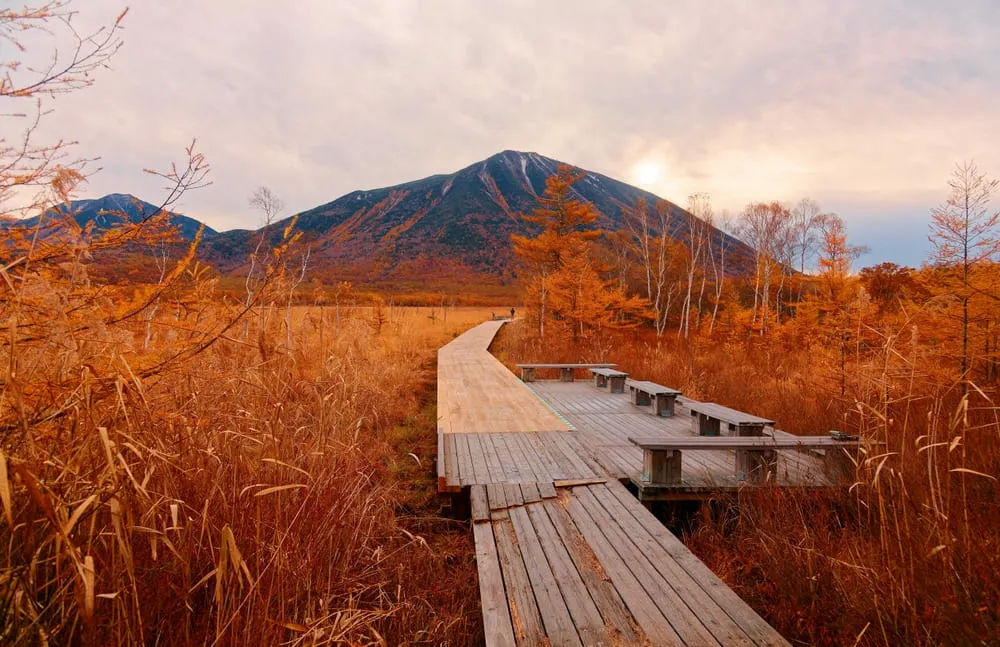
Paths, roads, fences, streams, and rows of trees can act as leading lines through an autumn photograph.
Instead of photographing the path straight on every time, try different positions. A lower camera angle can emphasize the foreground leaves, while a higher viewpoint can reveal more of the surrounding landscape.
Look for a natural focal point at the end of the path, such as a person, building, tree, or patch of light.
6. Photograph Foggy Mornings
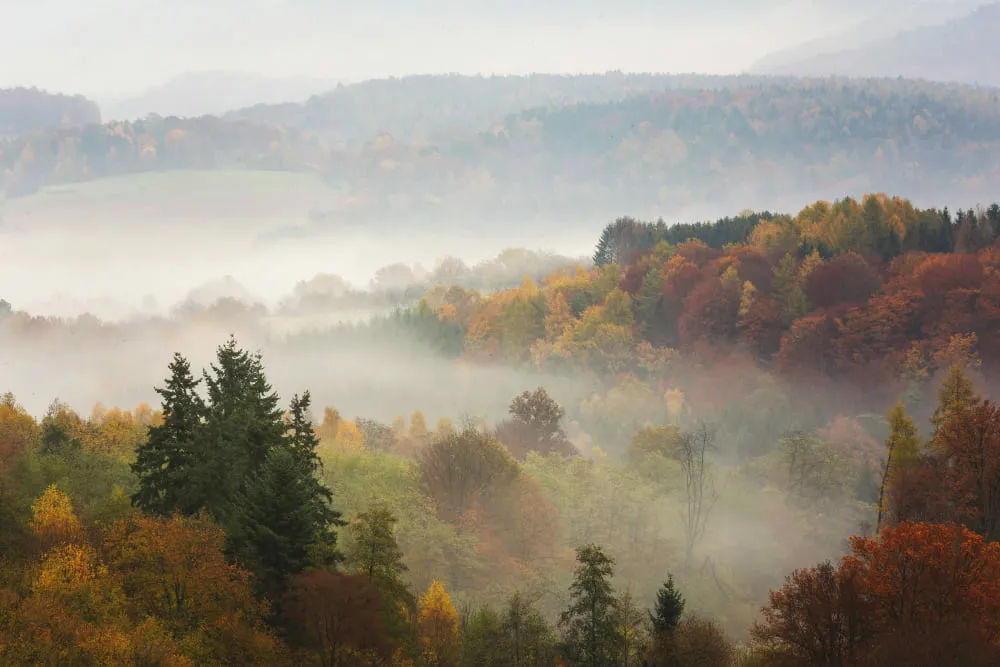
Fog can simplify a landscape by reducing contrast and obscuring distant objects. This makes it useful for creating atmospheric photographs with a strong sense of depth.
Look for isolated trees, fences, paths, or people emerging from the mist. Because fog reduces visibility, simple compositions often work better than scenes containing many competing elements.
Arrive early and protect your equipment from moisture. After the shoot, allow cold equipment to acclimatize gradually when moving it into a warmer environment.
7. Photograph Autumn Wildlife
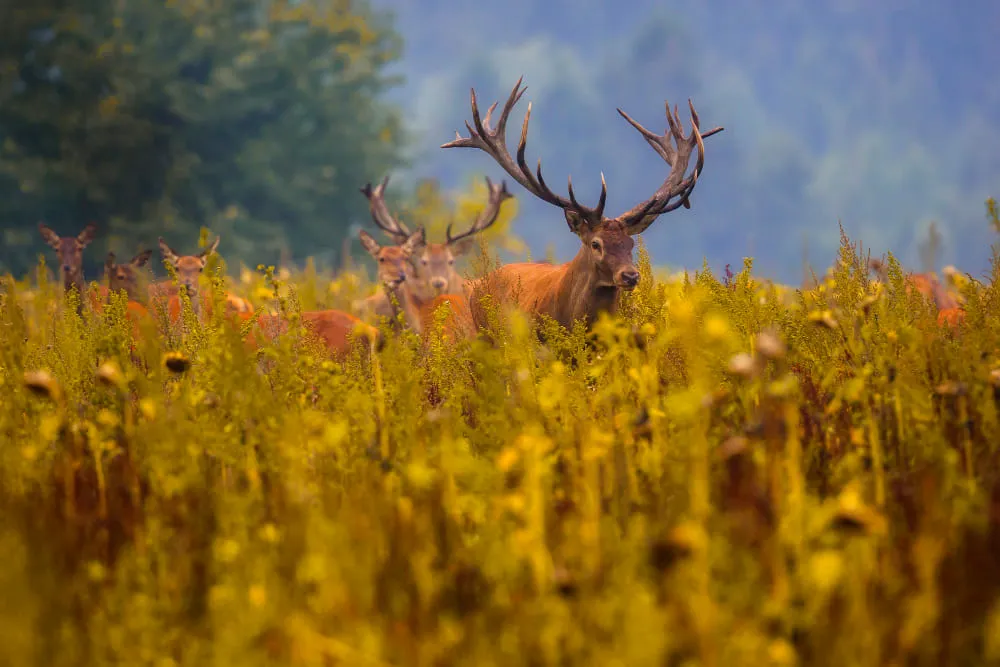
September can offer plenty of wildlife photography opportunities. Squirrels, birds, deer, and other animals may be active in parks, forests, and rural areas.
Wildlife photography generally requires patience. Instead of chasing an animal, observe its behavior and look for places where it is likely to appear.
A longer focal length can help you maintain distance while filling more of the frame. Use a faster shutter speed for moving subjects, and pay attention to the background so it doesn’t distract from the animal.
Tackle these ideas with your camera in hand, and you’ll see how each shot tells a part of fall’s story, making your photography not just seen but felt!
September Photo Ideas with People
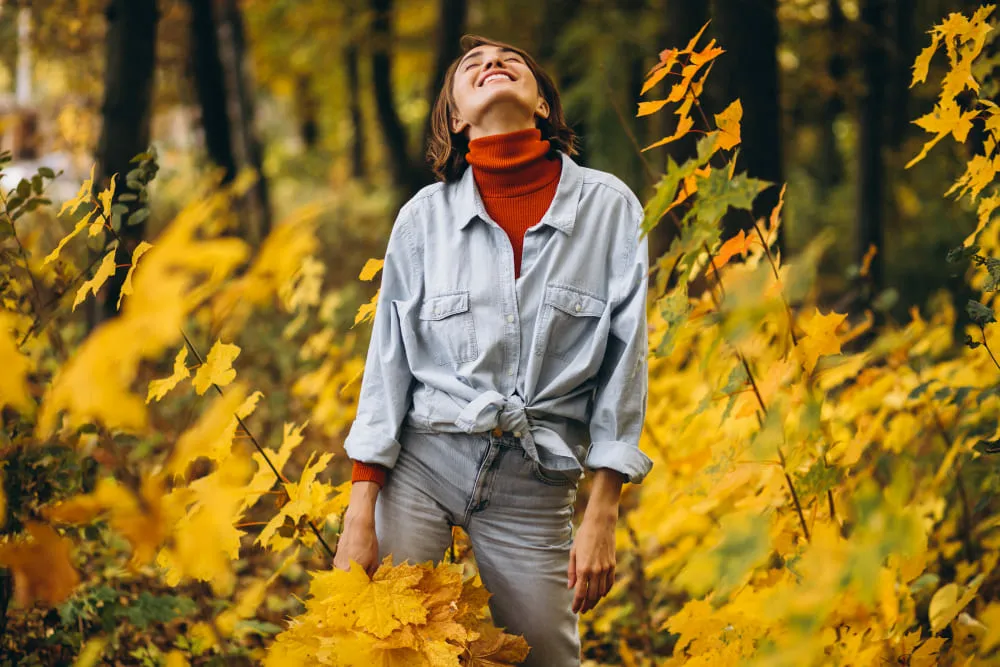
Autumn landscapes can provide natural settings for portraits and lifestyle photographs. Rather than treating the surroundings as a simple backdrop, incorporate seasonal activities, colors, and textures into the scene.
8. Create Seasonal Portraits
Place your subject among trees with changing foliage and use the background to establish a sense of season.
Overcast weather can provide soft, even light, while early-morning or late-afternoon sunlight can create warmer highlights. If the sun is strong, look for open shade to avoid harsh shadows across the face.
Clothing in earthy, neutral, or contrasting colors can work well, but the most important consideration is how the clothing interacts with the background rather than following a specific color formula.
Your Go-To in Professional Photo Retouching
9. Try Sunset Silhouettes
Position your subject between the camera and a bright sunset sky. Expose for the sky so the subject becomes a darker silhouette.
A recognizable pose is particularly important because facial details and clothing will not be visible. Ask the subject to create clear shapes with their arms or body rather than standing completely flat against the background.
10. Photograph a Fall Picnic
A picnic can turn an ordinary outdoor portrait into a small visual story.
Use a blanket, basket, seasonal fruit, warm drinks, or other simple objects as part of the composition. Photograph both the overall scene and smaller details, such as hands preparing food or leaves scattered across the blanket.
Natural interaction usually looks more convincing than asking everyone to pose for every frame.
11. Photograph Harvest Activities
Apple picking, visiting a pumpkin patch, collecting vegetables, or walking through an orchard can all provide opportunities for candid photography.
Instead of photographing only posed portraits, capture people interacting with the environment. Look for gestures, movement, expressions, and small moments between the main activities.
How To Edit Fall Photos To Bring Out The Fall Colors
Learn more12. Play with Autumn Leaves
Fallen leaves can become both a background and a foreground element.
Ask your subject to walk through leaves, hold a handful, or throw them into the air. Use a faster shutter speed if you want to freeze the movement, or experiment with a slower shutter speed to introduce motion blur.
Try photographing from ground level as leaves fall toward the camera for a more immersive perspective.
13. Create a Cozy Outdoor Scene
A blanket, tent, porch, or decorated patio can provide a simple setting for lifestyle portraits.
Keep the setup relatively uncluttered and use the surrounding environment to establish the season. Warm fabrics, books, mugs, lanterns, or other everyday objects can add context without overwhelming the subject.
14. Try a Themed or Halloween-Inspired Shoot
As October approaches, September can be a good time to plan a more conceptual autumn shoot.
Costumes, unusual accessories, darker clothing, or a wooded location can create a more dramatic atmosphere. Keep the lighting and styling consistent with the concept rather than adding too many visual elements at once.
15. Photograph a Couple Outdoors
Autumn colors can work particularly well for couple photography. Instead of asking subjects to stand and smile at the camera for every frame, give them something to do: walk along a trail, talk, drink coffee, or explore a park.
Each of these ideas is designed to enhance the interaction between your subjects and the beautiful fall environment, creating photos that are both vibrant and full of life!
Editing as an Important Step
Editing can help bring out the colors and atmosphere you noticed while shooting, but autumn photographs can become unnatural quickly if saturation and warmth are pushed too far.
Start with the fundamentals:
- Correct exposure and white balance.
- Recover highlights where possible.
- Open shadows when important details are lost.
- Adjust contrast to suit the scene.
- Fine-tune saturation and vibrance rather than increasing both aggressively.
- Crop and straighten the composition.
- Reduce noise when necessary.
- Apply sharpening carefully.
Refine Autumn Colors
If the foliage looks dull because of the lighting or camera settings, selective color adjustments can help.
Luminar provides color controls that allow you to adjust specific hues, including with its Image Color Replacer. You can use color adjustments to refine individual elements while leaving the rest of the image relatively unchanged.
For example, you might slightly shift the hue of green leaves toward yellow or orange, or reduce the saturation of a distracting background color. Small changes usually look more natural than dramatically recoloring the entire landscape.
Enhance Light Carefully
Luminar also includes tools for adjusting light, contrast, and atmospheric effects. Its Golden Hour tool can simulate warmer directional light, while other landscape adjustments can help control haze, contrast, and color.
These effects work best when they support the lighting already present in the photograph. If the original image shows flat overcast light, for example, a strong artificial golden-hour effect can make the result look inconsistent.
Keep Portrait Editing Subtle
For portraits, concentrate on exposure, skin tone, contrast, and background separation before adding stronger creative effects.
Current Luminar versions also include an expanded portrait toolkit with tools for skin and facial retouching, as well as updated masking and Bokeh AI features.
Use these tools selectively. The goal should be to preserve the person’s recognizable appearance while addressing distractions or technical issues.
Your AI-Powered Photo Editor for MacOS and Windows
Bottom Line
September offers plenty of opportunities for photography without requiring elaborate locations or equipment. Start with familiar subjects such as colorful leaves, reflections, paths, harvest scenes, and wildlife, then bring people into the frame through portraits and seasonal activities.
Pay close attention to the quality and direction of light, and look for compositions that use autumn colors rather than simply filling the frame with them. During editing, make small adjustments to exposure and color first, then use more specialized tools when they genuinely improve the image.
Whether you’re photographing a quiet foggy morning or a lively afternoon in a pumpkin patch, the best fall photography ideas are often the ones that encourage you to slow down and notice the details of the season.
Frequently Asked Questions
Try photographing fall foliage, golden-hour landscapes, reflections, harvest scenes, fog, wildlife, seasonal portraits, picnics, and outdoor activities. You can also create close-up photographs of leaves and other autumn textures.
Early morning and late afternoon often provide softer, warmer light. However, overcast conditions can also work well because they produce more even illumination and saturated-looking foliage.
Start by using good light and choosing a background that contrasts with the foliage. During editing, adjust white balance, vibrance, saturation, and individual colors carefully rather than simply increasing overall saturation.
Try close-ups, backlighting, reflections, patterns, low-angle compositions, and motion. You can also include people interacting with fallen leaves to introduce movement and scale.
Yes. Luminar includes a Golden Hour tool that can add warmth and emulate some characteristics of golden-hour lighting. Use the effect moderately and consider the original direction of light when adjusting the image.