Discover 12 must-see places and photo spots in Lisbon, from historic Alfama and Belém to scenic viewpoints and yellow trams. Get practical tips on when to visit and how to photograph each location.
Lisbon combines tiled façades, steep historic streets, river views, monumental architecture, and some of Europe’s most recognizable yellow trams. Whether you have a weekend or a full week, the city offers plenty to photograph without requiring a complicated itinerary.
This guide covers 12 of the best things to see in Lisbon, with practical photography tips, suggested times to visit, and notes on attractions whose access or transport status may change.
Don’t feel like reading the whole breakdown? We’ve pulled together a quick summary below.
Key Takeaways
- First-time visitors should prioritize Belém, Alfama, Praça do Comércio, São Jorge Castle, and at least one miradouro.
- Tram 28 is both public transport and a popular sightseeing experience, so early departures are usually easier to photograph and ride.
- Elevador da Bica remains a photogenic location, but the funicular is currently out of service; check CARRIS before planning around it.
- Lisbon’s hills can make short map distances feel much longer, so group nearby attractions into the same part of the day.
- Sunrise works well for viewpoints and quiet streets, while blue hour is ideal for the waterfront, bridges, and illuminated architecture.
- Opening hours, tickets, restoration work, and transport routes can change. Confirm them on official attraction and transit websites before visiting.
1. Belém Tower (Torre de Belém)
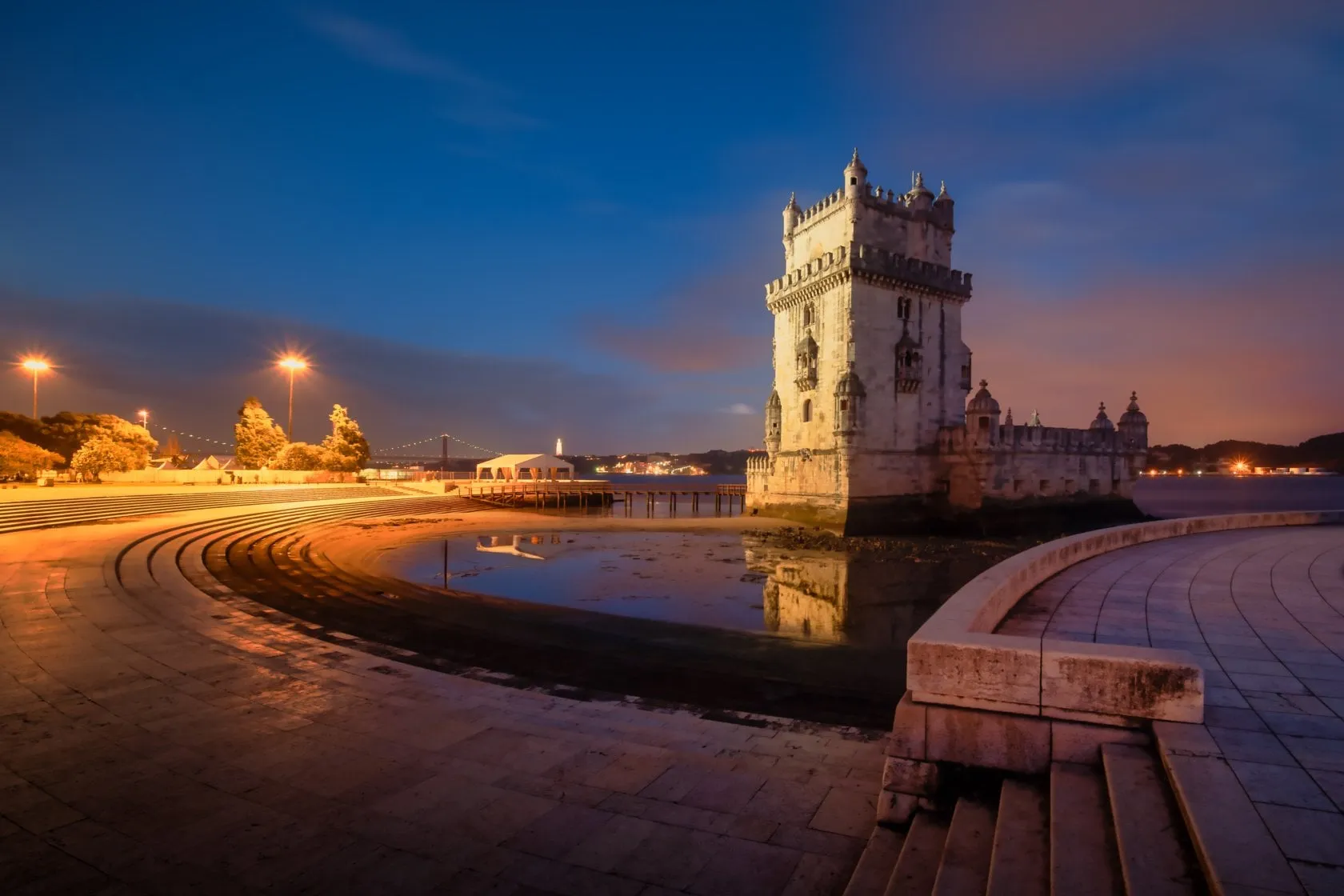 Belém Tower stands beside the Tagus and forms part of Lisbon’s UNESCO-listed complex together with Jerónimos Monastery. Its pale stonework, maritime details, turrets, and waterfront setting make it one of the most recognizable places to visit in Lisbon.
Photograph the tower from the promenade for a clean architectural view, or move farther along the water to include reflections, shoreline textures, and passing boats. Sunrise usually brings softer light and fewer people; blue hour can balance the illuminated monument against the sky.
Interior access may be affected by restoration work, capacity limits, or seasonal schedules. Even when entry is unavailable, the exterior and surrounding waterfront remain worthwhile. Check the monument’s official status before your trip.
If you stay until after sunset, these blue hour photography tips can help you balance the sky and artificial lighting.
Your AI-Powered Photo Editor for MacOS and Windows
2. Jerónimos Monastery (Mosteiro dos Jerónimos)

Jerónimos Monastery is an essential addition to any first Lisbon itinerary and one of the strongest examples of Portuguese Manueline architecture. The elaborate south portal, long stone façade, church interior, and two-level cloister offer very different compositions within the same site.
Arrive early if you want cleaner exterior frames and more time to study repeating arches and carved details. A wider lens is useful in the cloister, while a standard or short telephoto lens can isolate ornamentation without exaggerating perspective.
Belém Tower and the monastery are close enough to visit on the same half-day route. Allow extra time for security checks and queues, and confirm which areas are open before visiting.
3. Praça do Comércio and Arco da Rua Augusta
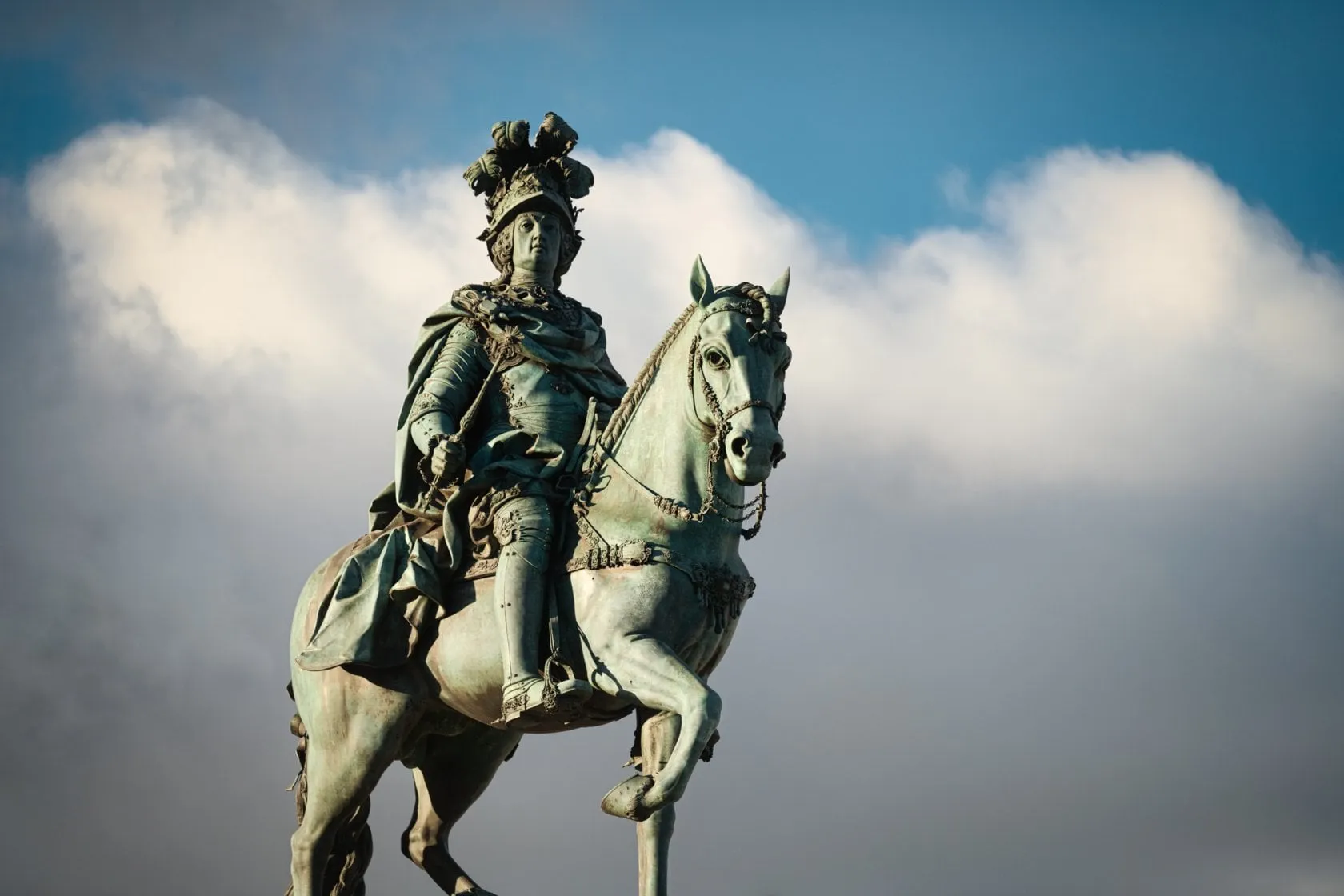 Praça do Comércio is Lisbon’s grand riverfront square, framed by yellow arcades and centered on the equestrian statue of King José I. The open space makes it useful for architectural symmetry, environmental portraits, and street photography.
Use the arch as a frame, photograph beneath the arcades for repetition, or walk toward the Cais das Colunas steps to include the Tagus. Early morning offers the cleanest geometry, while late afternoon brings warmer light and more street activity.
From the square, continue beneath Arco da Rua Augusta into the Baixa district. The elevated viewpoint at the arch can be an alternative to busier city panoramas, but verify access and hours on the day of your visit.
4. Alfama and Miradouro das Portas do Sol

Alfama is one of the best areas to explore on foot, with tiled buildings, narrow lanes, stairways, laundry lines, small squares, and glimpses of the Tagus between rooftops. The neighborhood rewards slow observation more than a fixed checklist.
Miradouro das Portas do Sol provides a broad view across Alfama toward the river. Sunrise is particularly useful for quieter streets and softer light. Later in the day, the viewpoint becomes busier but gains street performers, cafés, and opportunities for candid photography.
Respect residents when photographing close to homes. Avoid blocking doorways, keep voices low in residential lanes, and ask before making identifiable close-up portraits.
For planning warm backlit scenes, see this golden hour photography guide.
5. São Jorge Castle (Castelo de São Jorge)

São Jorge Castle overlooks central Lisbon from one of the city’s highest historic points. Its battlements, courtyards, stone textures, and views over Baixa and the Tagus make it more relevant to a “what to see in Lisbon” guide than the military memorial included in the original article.
Use the walls and arches to frame the skyline, and carry a short telephoto lens if you want to compress layers of rooftops. Bright midday light can produce harsh contrast on the pale stone, so morning or late afternoon is usually easier to work with.
The climb is steep. You can approach by public transport and walk the final section, but routes and stopping points can change. Reserve enough time for both the castle and the streets around it.
6. Tram 28
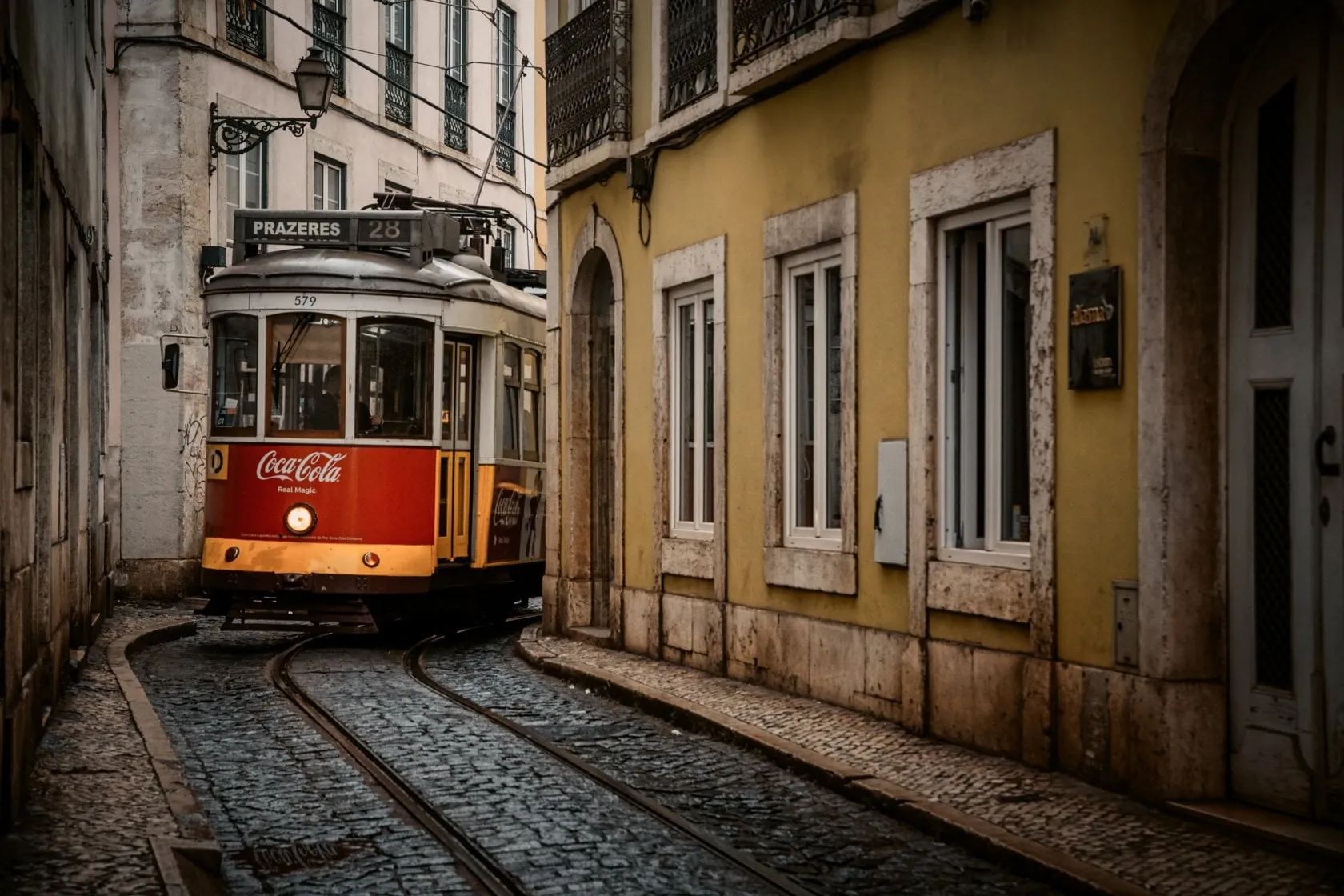
Tram 28E travels through several historic districts and remains one of Lisbon’s best-known experiences. Its yellow cars, narrow streets, overhead wires, and close relationship with everyday city life make it a strong subject for travel and street photography.
For the ride itself, avoid treating the tram as a private sightseeing vehicle: it is part of the public transport network and is used by residents. Travel early, keep bags secure in crowded areas, and do not lean into the roadway for a photograph.
For exterior shots, use a longer focal length from a safe position to layer the tram against buildings and hills. Check the current CARRIS route before setting out, as roadworks can produce temporary replacements or shortened service.
7. Elevador da Bica and Rua da Bica de Duarte Belo
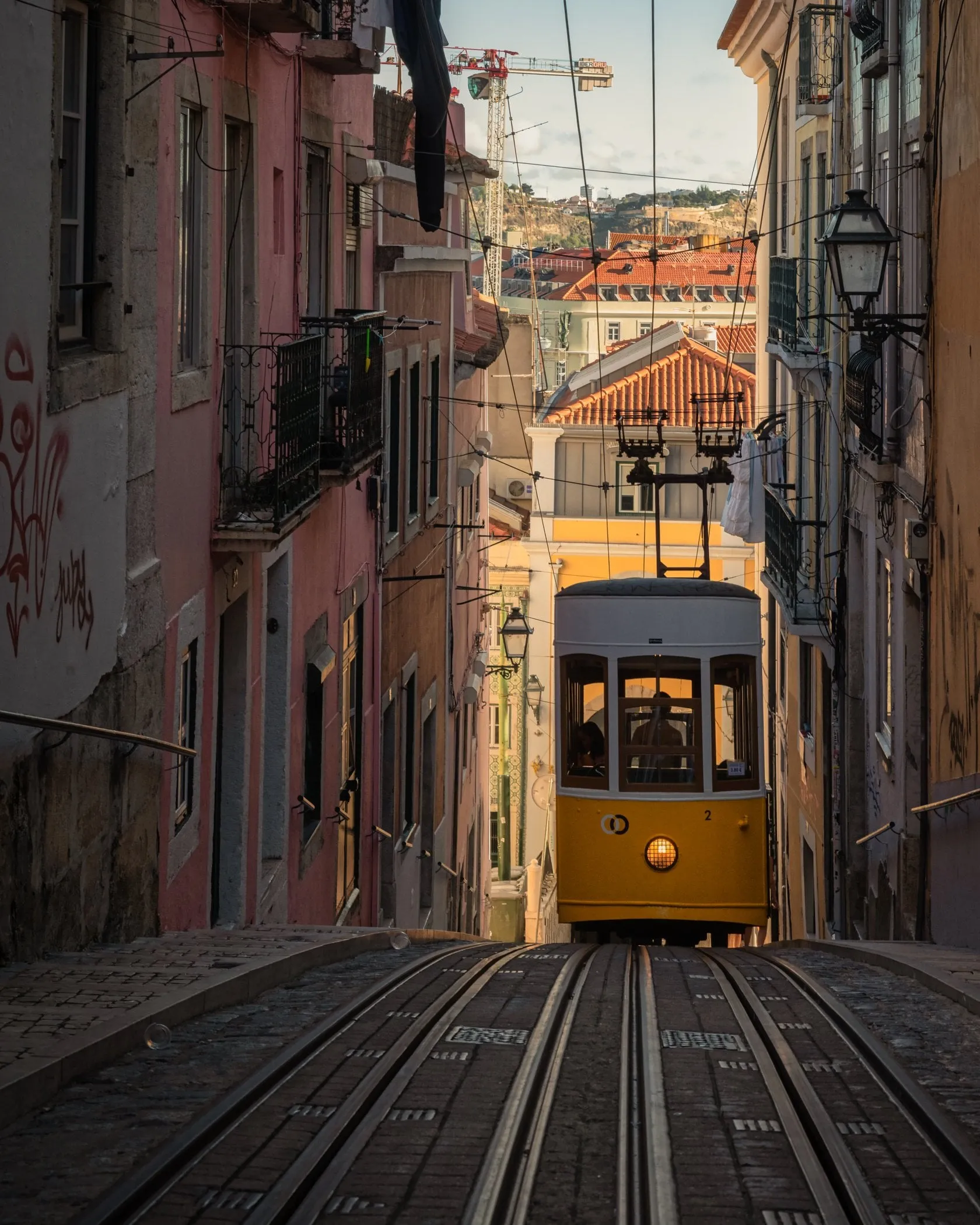
Elevador da Bica is one of Lisbon’s most photographed funiculars, connecting Rua de São Paulo with Largo do Calhariz along a steep street that opens toward the Tagus. The rails, overhead cables, tiled buildings, and descending perspective create a naturally layered composition.
Important 2026 update: the Bica funicular is currently out of service. Do not promise readers a ride or publish operating hours until CARRIS confirms that service has resumed. The street itself can still be photographed, but visitors should respect barriers, maintenance activity, residents, and changing access conditions.
Try a vertical frame from higher on the street to emphasize the slope and river beyond. A longer lens can compress the façades, although you should remain on the pavement and avoid active traffic lanes.
Elevate Your Photography with Our Advanced Software
8. Santa Justa Lift, Rua Augusta, and Carmo Convent
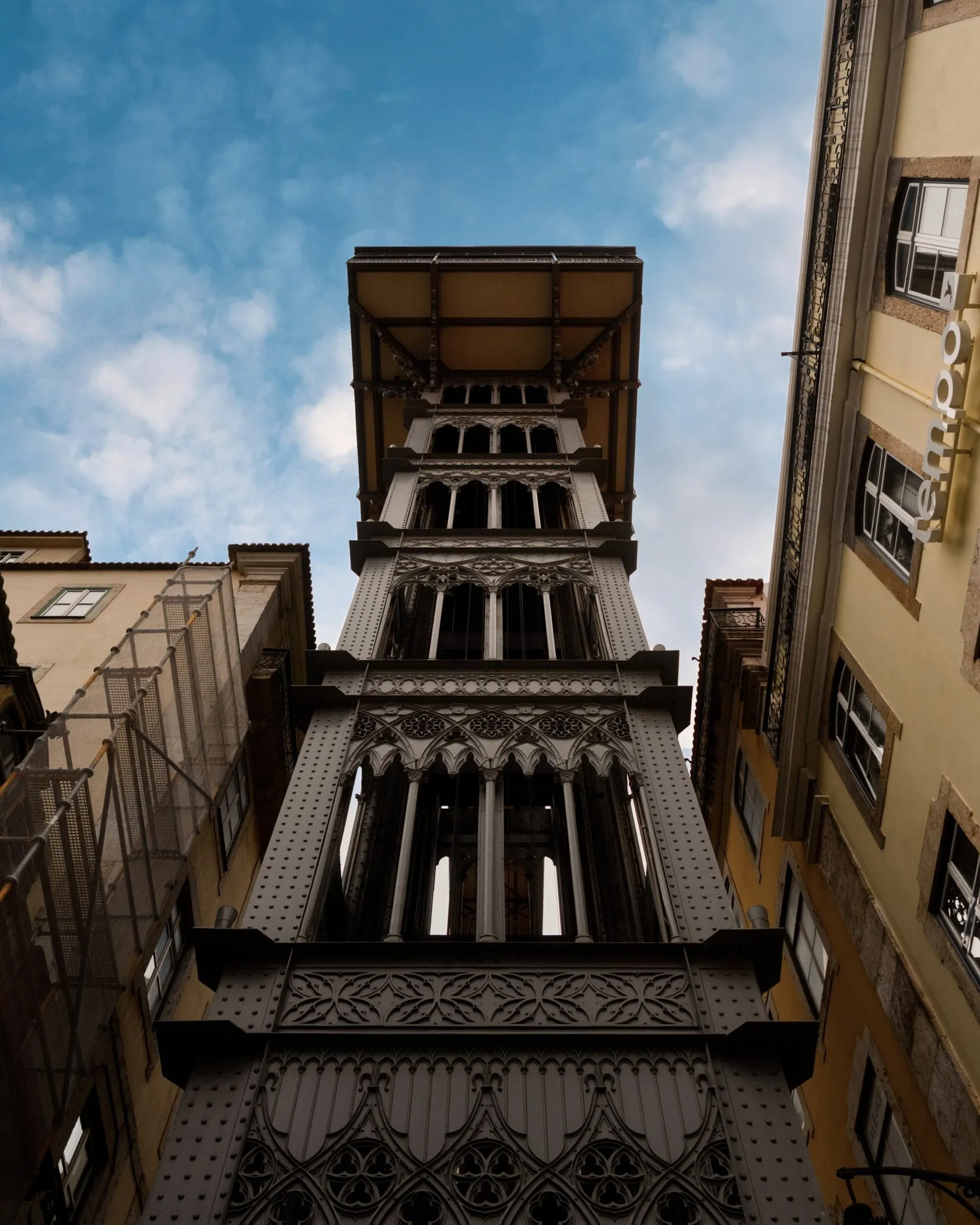
The neo-Gothic Santa Justa Lift links the lower Baixa streets with the higher Carmo area. Its iron structure creates strong patterns and details, while the surrounding streets offer leading lines toward the lift.
Queues can be long, so decide whether riding is essential to your itinerary. You can also explore the surrounding Baixa streets and continue toward Carmo Square and the roofless ruins of Carmo Convent for a different architectural experience.
Photograph Rua Augusta early for cleaner symmetry. Near the lift, watch vertical lines and perspective distortion; stepping back and keeping the camera level can reduce the amount of correction needed later.
9. 25 de Abril Bridge and the Belém Waterfront
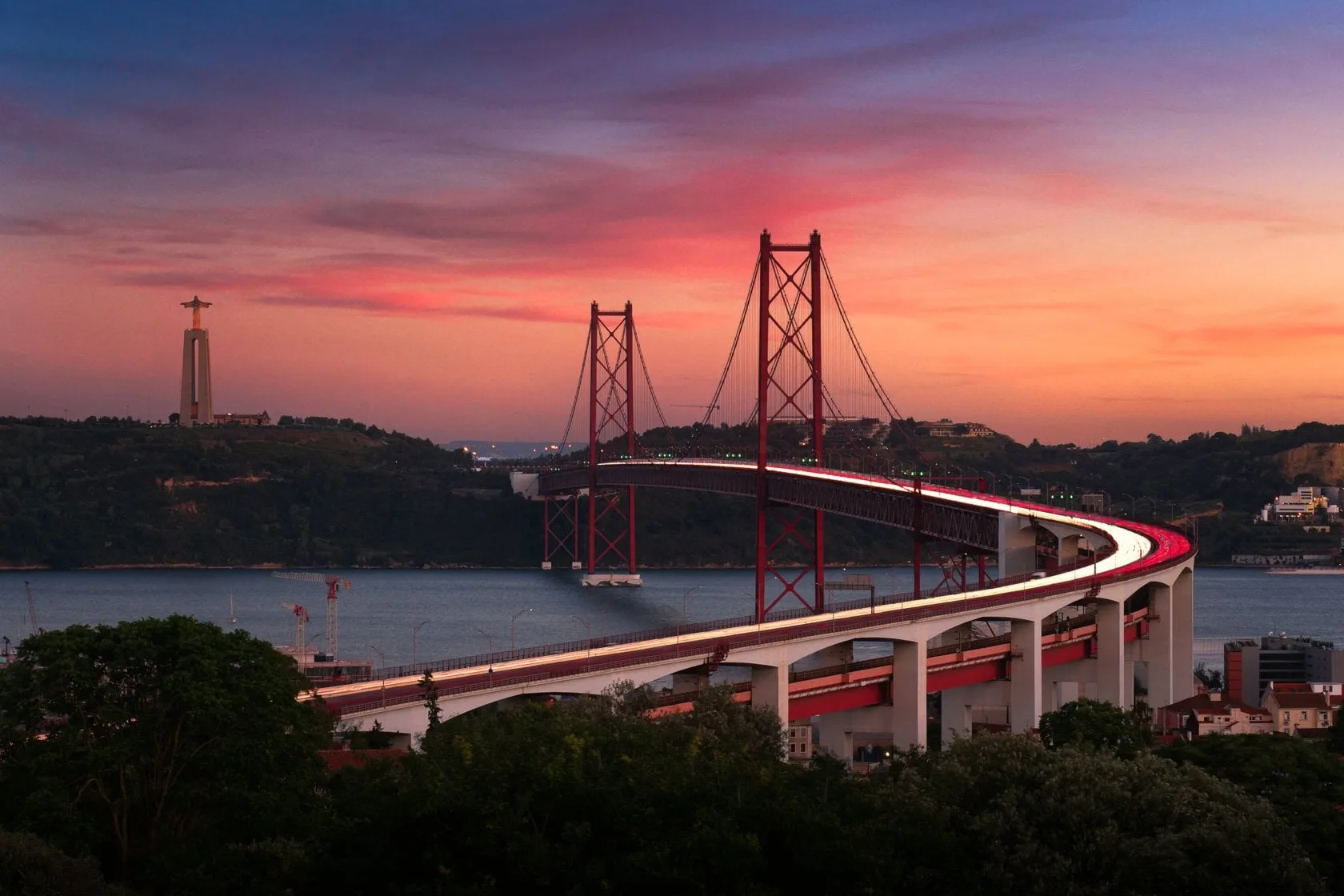
The red 25 de Abril Bridge stretches across the Tagus between Lisbon and Almada. Its color and suspension design make it a distinctive cityscape subject, especially when photographed from the Alcântara or Belém side of the river.
Look for compositions from the waterfront that combine the bridge with boats, railings, industrial details, or the Cristo Rei monument across the river. Sunset and blue hour work well when the sky retains color and the city lights begin to appear.
For long exposures, use a stable tripod where permitted, image stabilization settings appropriate to your equipment, and a remote release or timer. Avoid placing equipment where it blocks busy paths.
Use this city long-exposure photography guide to plan traffic trails and smoother water.
10. Oceanário de Lisboa and Parque das Nações
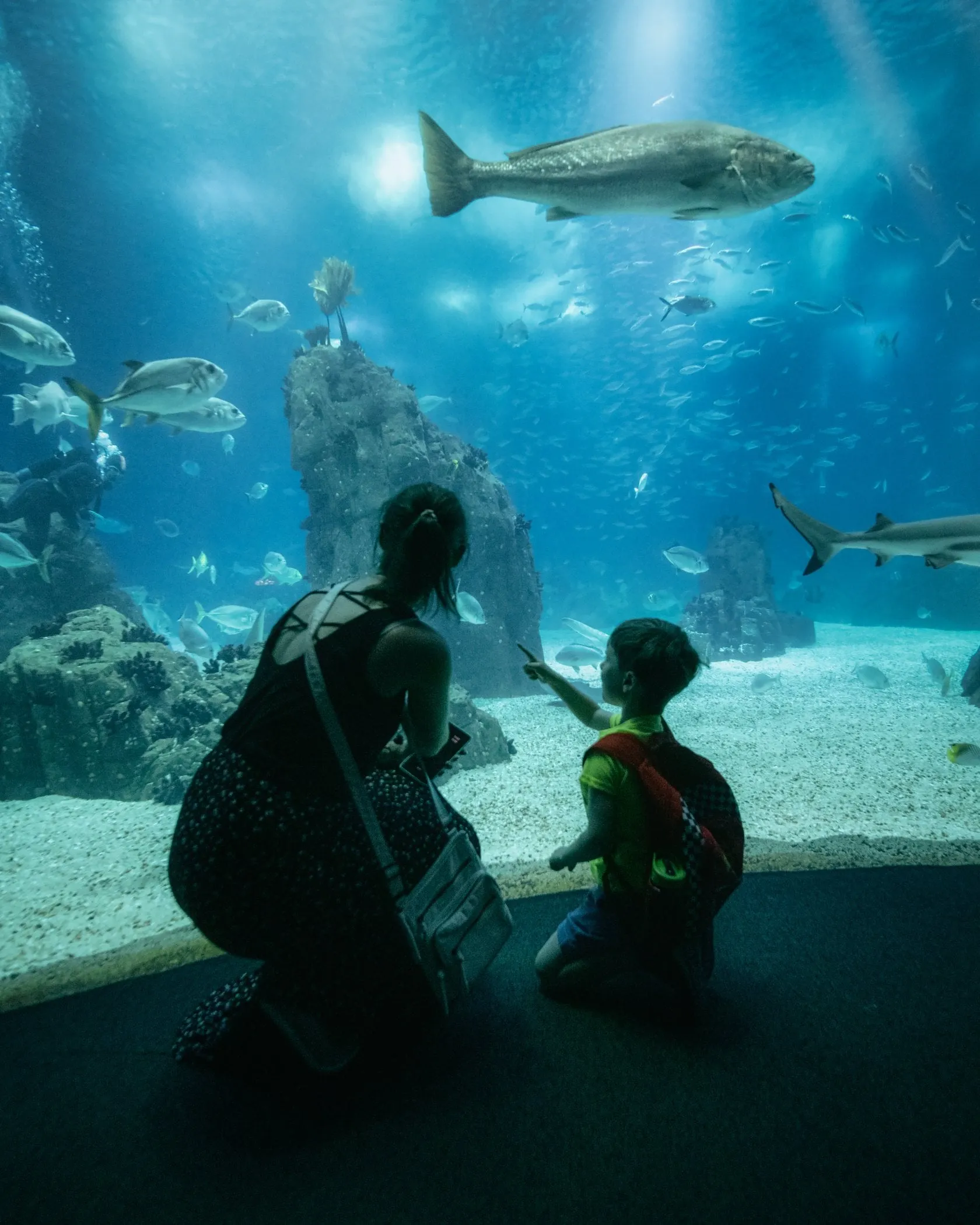
Oceanário de Lisboa is a strong choice for families and rainy days, while the surrounding Parque das Nações district adds contemporary architecture, open waterfront space, public art, and views toward the Vasco da Gama Bridge.
Aquarium photography is technically challenging. Avoid flash, follow all venue rules, stabilize the camera against your body, and shoot perpendicular to the glass when possible to reduce reflections. A rubber lens hood can help block stray light without touching restricted surfaces.
Outside, use the cable-stayed Vasco da Gama Bridge as a distant graphic element rather than treating it as a separate must-see stop. A telephoto lens works well for isolating its repeated lines and pylons.
11. Parque Eduardo VII
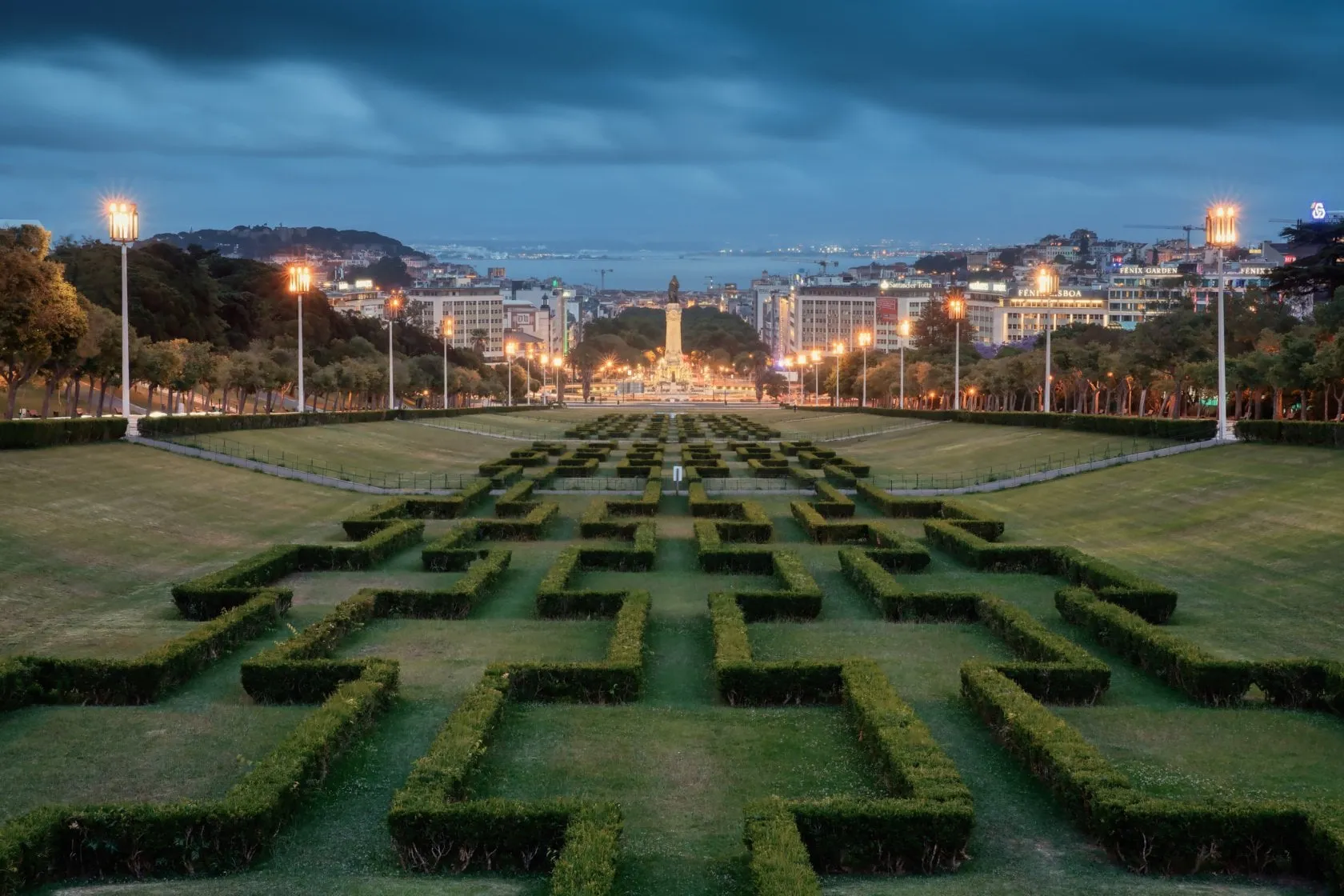
Parque Eduardo VII rises north of Marquês de Pombal and offers a broad view down toward central Lisbon and the Tagus. Its geometric hedges, long central axis, lawns, and skyline create clear symmetrical compositions.
Stand near the upper end of the park to emphasize the descending lines. A standard lens captures the overall layout, while a telephoto lens can compress the hedges, monument, buildings, and river into tighter layers.
The park works well at sunrise or near sunset, but temporary events can change access and sightlines. Check the area before planning a highly specific composition.
12. LX Factory

LX Factory occupies a former industrial complex in Alcântara and now contains shops, restaurants, creative spaces, murals, and event venues. It adds a contemporary counterpoint to Lisbon’s historic center and works particularly well for detail, street, architecture, and lifestyle photography.
Look for layered signage, metal structures, typography, murals, and the contrast between industrial materials and newer creative businesses. Late morning or afternoon provides more activity, although event schedules can make the space significantly busier.
The site is close to viewpoints of the 25 de Abril Bridge, so the two stops can be combined. Because individual businesses and events change, verify anything you specifically want to visit.
How to Plan a Lisbon Sightseeing Route
Lisbon is easier to explore when you group attractions geographically:
- Belém half day: Jerónimos Monastery, Belém Tower, and the riverfront.
- Baixa and Chiado: Praça do Comércio, Rua Augusta, Santa Justa Lift, and Carmo.
- Alfama morning: Portas do Sol, surrounding lanes, São Jorge Castle, and Tram 28 photography.
- Alcântara afternoon: LX Factory and views of the 25 de Abril Bridge.
- Parque das Nações: Oceanário, modern architecture, waterfront, and Vasco da Gama Bridge views.
Wear shoes with reliable grip because cobbles and steep pavements can become slippery. Public transport reduces some climbs, but walking is still a major part of most Lisbon itineraries. Leave extra time between locations rather than planning only from map distances.
Editing Lisbon Travel Photos in Luminar
Lisbon scenes often combine bright façades, shaded streets, reflective water, and vivid skies. In Luminar, begin by correcting exposure and white balance, then use masking to adjust the sky, buildings, or foreground separately.
Keep the city’s colors believable: protect detail in pale stone and yellow façades, avoid oversaturating blue tiles, and check vertical lines before exporting architecture photographs. For mobile edits during the trip, Luminar for Mobile provides quick access to Develop, Curves, masking, RAW support, and other essential adjustments.
Final Thoughts
If you are deciding what to see in Lisbon for the first time, build your itinerary around Belém, Alfama, Baixa, one major viewpoint, and the river. Then add places such as Parque das Nações or LX Factory according to your interests.
The city is visually rewarding in almost any weather, but timing matters. Visit popular architecture early, save riverfront locations for sunset or blue hour, and leave room to explore streets that were not on the original plan. Before departure, confirm current transport and monument status—especially for Lisbon’s historic funiculars.
Frequently Asked Questions
Prioritize Belém Tower and Jerónimos Monastery, Praça do Comércio, Alfama, a viewpoint such as Portas do Sol, and São Jorge Castle. Tram 28 can connect parts of the historic city, but it is often crowded.
Three days cover the main Lisbon attractions at a reasonable pace. Four or five days allow more time for photography, museums, neighborhoods outside the historic center, or a day trip.
Many central areas are walkable, but steep hills and cobbled surfaces make routes more demanding than their map distance suggests. Combine walking with trams, metro, buses, or funiculars that are confirmed to be operating.
Sunrise is useful for quiet viewpoints and streets. Late afternoon, sunset, and blue hour work well around the river, bridges, and illuminated monuments. Midday can suit tiled details and narrow lanes but often creates stronger contrast.
As of September 2026, CARRIS lists the Bica funicular as out of service. The street remains a recognizable photo location, but visitors should check the official transport status before planning a ride.