
Make your couples photoshoot feel comfortable and personal with simple poses, movement prompts, and practical tips for lighting, focus, and editing.
The most useful couple poses give two people something comfortable to do together: walk, sit close, talk, or share an activity. A clear starting position helps, but the expressions and small movements between poses often make the photograph memorable.
This guide covers couples photoshoot ideas for everyday portraits, engagements, and weddings. Use the prompts as starting points, then adapt them to the couple’s personalities, mobility, and preferred level of affection.
Don’t feel like reading the whole breakdown? We’ve pulled together a quick summary below.
Key Takeaways
- Start with easy couple poses, such as standing side by side or walking together, before suggesting closer contact.
- Give one short instruction at a time. “Walk toward me and talk to each other” is easier to follow than several simultaneous directions.
- Combine wide environmental portraits, medium shots, close-ups, and details to create a varied gallery.
- Keep both faces at similar distances from the camera when possible, and check that both are sharp.
- Use a faster shutter speed for walking or dancing than for stationary portraits.
- Window light, open shade, and suitable late-day light can work without flash; add lighting when the scene needs it.
- Coordinate clothing around the location, but avoid requiring identical outfits or props that feel unfamiliar.
- Edit exposure and color consistently while preserving recognizable features and natural skin texture.
How Do You Pose Naturally for a Couples Photoshoot?
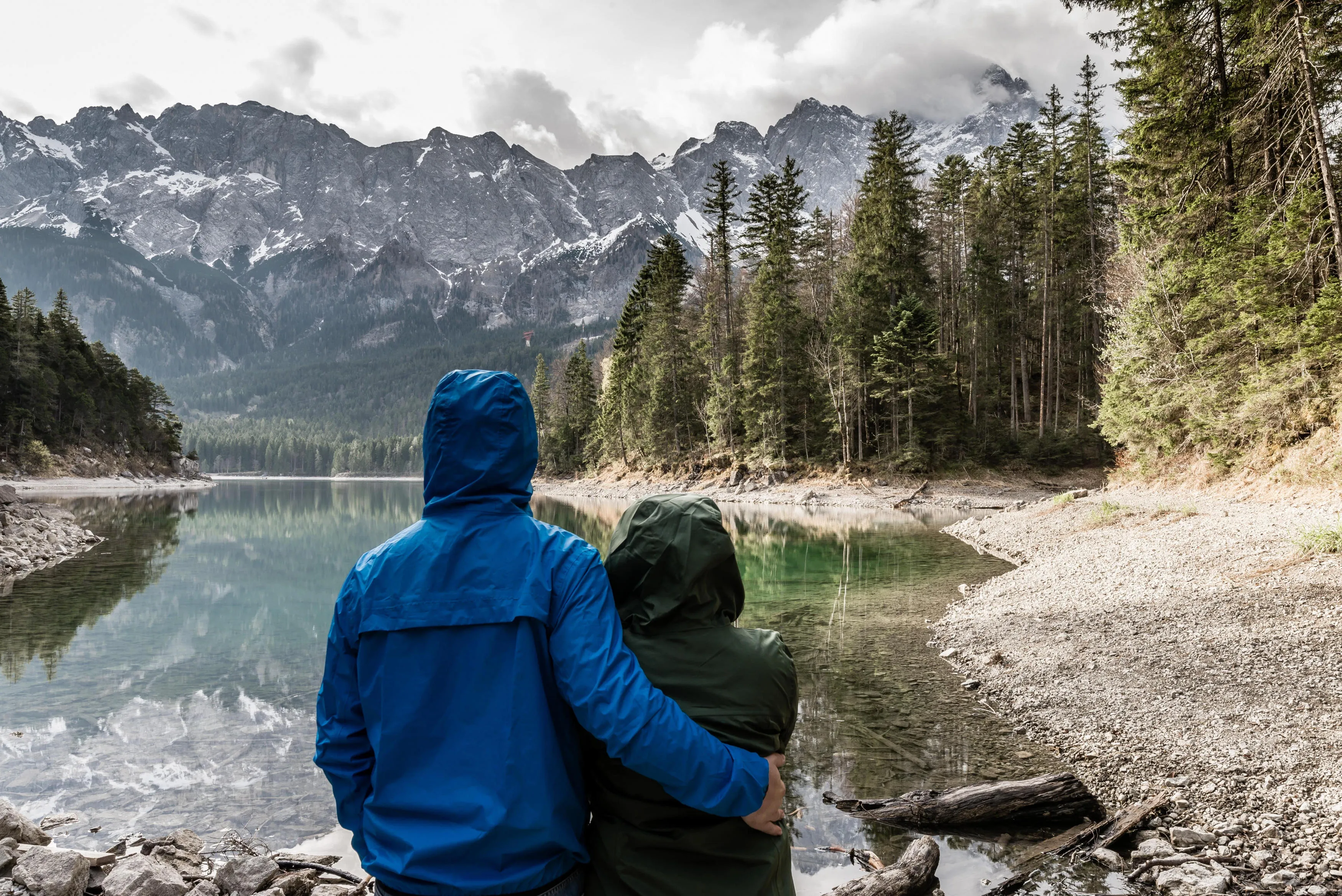
Natural couple posing starts with a comfortable position and a small, believable action. Instead of asking the couple to “look romantic,” tell them where to stand, what to do with their hands, and what to look at.
A pose describes the arrangement of bodies in the frame. A prompt gives the couple an action or topic that can produce expressions and movement.
Use this simple sequence:
- Set the position. Ask the couple to stand beside each other or sit comfortably.
- Give their hands a purpose. They can hold hands, rest an arm on a shoulder, or hold a familiar object.
- Add one action. Suggest a short walk, a quiet conversation, or a gentle turn toward each other.
- Photograph the transition. Keep watching as they settle into the position or react.
- Make a small variation. Change the framing or ask them to look toward the camera.
Ask which kinds of contact feel comfortable. Kissing and embracing are options, and a shared look or side-by-side portrait can communicate connection just as effectively.
12 Couple Poses to Try
Choose a few poses that suit the session rather than trying to complete every idea. This quick reference helps you match the pose to the setting.
| Couple pose | Best use | Simple prompt |
| Standing side by side | Warm-up and classic portraits | “Stand close and let your shoulders relax.” |
| Walking together | Outdoor sessions and candid expressions | “Walk slowly and talk about your day.” |
| Facing each other | Quiet, close portraits | “Turn toward each other and hold hands.” |
| Hugging from behind | Comfortable, affectionate portraits | “Rest your arms gently around your partner.” |
| Foreheads together | Close-ups | “Lean in lightly and pause.” |
| A kiss or almost-kiss | Romantic portraits | “Move closer slowly, if that feels comfortable.” |
| Whispering | Expressions and reactions | “Share a small memory or an inside joke.” |
| Sitting close | At-home and relaxed sessions | “Sit together and turn slightly inward.” |
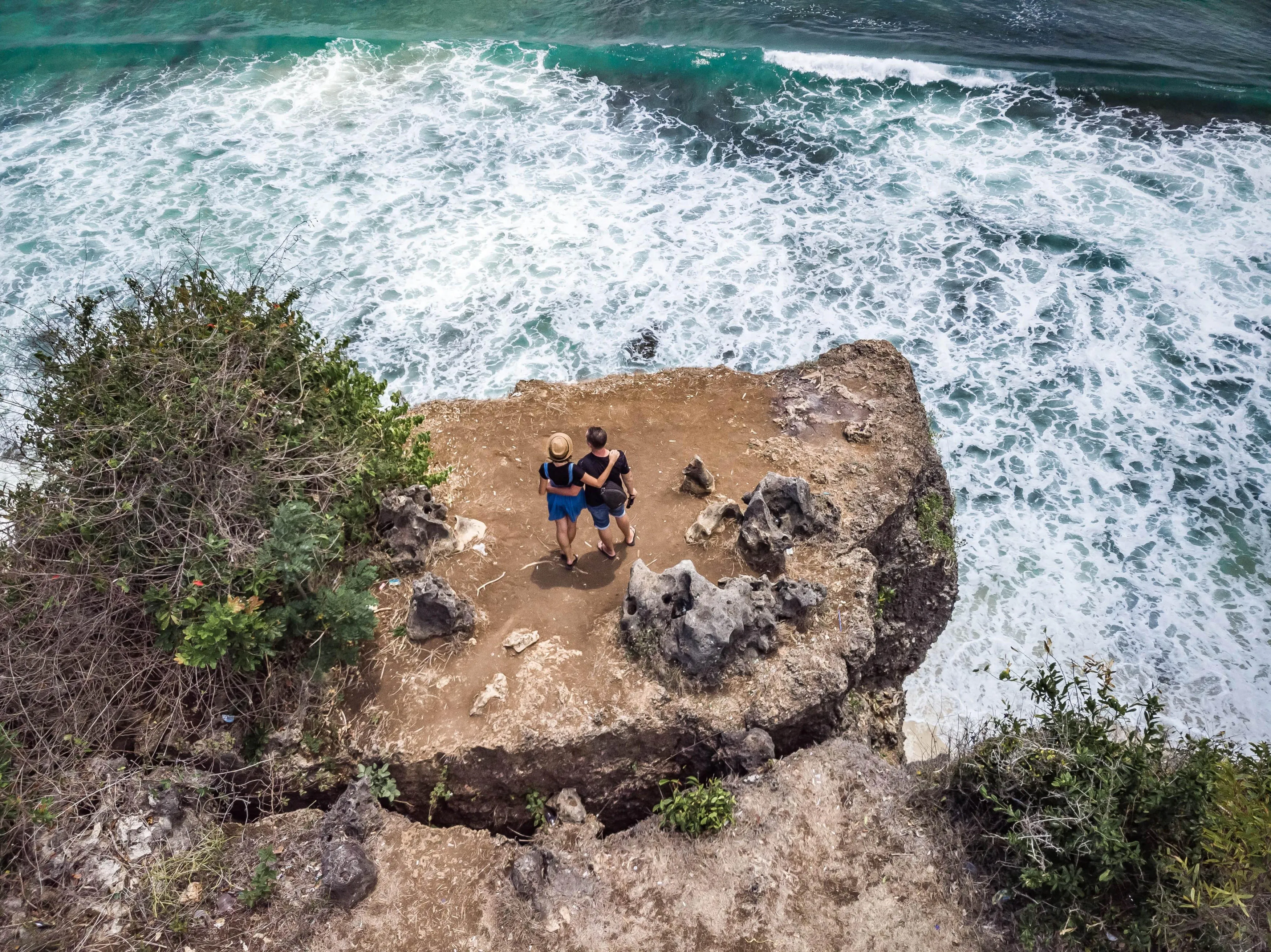
| Looking at the view | Environmental portraits | “Enjoy the view together.” |
| Dancing or swaying | Movement and playful sessions | “Sway together at your own pace.” |
| Sharing a hobby | Personal storytelling | “Do something you genuinely enjoy together.” |
| Hands and meaningful details | Engagement photos and gallery variety | “Hold hands naturally and relax your fingers.” |
1. Stand Side by Side

Standing beside each other is an easy opening pose because it requires little performance. Ask the couple to leave a comfortable amount of space between their feet, relax their shoulders, and turn slightly toward one another.
Take one photograph with both looking at the camera, then ask them to look at each other. For couples who prefer minimal contact, this can remain the main portrait position.
2. Walk Together
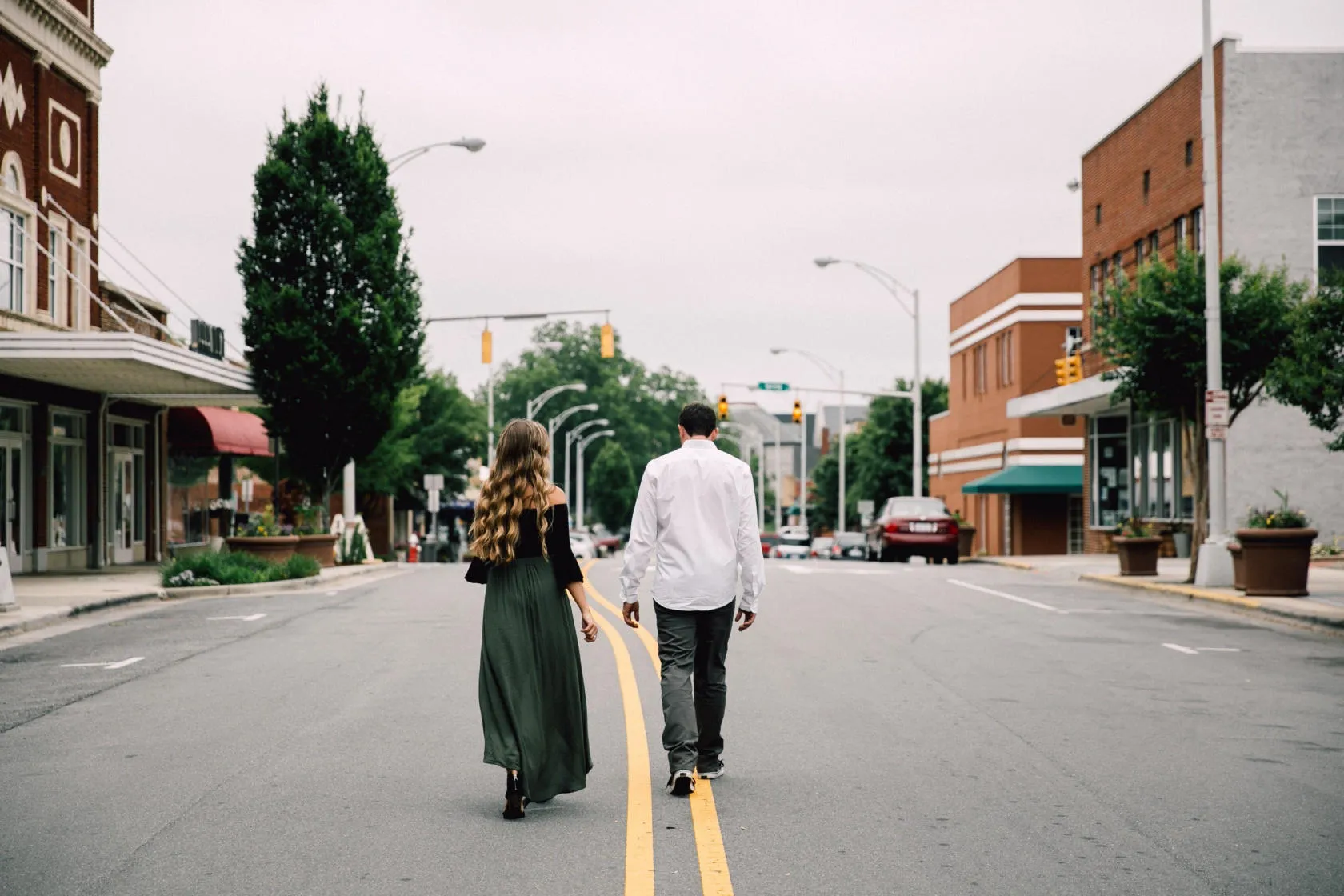
Walking gives hands and bodies something natural to do. Choose a clear, level path and ask the couple to walk slowly toward you, away from you, or across the frame.
They can hold hands, link arms, or walk without touching. Ask them to continue a conversation rather than keep their eyes fixed on the camera.
3. Face Each Other and Hold Hands

Facing each other creates a simple connection without requiring an elaborate embrace. Ask the couple to stand comfortably, hold hands loosely, and turn their faces enough for the camera to see their expressions.
Avoid forcing their bodies into matching angles. A slight difference in stance can make the arrangement feel more relaxed.
Exclusive Tools of Endless Possibilities in One Editor
4. Hug from Behind
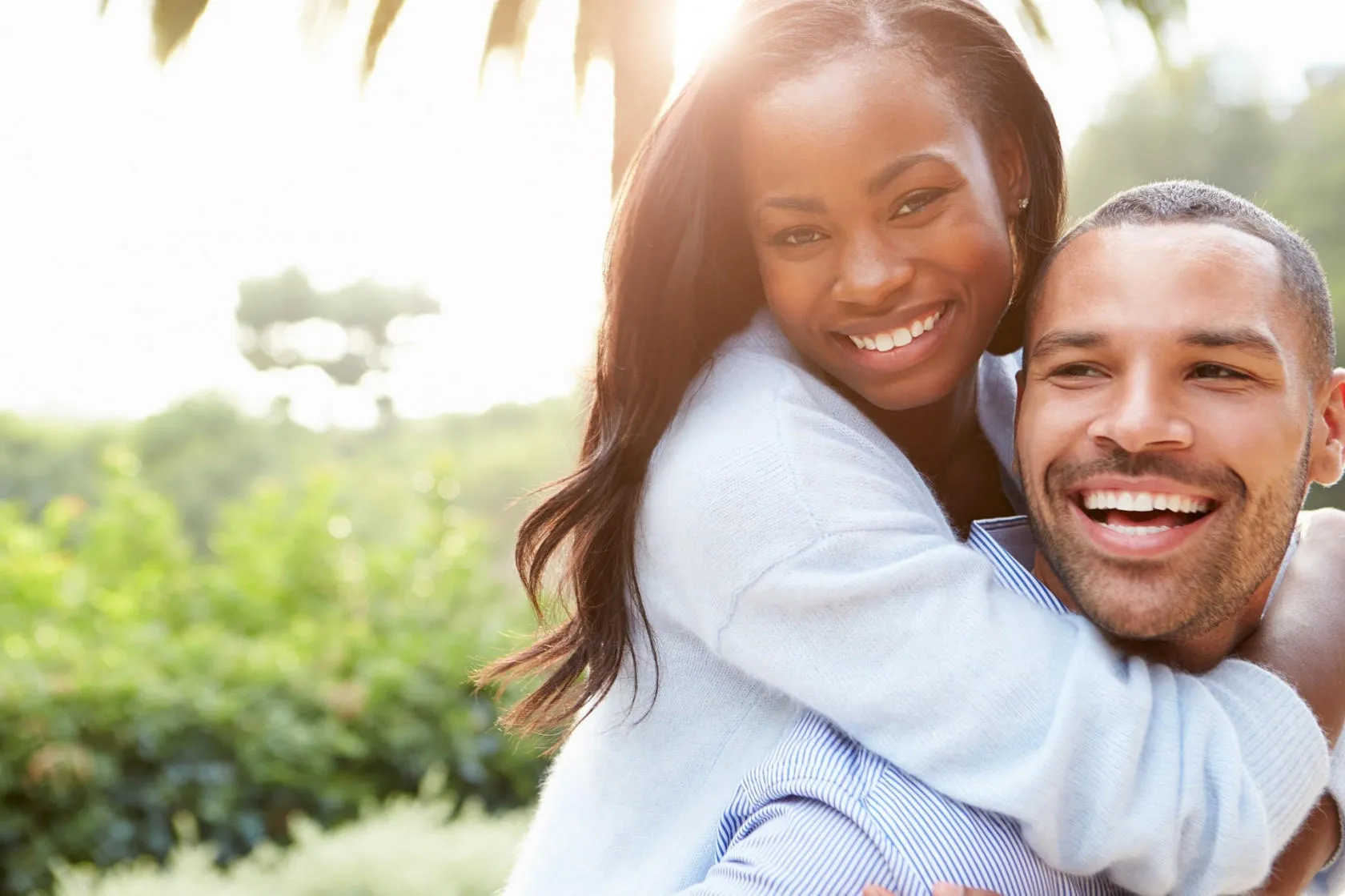
A hug from behind works when both partners find the position comfortable. Ask the person behind to rest their arms gently around their partner, leaving room for relaxed breathing and movement.
Check that hands do not obscure faces and that neither person is straining to reach. Photograph a version with both faces visible, then a closer detail of the embrace.
5. Bring Foreheads Together

Touching foreheads can create a quiet close-up. Ask the couple to lean in lightly rather than press their heads together.
Keep shoulders relaxed and give noses enough space. If the position feels awkward because of height differences, try it seated or replace it with a cheek-to-cheek pose.
6. Photograph a Kiss or Almost-Kiss
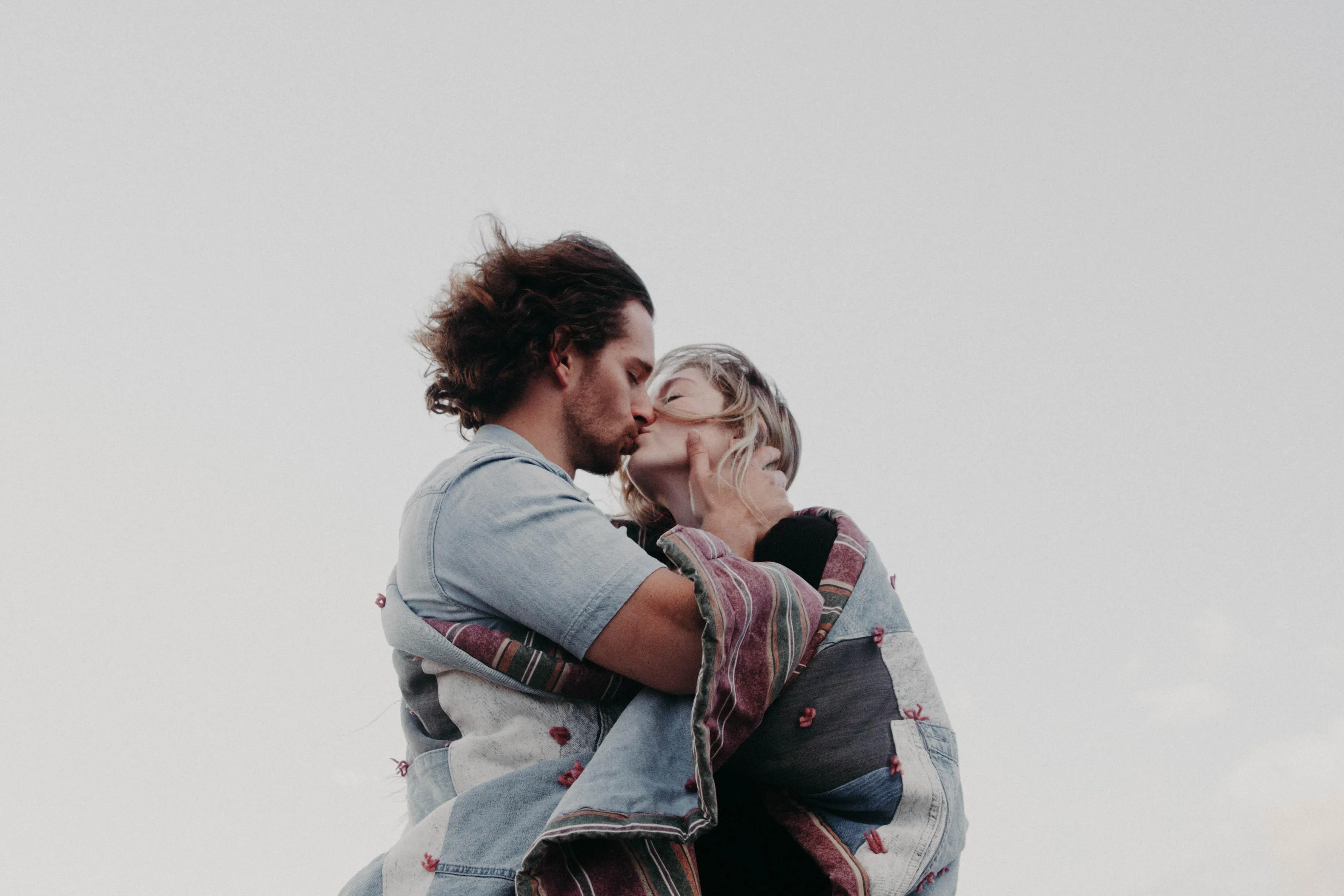
For couples who want kissing photos, capture the approach as well as the kiss itself. Ask them to move closer slowly and pause briefly before making contact.
A forehead or cheek kiss is another option. Let the couple choose the gesture; avoid assigning a particular meaning or level of intimacy to it.
7. Use a Whispering Prompt
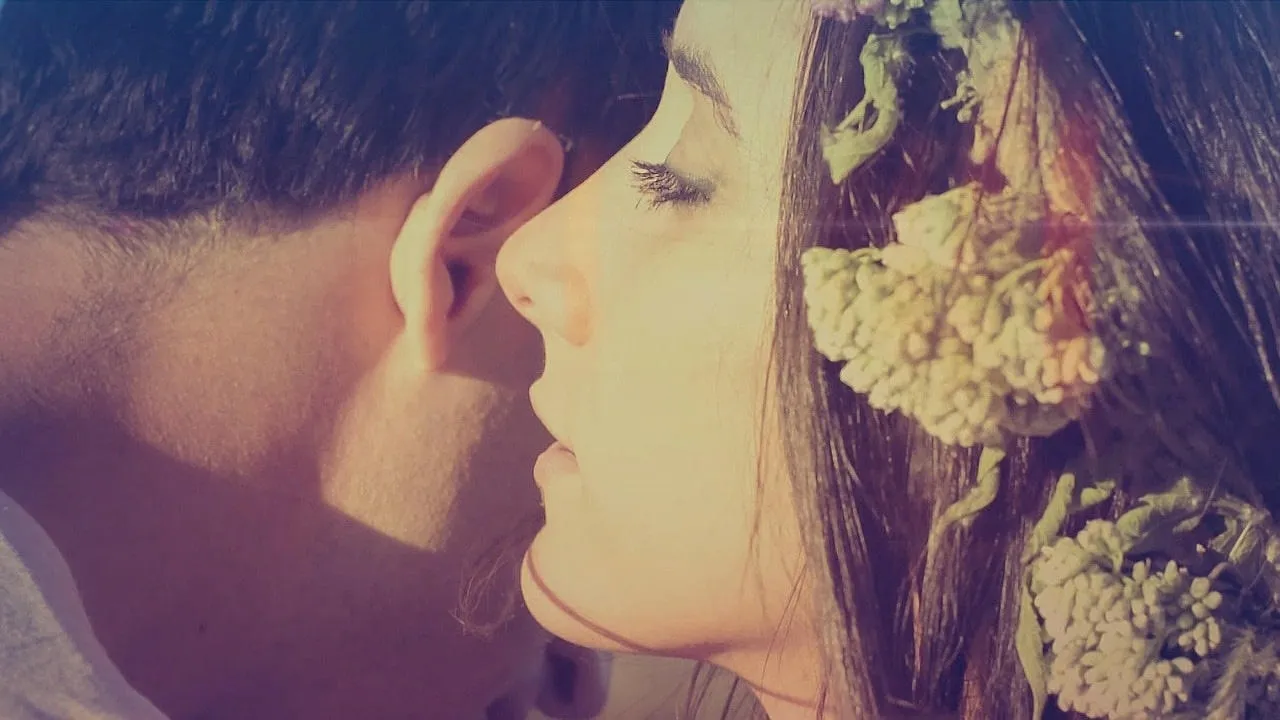
Whispering gives one partner a reason to lean closer and the other a reason to react. Suggest an inside joke, a favorite shared memory, or something they appreciate about each other.
The response may be a smile, laughter, or a thoughtful expression. Leave space for any of these instead of insisting on a particular reaction.
8. Sit Close Together
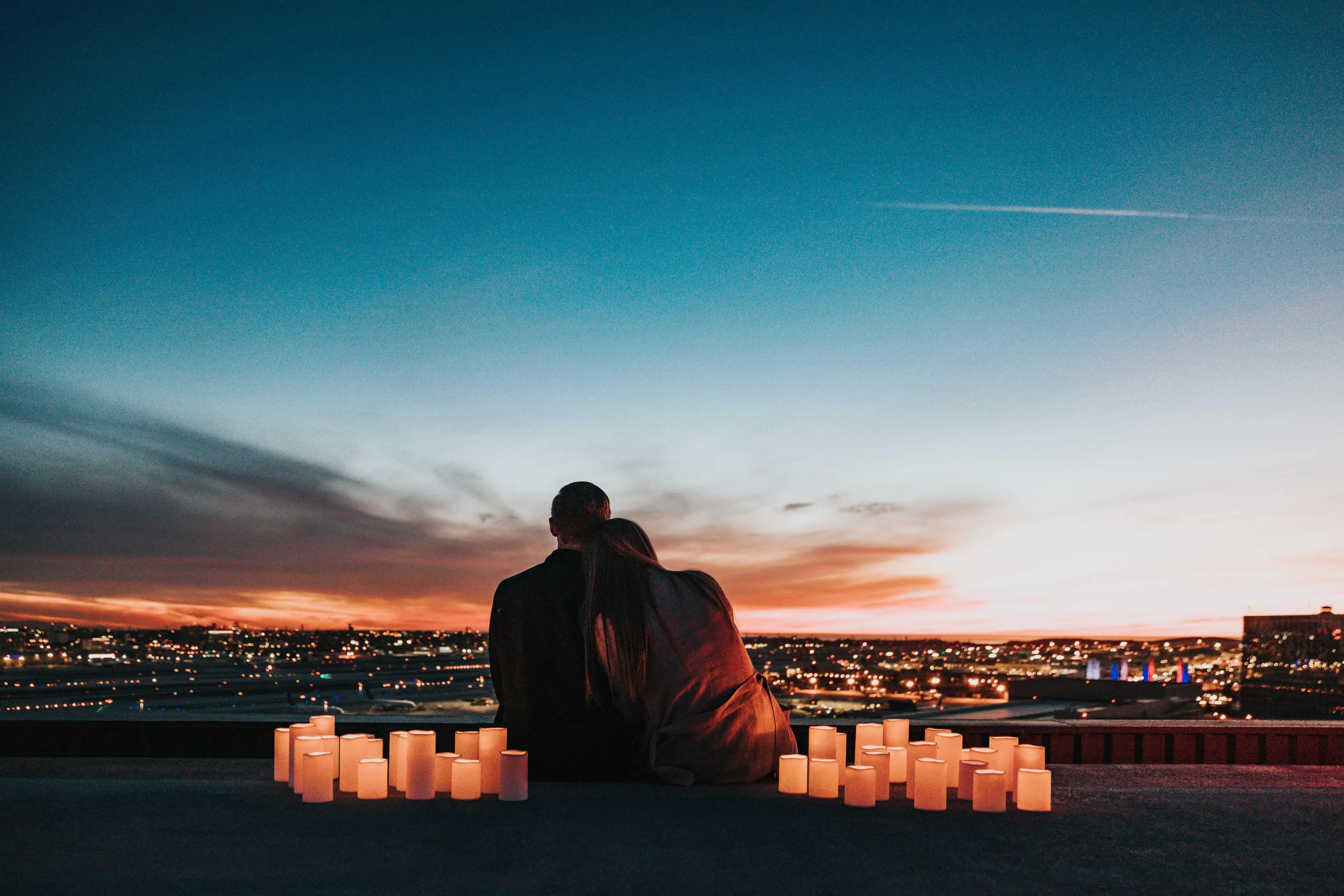
Seated couple poses work on a sofa, bench, picnic blanket, or suitable steps. Let both people settle comfortably before arranging the frame.
Ask them to turn slightly toward each other or rest a head on a shoulder if that feels natural. Watch for tense hands and awkwardly folded limbs, and adjust one detail at a time.
Elevate Your Photography with Our Advanced Software
9. Look at the View Together
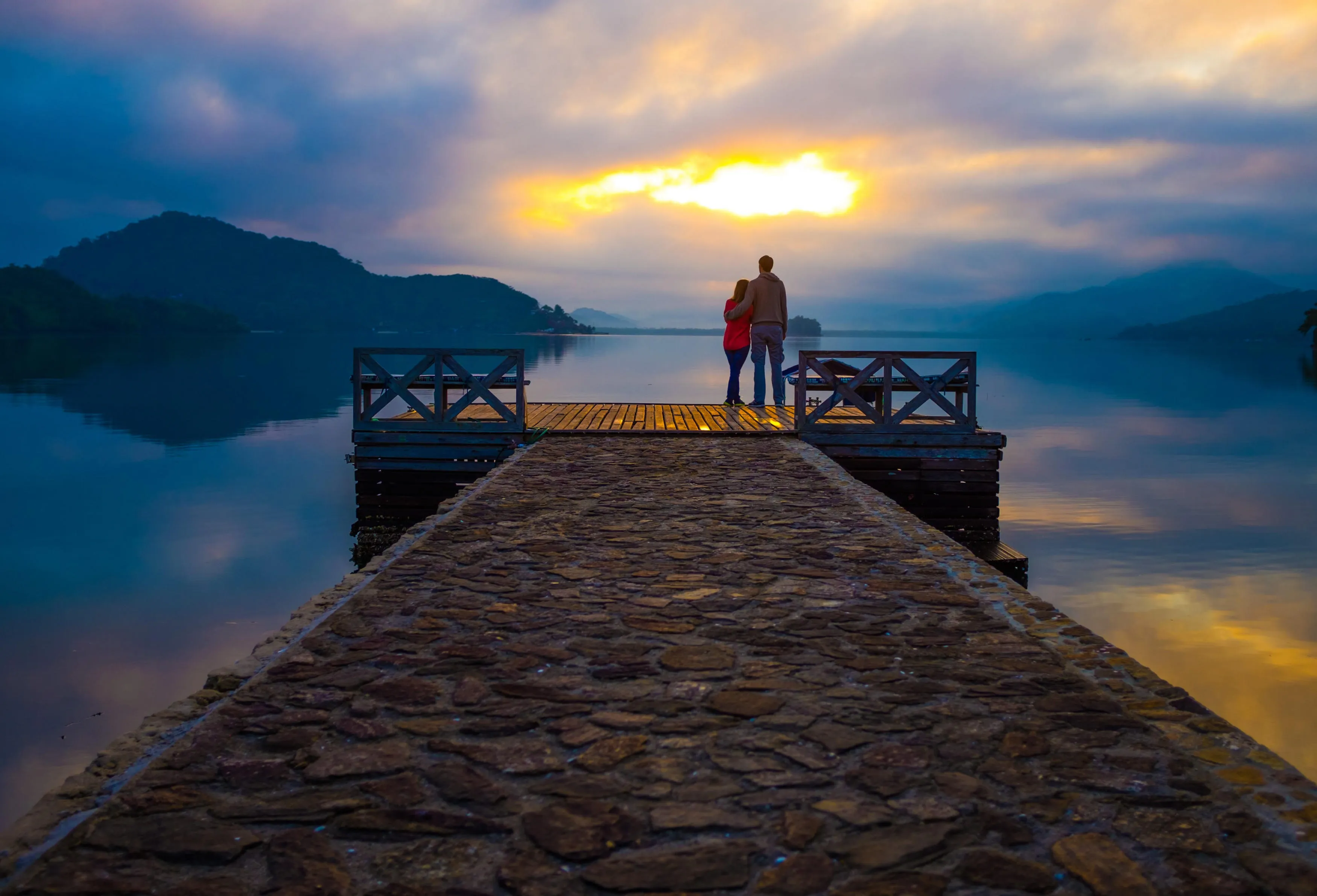
For outdoor couple photoshoot ideas, include a portrait that gives the surroundings room to breathe. Place the couple where their outlines remain visible against the landscape, then ask them to look toward the view.
Try both a wide photograph and a closer version. The wide frame establishes the setting; the closer image shows their interaction.
10. Dance or Sway
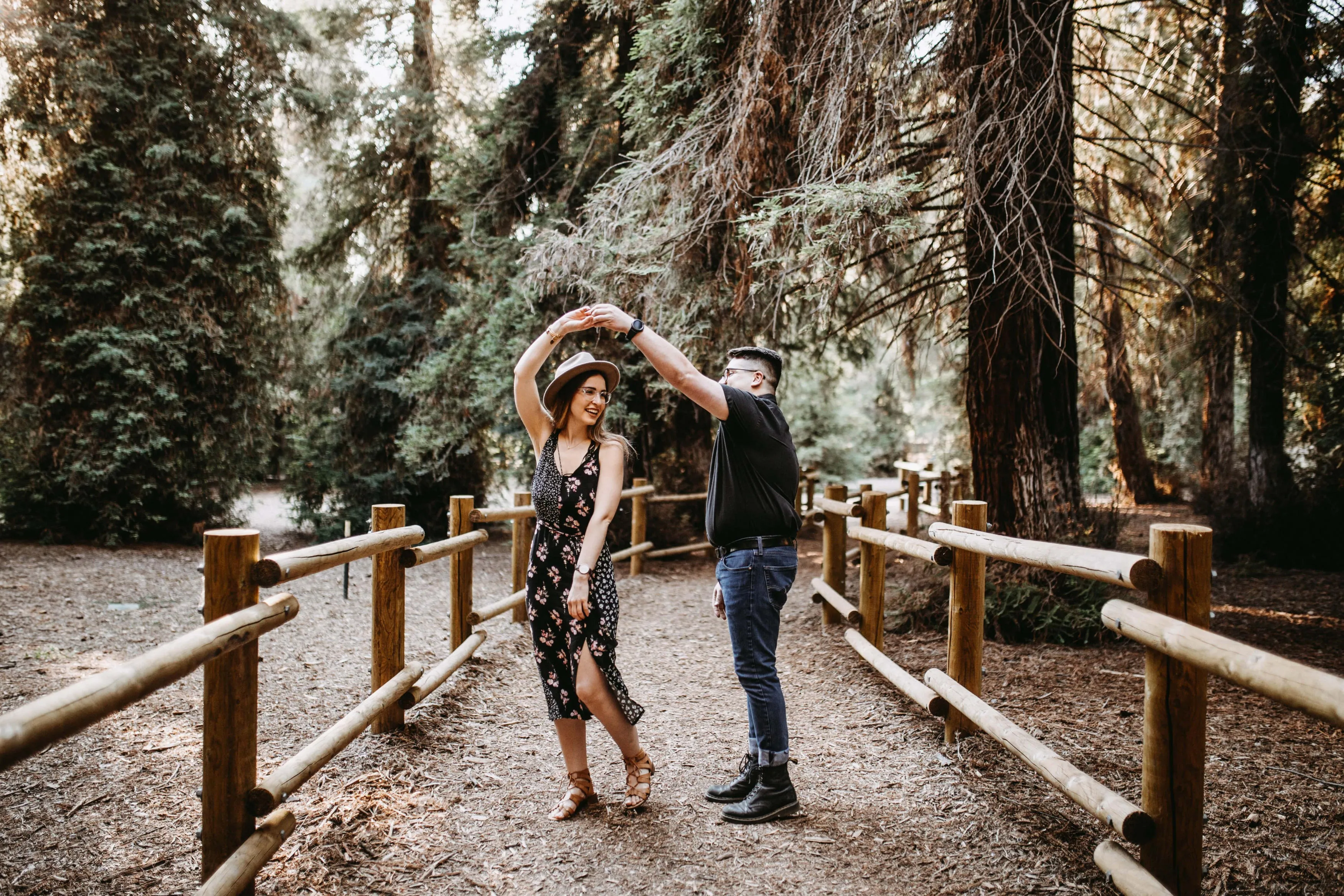
A gentle sway can add movement without complicated choreography. Ask the couple to move at a comfortable pace, and leave enough clear space around them.
Photograph their faces and hands as well as the full movement. Skip dips, lifts, or spins unless both people are comfortable and the location supports them.
11. Share a Hobby

Personal activities can make a session feel less like a posing exercise. Photograph the couple cooking, reading, playing music, gardening, or walking their dog if these activities belong to their everyday life.
Choose an activity that allows interaction and leaves faces visible. Use a few wide frames to establish the activity, then move closer for expressions and details.
12. Photograph Hands and Meaningful Details

Detail photographs add variety between portraits. Look for relaxed hands, a meaningful accessory, a shared object, or engagement rings when relevant.
For engagement photoshoot ideas, avoid making every detail about the ring. A handwritten note, favorite location, or familiar activity may tell more of the couple’s story. These save-the-date photo ideas offer additional ways to connect the images with an upcoming celebration.
Couples Photoshoot Ideas for Different Locations
Choose a setting that fits the couple’s interests and gives you usable light. A familiar place can also provide easy conversation topics and activities.
| Setting | Photoshoot idea | What to plan |
| At home | Sit by a window, cook together, or relax on the sofa | Clear distracting clutter and check the direction of window light |
| Park or garden | Walk, sit on a blanket, or share a quiet conversation | Find accessible paths and backgrounds that do not compete with faces |
| Beach or lakeside | Walk along the shore or look toward the water | Account for wind, changing light, and stable footing |
| City streets | Explore a favorite neighborhood or pause outside a café | Choose quieter times and avoid blocking pedestrians |
| Meaningful venue | Revisit where the couple met or spends time | Confirm access and photography permission where needed |
| Wedding venue | Use a garden, doorway, or covered walkway | Coordinate the portrait window with the wedding schedule |
For a Valentine’s Day photoshoot, a handwritten card or familiar tradition can be more personal than a large collection of themed props. Bring only items the couple wants in the photographs.
For intimate or boudoir sessions, discuss clothing, poses, privacy, and image use in advance. Keep the session within the boundaries both partners have agreed to.
How to Prepare for a Couples Photoshoot
Agree on the mood, location, and practical details before selecting poses. This makes the session easier to direct and helps the couple know what to expect.
Coordinate Clothing Without Requiring Matching Outfits
Choose clothing that feels comfortable and works with the location. Related colors can create cohesion, while contrasting outfits can help distinguish the two people.
Check large logos, busy patterns, and items that need frequent adjustment. Bring a layer for changing weather and suitable shoes for moving between locations.
Scout the Light and Background
Visit the location at approximately the planned shooting time when possible. Identify a few usable backgrounds and a sheltered alternative.
Check what will appear behind each person’s head and shoulders. A small change in camera position can remove a distracting sign, branch, or bright patch before editing becomes necessary.
Prepare a Short Shot List
Plan a varied set rather than dozens of individual poses:
- One portrait with both people looking at the camera.
- One walking or movement sequence.
- One comfortable seated or standing interaction.
- One close-up.
- One wide environmental portrait.
- One meaningful detail.
Leave time for the couple’s own suggestions and moments that happen between instructions.
What Camera Settings Work for Couple Photography?
Use enough depth of field to keep both people sharp and a shutter speed suited to their movement. The following settings are starting points for natural-light portraits, not fixed requirements.
| Situation | Starting aperture | Starting shutter speed | What to check |
| Stationary couple at similar distances | f/4–f/5.6 | Around 1/250 second | Both faces are sharp and camera movement is controlled |
| One partner noticeably farther away | f/5.6–f/8 | Around 1/250 second | Depth of field covers both faces |
| Walking or gentle dancing | f/4–f/5.6 | 1/500 second or faster | Faces and moving hands are not unintentionally blurred |
| Wide environmental portrait | f/5.6–f/8 | Set for movement and focal length | The couple remains clear within the scene |
Raise ISO when necessary to maintain your chosen shutter speed. Adjust the aperture for your lens, distance, framing, and the separation between the partners.
Depth of field is the range of distances that appears acceptably sharp. A wide aperture can blur the background, but it can also leave one partner out of focus.
Use eye-detection autofocus if it helps, then inspect both faces at magnified view. The camera selecting one eye does not guarantee that the other person is sharp.
For softer light, try open shade, suitable overcast conditions, or a large window. Flash or a reflector can help balance uneven illumination, but neither is compulsory for every outdoor portrait.
Tips for Wedding Couple Poses
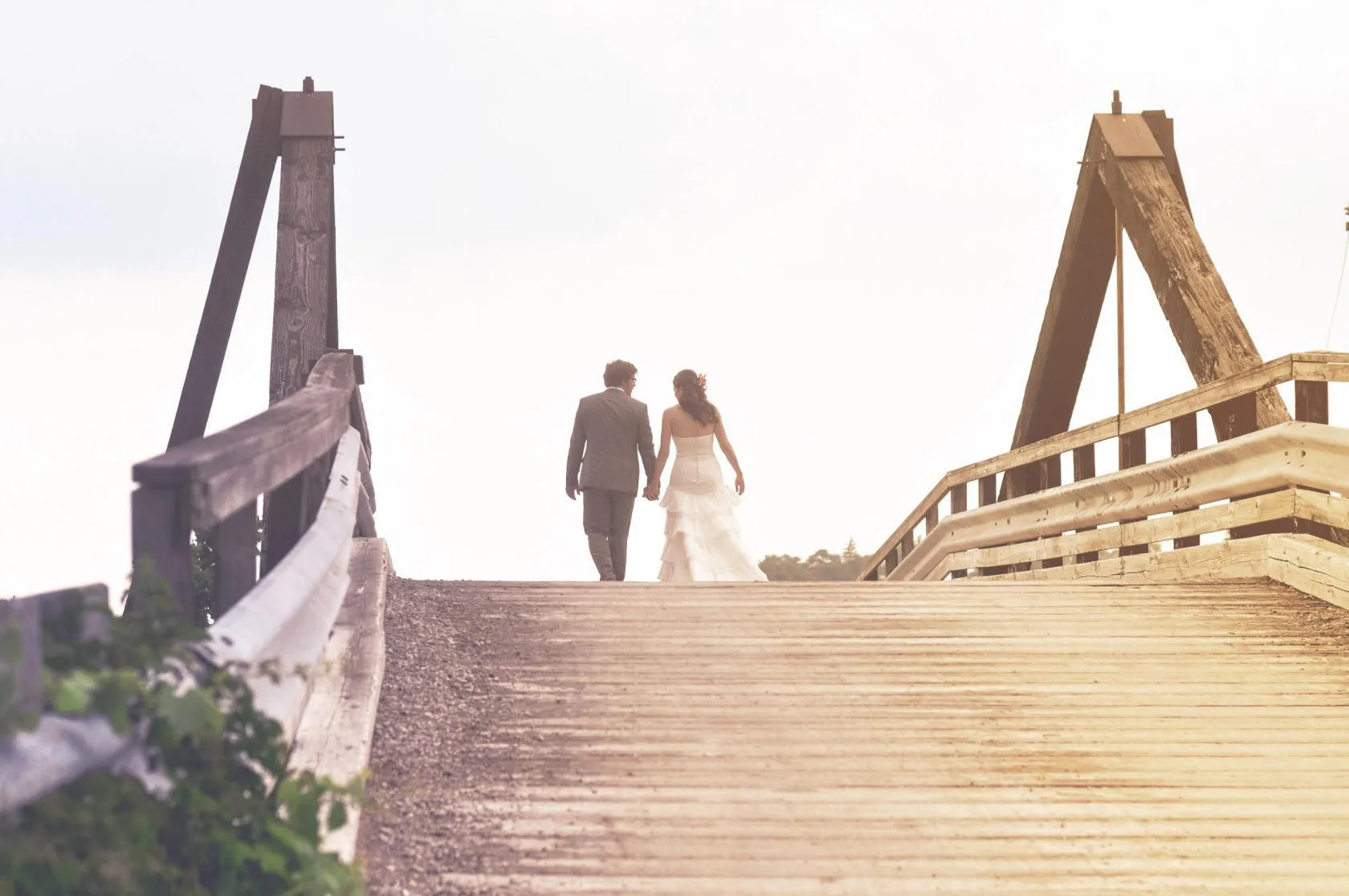
Wedding couple poses should fit the available time, clothing, and surroundings. Reuse simple positions the couple already finds comfortable.
Before the wedding:
- Confirm priorities. Ask which portraits and details matter most.
- Agree on a portrait window. Coordinate it with the ceremony and other planned events.
- Scout nearby options. Include a covered location in case of poor weather.
- Check equipment. Prepare charged batteries, suitable memory cards, and backup equipment appropriate to the assignment.
- Plan file backups. Make additional copies promptly; using two memory cards does not replace a separate backup.
On the day, start with a straightforward portrait of both partners. Add a walk, an embrace, a close-up, and a wider scene as time allows. Keep directions brief and watch how dresses, veils, jackets, and bouquets sit in the frame.
Your AI-Powered Photo Editor for MacOS and Windows
How to Edit Couple Photos with Luminar
Begin with exposure, white balance, and framing, then make selective adjustments where needed. Editing should support the interaction already captured.
1. Correct Exposure and White Balance
Adjust overall brightness and check both faces. Protect bright clothing and avoid lifting shadows so far that they look washed out.
Use white balance to address an unwanted color cast, then check that both partners’ skin tones remain believable. Luminar’s photo color editor can help refine individual color ranges when foliage, clothing, or reflected light dominates the frame.

2. Crop and Straighten
Straighten an unintentionally tilted horizon and remove distracting space. Check the crop around hands, feet, and joints, especially when preparing different aspect ratios.
Keep a wider version when the location is part of the story. Cropping cannot extend the photograph beyond its original boundaries.

3. Adjust the Couple and Background Separately
If the surroundings are much brighter than the people, apply a selective adjustment rather than changing the entire image. Luminar’s AI photo masking can help identify areas for editing; inspect and refine the mask before applying a strong correction.
Check hair, clothing edges, and the space between the partners for halos or missed areas.

4. Retouch Skin Lightly
Use Skin AI conservatively when reducing shine or smoothing texture. Compare the result with the original and preserve freckles, facial hair, and other recognizable features.
Discuss more noticeable retouching with the couple. Different people have different preferences about which details they want changed.

5. Keep the Gallery Consistent
Use a similar approach to color and contrast across related photographs, then adjust individual frames for changing light. A preset can provide a starting point, but each image still needs inspection.
For engagement and wedding photographs intended to record the event, preserve the original surroundings. Replacing skies or adding generated elements substantially changes the scene and should be agreed with the couple.

Conclusion
Choose a few couple poses that fit the people in front of you, then build variety through movement, framing, and conversation. Plan usable light, check both faces for sharpness, and leave room for the couple’s own ideas. A session that feels comfortable gives you more opportunities to capture expressions and gestures that belong to them.
Frequently Asked Questions
Start with a comfortable position and a simple action, such as walking or talking. Give one instruction at a time, allow the couple to adjust, and photograph the moments between poses.
Seated portraits, walking, and gentle leaning can accommodate different heights comfortably. There is no need to make both heads level; prioritize relaxed posture and visible expressions.
Keep their faces at similar distances from the camera when practical, use sufficient depth of field, and inspect both faces. If one partner is soft, narrow the aperture, change their positions, or adjust your shooting distance and framing.
Wear comfortable clothing that suits the location and allows movement. Coordinate colors if desired, but identical outfits are unnecessary; check distracting logos, patterns, and accessories before shooting.
Yes, a phone can capture couple photos effectively in suitable light. Use a stable support and timer for self-portraits, and inspect portrait-mode effects around hair, hands, and overlapping bodies for errors.


