Looking for the ideal camera for street photography? Our guide has got you covered! Explore various options based on your budget, needs, and preferences.
When venturing into the world of street photography, choosing the right camera can be a daunting decision. The fast-paced nature of street photography demands a reliable camera that offers quick, sharp focus and delivers high-quality, crisp images. You’ll need to consider what type of camera suits your style:
Are you shooting during daylight or at night?
Do you prefer sharp, modern images?
Or are you drawn to the older aesthetic of a film camera?
Unfortunately, cameras can be costly, and as any enthusiast will tell you, you can never have enough gear. Whether you’re just starting out or are a seasoned professional, our guide offers suggestions to help you make an informed decision. Stay tuned for more.
Don’t feel like reading the whole breakdown? We’ve pulled together a quick summary below.
Best Street Photography Cameras at a Glance
| Camera | Best for | Sensor | Lens |
| Canon EOS R50 | Beginners | 24.2 MP APS-C | Interchangeable RF mount |
| Fujifilm X100VI | Best overall | 40.2 MP APS-C | Fixed 23mm f/2 (35mm equivalent) |
| Ricoh GR IV | Pocketable shooting | Approx. 25.7 MP APS-C | Fixed 18.3mm f/2.8 (28mm equivalent) |
| Sony RX100 VII | Compact zoom | 20.1 MP 1-inch type | 24–200mm equivalent f/2.8–4.5 |
| Nikon Zf | Night photography | 24.5 MP full frame | Interchangeable Z mount |
| Leica Q3 | Premium fixed-lens camera | 60.3 MP full frame | Fixed 28mm f/1.7 |
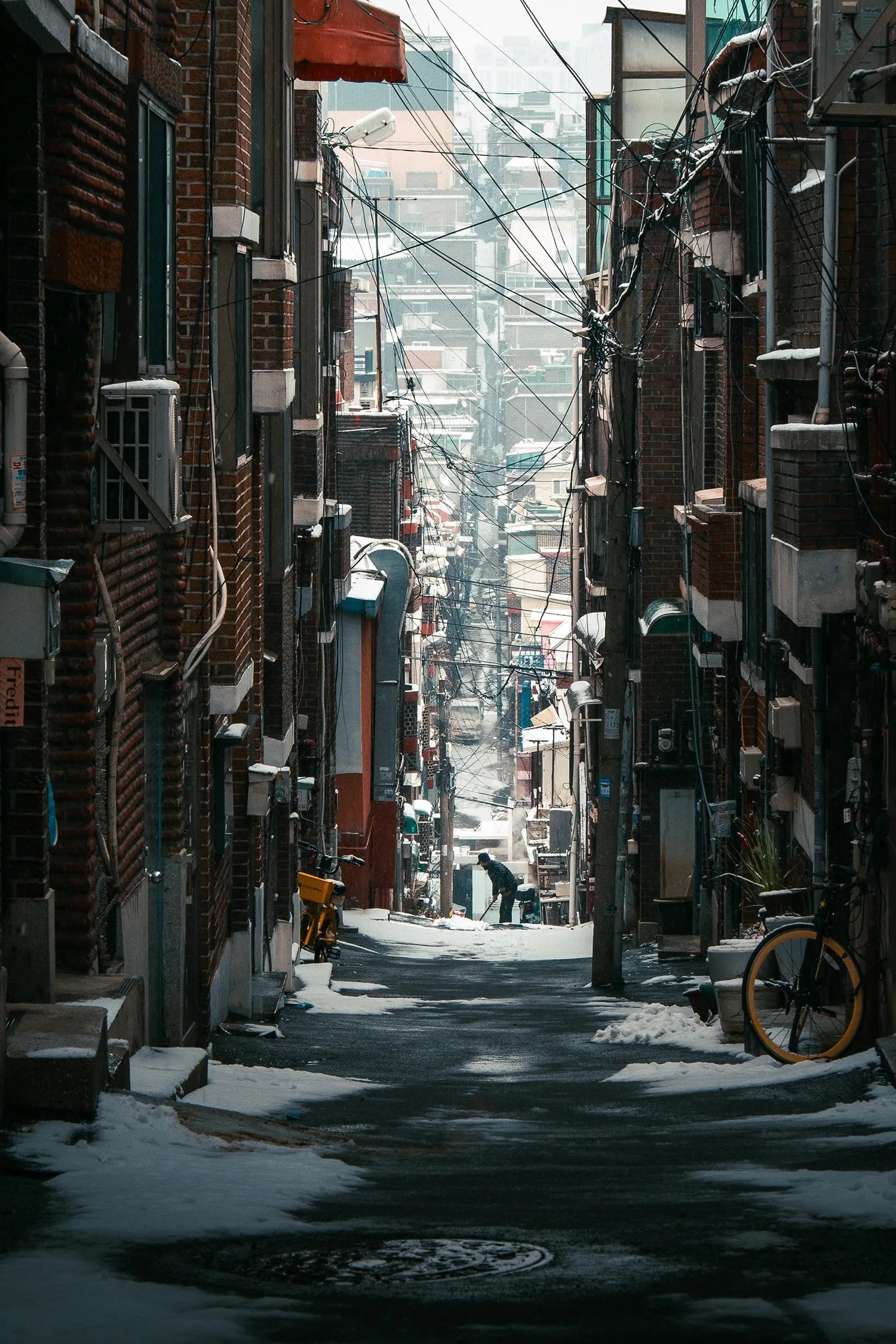
What Makes a Good Street Photography Camera?
A good street camera should help you react quickly without attracting unnecessary attention. Look for:
- Compact size and low weight: A camera you can comfortably carry is more useful than one left at home.
- Fast, reliable autofocus: Face and eye detection can help when subjects move unpredictably.
- Simple controls: Easy access to shutter speed, aperture, ISO, and exposure compensation.
- A suitable focal length: Full-frame-equivalent focal lengths between 28mm and 50mm are popular because they feel natural and work in busy environments.
- A wide maximum aperture: A “fast” lens—typically f/2.8 or wider—lets in more light and can help separate a subject from the background. The term refers to aperture, not autofocus speed.
- Good high-ISO performance: This becomes particularly important for evening and night photography.
- A quiet shutter: Discreet operation can help you avoid interrupting a scene.
RAW support is also useful when a frame contains bright signs, deep shadows, or mixed lighting. A flexible RAW photo editor can help recover tonal detail and correct color after the shoot.
Your AI-Powered Photo Editor for MacOS and Windows
Best Cameras for Street Photography
1. Canon EOS R50 — Best for Beginners

The Canon EOS R50 is a compact mirrorless camera with a 24.2 MP APS-C sensor, an electronic viewfinder, and subject-detection autofocus. Automatic modes make it approachable, while manual controls and interchangeable lenses provide room to develop. The body does not include in-body image stabilization, so pair it with a stabilized lens or use a sufficiently fast shutter speed.
| Pros | Cons |
| Compact and beginner-friendly | No in-body image stabilization |
| Reliable subject-detection autofocus | Small body may feel cramped with large lenses |
| Interchangeable lenses | Compact RF lens selection is more limited than some competing systems |
2. Fujifilm X100VI — Best Overall

The Fujifilm X100VI combines a 40.2 MP APS-C sensor with a fixed 23mm f/2 lens, providing a 35mm-equivalent view. It also includes in-body image stabilization, a hybrid optical/electronic viewfinder, and Fujifilm film simulations. The fixed lens keeps the setup simple but may feel restrictive if you prefer zooms.
| Pros | Cons |
| Excellent image quality in a compact body | Fixed lens limits framing options |
| Useful 35mm-equivalent focal length | Premium price |
| In-body image stabilization | Availability may vary |
| Strong JPEG color options | Not truly pocket-sized |
3. Ricoh GR IV — Best Pocketable Street Camera

The Ricoh GR IV has an APS-C sensor with approximately 25.7 effective megapixels, a fixed 28mm-equivalent f/2.8 lens, image stabilization, and a fast startup time. Its slim body suits discreet shooting, while Snap Focus lets you preset a focusing distance. The main compromise is the lack of a built-in viewfinder.
| Pros | Cons |
| Genuinely pocketable APS-C camera | No built-in viewfinder |
| Sharp 28mm-equivalent lens | Fixed lens and focal length |
| Fast startup and useful Snap Focus mode | Less comfortable for long video sessions |
4. Sony RX100 VII — Best Compact Camera with a Zoom

The Sony RX100 VII combines a 1-inch-type sensor with a 24–200mm-equivalent f/2.8–4.5 zoom, a pop-up electronic viewfinder, and real-time autofocus tracking. Its range covers wide scenes and distant details, although the smaller sensor and f/4.5 aperture at the long end are less suited to very dark conditions.
| Pros | Cons |
| Wide 24–200mm-equivalent zoom range | Small controls can feel cramped |
| Pocketable body with a viewfinder | Smaller sensor than APS-C alternatives |
| Fast autofocus and subject tracking | Lens becomes f/4.5 at the telephoto end |
5. Nikon Zf — Best for Night Street Photography

The Nikon Zf pairs a 24.5 MP full-frame sensor with in-body image stabilization and subject-detection autofocus. It is a flexible choice for dim streets, especially with a bright 28mm or 40mm prime. However, it is larger and heavier than the compact models above.
| Pros | Cons |
| Strong low-light potential | Larger and heavier than compact alternatives |
| In-body image stabilization | Grip may feel shallow with large lenses |
| Interchangeable lenses | Full-frame lenses increase the total cost and weight |
Night scenes often contain strong color casts and bright highlights. After shooting, you can use an AI photo editor such as Luminar Neo to adjust exposure, reduce noise, and refine color without changing the character of the scene.
6. Leica Q3 — Best Premium Option

The Leica Q3 combines a 60.3 MP full-frame sensor with a fixed Summilux 28mm f/1.7 lens. Its bright stabilized lens and high-resolution viewfinder suit both daytime and nighttime work. Its major limitation is price, so it makes most sense for photographers who already enjoy a 28mm field of view.
| Pros | Cons |
| High-resolution full-frame sensor | Very expensive |
| Bright 28mm f/1.7 lens | Fixed lens |
| Premium construction and simple controls | Larger than pocketable compact cameras |
Must Know Key Points of Mobile Portrait Photography
Learn moreCan You Use a Smartphone for Street Photography?
Yes. A smartphone is discreet and excellent for practicing timing and composition. Its limitations become more noticeable in low light, with fast movement, or when you need true telephoto reach. A photo editor for iPhone can help refine exposure and color before sharing the image.
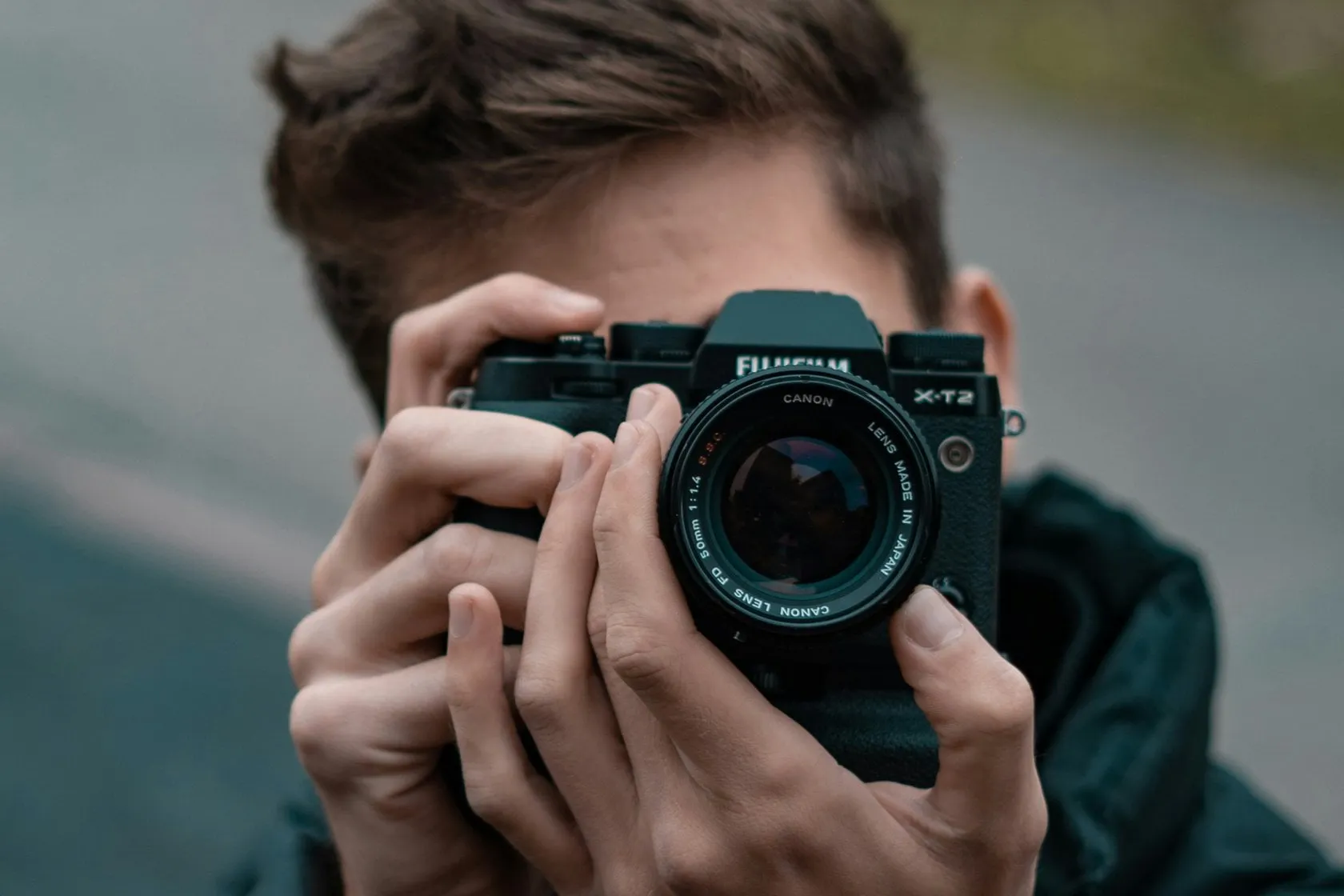
What About Film Cameras?
Film encourages slower, more deliberate shooting. Both manual and automatic film cameras exist, so beginners do not have to start with a fully mechanical model. When buying used, inspect the lens and viewfinder for fungus or haze and check the shutter, meter, battery compartment, film transport, and light seals. Remember to include processing and scanning in your budget.
For more guidance, read our introduction to film photography.
Additional Equipment
Street photography rarely requires a large collection of accessories. A simple kit may include:
- A comfortable wrist or shoulder strap to keep the camera secure and accessible.
- A spare battery, especially when using an electronic viewfinder or shooting in cold weather.
- An extra memory card in case the main card fills up or fails.
- A small weather-resistant bag that does not slow you down.
- A lens cloth for rain, dust, and fingerprints.
A tripod is usually unnecessary for candid daytime photography, but a small support can help with deliberate long exposures after dark. Filters and prisms are optional creative tools rather than essential equipment.
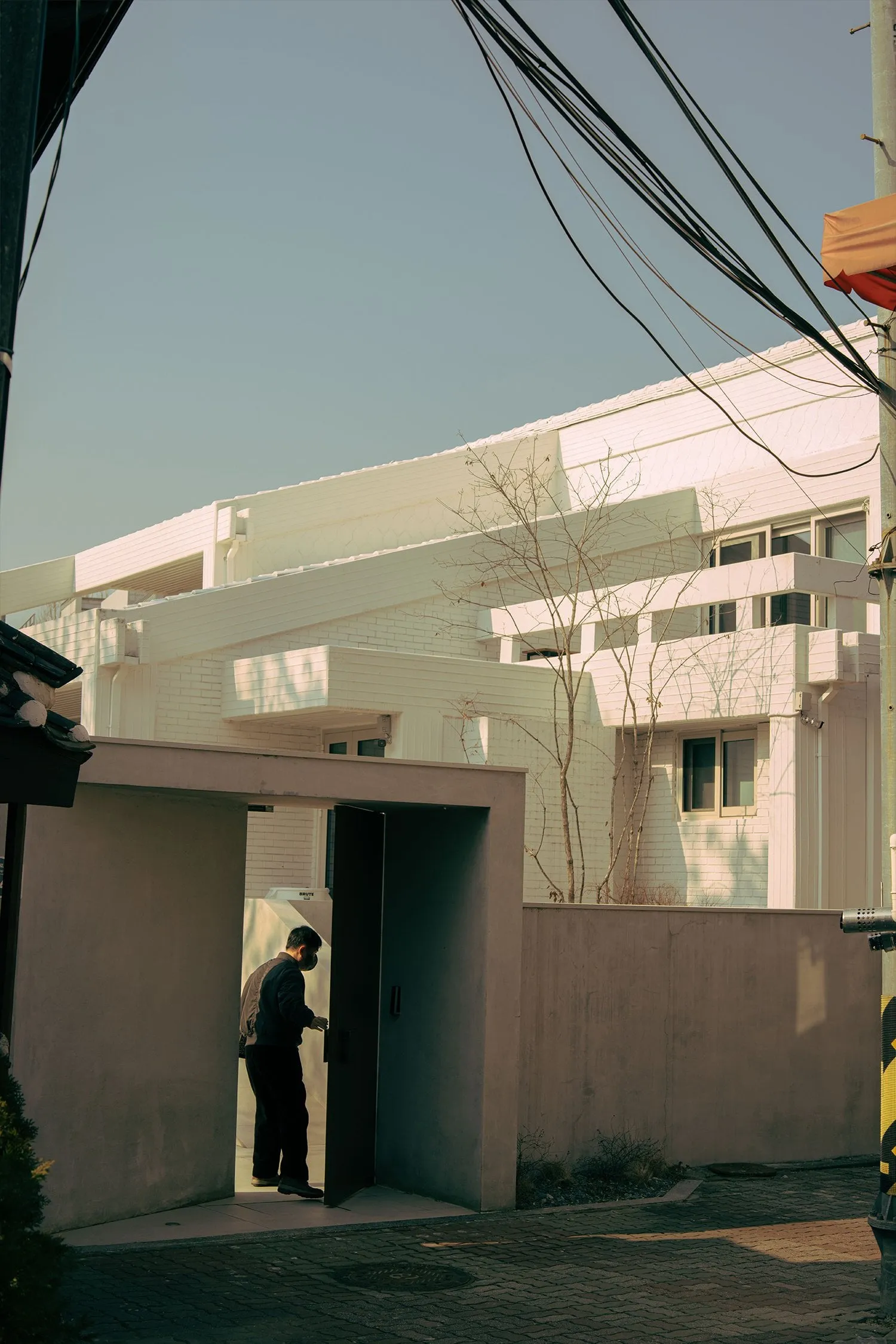
Film Photography for Beginners: How to Shoot Your First Roll
Learn moreHow to Choose the Right Street Photography Camera
Before buying, ask yourself four questions:
- Will I carry it regularly? Size and weight matter more than specifications if a camera stays at home.
- Do I want a fixed lens or interchangeable lenses? Fixed-lens cameras are simple and consistent; interchangeable-lens systems are more flexible.
- Which focal length feels natural? A 28mm-equivalent lens captures more context, while 35mm and 50mm options make it easier to isolate a subject.
- How often do I shoot at night? Frequent low-light work may justify a larger sensor, stabilization, and a bright lens.
Whenever possible, handle or rent a camera before buying it. Comfort and control placement can matter more than a small difference in specifications.
The Bottom Line
The Fujifilm X100VI is the strongest all-around option for photographers who enjoy a fixed 35mm-equivalent lens. The Ricoh GR IV is better when pocketability and discretion are the priority, while the Canon EOS R50 gives beginners an affordable path into an interchangeable-lens system. Choose the Sony RX100 VII for zoom flexibility, the Nikon Zf for full-frame low-light shooting, or the Leica Q3 for a premium fixed-lens experience.
Whichever camera you choose, familiarity matters more than specifications. Learn its controls, carry it often, and concentrate on light, timing, and the relationships between people and their surroundings.
Frequently Asked Questions
The Fujifilm X100VI is a strong all-around choice because it combines a compact body, a 35mm-equivalent f/2 lens, stabilization, and straightforward controls. The best option still depends on your preferred focal length and budget.
A 28mm lens includes more of the environment and works well in crowded spaces. A 35mm lens provides a slightly tighter, more natural perspective. Neither is universally better, so test both if possible.
No. APS-C, Micro Four Thirds, 1-inch-type, and smartphone cameras can all produce excellent street photographs. Full-frame cameras mainly provide an advantage when you need stronger low-light performance or shallower depth of field.
Yes. A fixed lens keeps the camera compact and helps you become familiar with one field of view. The trade-off is that you must move or crop instead of changing lenses or zooming.
Yes. Smartphones are discreet and ideal for learning composition and timing. A dedicated camera becomes more useful when you need stronger low-light performance, faster physical controls, or greater focal-length flexibility.