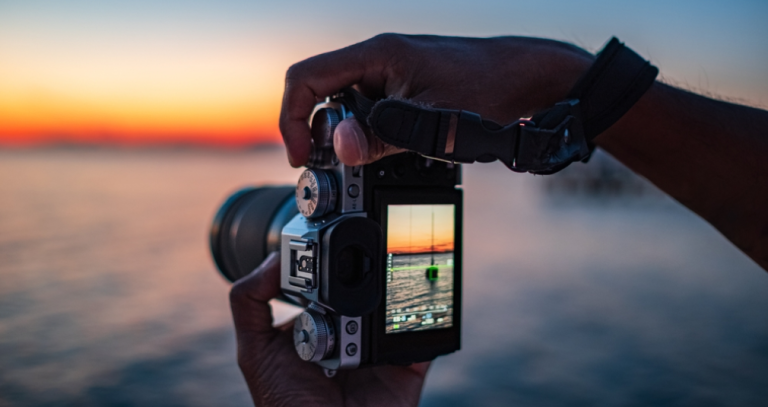
Packing for a trip? Learn which travel lens suits the photos you want to take, from city streets and landscapes to portraits and wildlife.
Travel photography often means working with limited space, changing light, unfamiliar locations, and very little time to change your setup. The right lens can make those situations easier, but there is no single best travel lens for every photographer.
A city break, a mountain hike, a wildlife trip, and a beach vacation can all call for different focal lengths. Your camera system, shooting style, luggage allowance, and budget matter just as much.
The good news is that you rarely need to bring an entire collection of lenses. With one versatile zoom or a small combination of complementary lenses, you can cover most travel situations without turning your camera bag into extra luggage.
Don’t feel like reading the whole breakdown? We’ve pulled together a quick summary below.
Key Takeaways
- A versatile zoom can cover many travel situations with one lens.
- Wide-angle lenses work well for landscapes, architecture, and interiors.
- Standard focal lengths are useful for street photography, portraits, and everyday scenes.
- Telephoto lenses help capture distant subjects, wildlife, and compressed landscapes.
- Prime lenses can be a good choice when low-light performance, size, and simplicity matter.
- Aperture, stabilization, weather protection, size, and weight are as important as focal length.
- A compact travel setup can be more useful than carrying several specialized lenses.
- RAW editing software such as Luminar can help refine exposure, color, detail, and distracting elements after the trip.
What Makes a Good Travel Lens?
 A travel lens should fit the way you actually photograph. There is little benefit in owning a technically impressive lens if its size or weight means you leave it in your hotel room.
Before choosing one, consider:
- Focal length: Determines how much of the scene you can capture and how close you can frame distant subjects.
- Aperture: Affects low-light performance and depth of field.
- Size and weight: Especially important when walking all day or traveling with carry-on luggage.
- Image stabilization: Useful for handheld shooting at slower shutter speeds.
- Weather protection: Valuable for outdoor travel in rain, dust, or changing conditions.
- Minimum focusing distance: Helpful for food, details, flowers, and small objects.
- Compatibility: Make sure the lens is designed for your camera mount and sensor format.
The ideal setup is usually a compromise between versatility and portability.
Exclusive Tools of Endless Possibilities in One Editor
How Many Lenses Do You Need for Travel?
 For many trips, one or two lenses are enough.
A single all-purpose zoom is convenient when you want to travel light. A lens covering a moderate wide angle through short telephoto can handle street scenes, architecture, portraits, food, and many landscapes.
A two-lens setup gives you more flexibility. For example, you might combine a wide-angle zoom for landscapes and architecture with a telephoto zoom for wildlife or distant details.
A prime-lens setup can also work well if you prefer a small, lightweight camera bag and don’t mind moving yourself to change the composition.
Think about your destination before packing. A wildlife safari and a weekend in a historic city have very different lens requirements.
Zoom Lenses vs. Prime Lenses
 Both types can be excellent for travel photography, but they solve different problems.
| Feature | Zoom Lens | Prime Lens |
| Focal length | Variable | Fixed |
| Flexibility | High | Lower |
| Size | Varies; some are compact | Often compact |
| Low-light options | Depends on aperture | Many have wide apertures |
| Composition | Change framing from one position | Encourages movement |
| Best for | Versatile travel setups | Street, portraits, low light |
Why Choose a Zoom?
A zoom lets you change your framing without physically moving closer or farther away. This is particularly useful when you’re photographing from a fixed position, working in crowded streets, or trying to capture a fleeting moment.
A standard zoom can often stay on your camera for most of the day.
Why Choose a Prime?
Prime lenses have a fixed focal length. Many offer wide maximum apertures, which can be useful for evening streets, interiors, portraits, and scenes where you want a shallow depth of field.
They can also be relatively small and lightweight, making them attractive for minimalist travel kits.
The trade-off is that you have to compose by moving yourself rather than zooming.
Wide-Angle Lenses for Landscapes and Architecture
 Wide-angle lenses capture a broad field of view, making them useful for large landscapes, architecture, interiors, and dramatic foregrounds.
They are especially helpful when you cannot move farther away from your subject. This happens frequently when photographing buildings in narrow streets or interiors with limited space.
However, wider isn’t automatically better.
Very wide lenses can exaggerate the size of objects close to the camera and make distant subjects appear smaller. They can also make vertical architectural lines converge when the camera is tilted upward.
For architecture, keep the camera as level as practical and pay attention to the edges of the frame.
For landscapes, place an interesting foreground element close to the camera to make the image feel more dimensional.
Standard Lenses for Everyday Travel Photography
Standard focal lengths are often useful for documenting everyday moments because they provide a natural-looking perspective without covering an extremely wide or narrow field of view.
Depending on your camera’s sensor size, a focal length around the equivalent of 35–50mm can work well for:
- Street photography
- Environmental portraits
- Cafés and restaurants
- Markets
- Travel details
- Everyday scenes
- Family and group photos
A compact standard prime can be particularly convenient when you want to explore a city without carrying much equipment.
Telephoto Lenses for Distant Subjects
 Telephoto lenses are useful when you cannot get physically close to your subject.
They can be valuable for:
- Wildlife
- Birds
- Sports
- Distant architecture
- Mountain details
- Isolated landscape elements
- Candid travel moments
Telephoto lenses also change the visual relationship between objects in a scene. Distant mountains, buildings, or people can appear visually closer together, creating a compressed perspective.
The downside is size and weight. A long telephoto can take up a significant part of your camera bag, so it makes sense to bring one only when your destination and shooting plans justify it.
Travel Lens Focal Length Guide
 Instead of looking for one universal “best” focal length, think about what you want to photograph.
| Focal length range | Useful for |
| 14–24mm | Landscapes, interiors, architecture, dramatic foregrounds |
| 24–35mm | Travel scenes, streets, landscapes, environmental portraits |
| 35–50mm | Street photography, everyday scenes, portraits |
| 50–85mm | Portraits, details, food, tighter compositions |
| 70–200mm | Wildlife, sports, distant details, compressed landscapes |
| 200mm+ | Wildlife, birds, distant subjects |
These ranges are approximate, and the effective field of view changes with sensor size.
Elevate Your Photography with Our Advanced Software
Aperture and Depth of Field
 Aperture controls how much light reaches the sensor and influences depth of field.
A wider aperture, such as f/1.4 or f/2, can be useful for:
- Low-light photography
- Portraits
- Separating a subject from the background
- Creating shallow depth of field
A narrower aperture, such as f/8 or f/11, can help keep more of a landscape or architectural scene in focus.
However, there is no single aperture that is always correct. Using extremely narrow apertures such as f/16 or f/22 does not automatically make a landscape sharper. Diffraction can reduce fine detail at very small apertures.
Choose the aperture based on the scene, desired depth of field, available light, and your lens.
Image Stabilization for Travel Photography
 Image stabilization can reduce the effects of camera shake when shooting handheld. Depending on the camera system, stabilization may be built into the lens, the camera body, or both.
It can be particularly useful when photographing:
- Evening city scenes
- Interiors
- Static subjects in low light
- Handheld telephoto images
- Travel details after sunset
Stabilization does not freeze subject movement. If a person is walking through the frame, for example, you may still need a faster shutter speed.
When the camera is mounted securely on a tripod, stabilization may need to be disabled on some systems, although modern cameras and lenses vary. Check the manufacturer’s recommendations for your specific equipment.
Size and Weight Matter More Than You Think
 A lens that stays in your bag because it is too heavy isn’t helping you take photographs.
When comparing travel lenses, consider the complete setup rather than the lens alone:
- Camera body
- Lens
- Spare batteries
- Memory cards
- Tripod
- Filters
- Cleaning supplies
- Camera bag
For a city trip, a compact camera with one versatile lens may be more practical than a large body with several heavy lenses.
For a dedicated landscape or wildlife trip, the balance may be different.
Weather Protection and Durability
Travel photography can expose equipment to conditions you don’t encounter at home: rain, snow, sand, humidity, dust, and temperature changes.
Weather sealing can provide additional protection, but it does not make equipment completely waterproof. A weather-sealed camera and lens should still be protected from prolonged exposure to heavy rain, water, and dust.
A simple rain cover, dry bag, or waterproof camera insert can provide another layer of protection.
Filters and Other Useful Accessories

You don’t need every photography accessory available. A few practical additions can be enough.
Polarizing Filter
A circular polarizer can reduce reflections on non-metallic surfaces and can make skies appear more saturated under suitable conditions.
It can be useful around:
- Water
- Glass
- Wet foliage
- Landscapes
- Bright outdoor scenes
Remember that its effect changes depending on your angle relative to the sun.
Neutral Density Filter
An ND filter reduces the amount of light entering the lens. This allows you to use slower shutter speeds or wider apertures in bright conditions.
For example, an ND filter can help create motion blur in waterfalls or moving water during daylight.
Tripod
A compact tripod is useful for long exposures, night photography, landscape bracketing, and self-portraits.
For lightweight travel, look for a tripod that provides enough stability for your camera and lens without becoming unnecessarily bulky.
Cleaning Kit
A blower, microfiber cloth, and appropriate lens-cleaning supplies take up little space and can be useful when traveling in dusty or humid environments.
A Practical Travel Photography Kit
A lightweight setup could look like this:
Minimalist city kit
- Camera body
- Compact standard zoom or prime
- Spare battery
- Extra memory card
- Small cleaning cloth
Landscape and nature kit
- Camera body
- Wide-angle or standard zoom
- Telephoto lens if needed
- Compact tripod
- Polarizing filter
- Spare batteries and memory cards
Wildlife or adventure kit
- Camera body
- Telephoto zoom
- Standard zoom for environmental scenes
- Extra batteries
- Multiple memory cards
- Weather protection
You can adjust the kit according to your destination rather than following a fixed packing list.
Popular Travel Lens Types by Camera System

Camera systems from Canon, Nikon, Sony, Fujifilm, OM System, Panasonic, and other manufacturers offer different combinations of zooms and primes for travel.
Instead of choosing a lens because it appears on a generic “best” list, check these specifications for your particular camera:
- Mount compatibility
- Sensor format
- Equivalent focal length
- Maximum aperture
- Weight
- Stabilization
- Minimum focusing distance
- Weather resistance
- Price
- Your actual shooting needs
Third-party manufacturers also offer travel-friendly lenses, often with focal lengths and specifications that complement the camera manufacturer’s own lineup.
Don’t Forget the Camera Bag

A good travel bag should protect your equipment while allowing you to access it without unpacking everything.
For a lightweight setup, a small sling or compact backpack may be enough. For longer trips, a larger camera backpack can provide space for additional lenses, a tripod, water, and personal items.
Keep frequently used items easy to reach, and avoid packing equipment simply because you might use it.
The best travel kit is the one you’re comfortable carrying all day.
Editing Travel Photos After the Trip
Even well-exposed photographs often benefit from small adjustments after a trip.
Typical edits include:
- Correcting exposure
- Recovering highlights and shadows
- Adjusting white balance
- Fine-tuning color
- Straightening horizons
- Cropping
- Reducing noise
- Sharpening details
- Removing distracting objects

GenErase can be useful when a tourist, sign, cable, or other unwanted element distracts from a composition.

For images that need more substantial framing changes, GenExpand can extend the boundaries of a photo.

If you’re working with RAW files, a dedicated RAW photo editor gives you more flexibility when adjusting exposure, color, and detail.
Your AI-Powered Photo Editor for MacOS and Windows
How to Choose Your Travel Lens
Before buying a lens, answer five questions:
Where are you going?
A city, beach, mountain range, or wildlife reserve will place different demands on your equipment.
What will you photograph?
Architecture requires a different approach from birds or portraits.
How much will you walk?
If you’re exploring for eight hours a day, weight becomes a major factor.
Do you prefer flexibility or simplicity?
A zoom provides versatility, while a prime can offer a compact setup and wide aperture.
What is your camera’s sensor size?
The same focal length gives different fields of view on full-frame, APS-C, and Micro Four Thirds cameras.
Final Thoughts

There is no universal best travel lens. The right choice depends on the destination, camera system, subjects, and how much equipment you are willing to carry.
For many photographers, one versatile zoom is a practical starting point. Others may prefer a compact prime for street photography or a wide-angle and telephoto combination for landscapes and wildlife.
The goal isn’t to build the biggest camera bag. It’s to create a setup that gives you the focal lengths you need while leaving enough room — and energy — to actually enjoy the journey.
Once you’re home, thoughtful editing can help bring those memories together. Tools such as Luminar can be used to refine color and exposure, remove distractions, and make targeted adjustments without changing the character of the trip.
FAQ
There is no single best focal length. Around 24–35mm can be useful for landscapes, architecture, and street scenes, while 35–50mm works well for everyday photography and environmental portraits. A telephoto becomes more useful for wildlife and distant subjects.
A zoom offers greater flexibility, while a prime can be smaller, lighter, and useful in low light. The better option depends on your destination and shooting style.
Yes. A 24mm lens can be useful for landscapes, architecture, interiors, and street scenes, particularly when you want to include more of the surroundings. On crop-sensor cameras, however, the field of view will be narrower than on full frame.
Not always. A telephoto is worth packing if wildlife, sports, distant landscapes, or compressed-perspective images are an important part of your trip.
A tripod is useful for long exposures, night photography, landscape bracketing, and self-portraits. If you rarely use these techniques, a compact or lightweight tripod may be a better compromise than a large one.