The best travel camera depends on how you shoot. Explore pocket cameras, hiking kits, vlogging options, and practical tips for choosing and carrying gear.
The best travel camera is one that fits the photographs you want to make and the equipment you are willing to carry. A pocket camera suits a city break differently from a weather-resistant hiking kit or a camera chosen mainly for video.
For a flexible interchangeable-lens setup, the Fujifilm X-S20 is worth considering. For pocketable zoom coverage, the Sony RX100 VII offers a different approach. For outdoor travel with a compact lens system, consider the OM SYSTEM OM-5 Mark II.
This guide matches seven cameras to specific travel needs using their published features and practical trade-offs. It includes mirrorless, fixed-lens compact, and bridge cameras, since those categories solve different problems.
Don’t feel like reading the whole breakdown? We’ve pulled together a quick summary below.
Best Travel Cameras: A Quick Comparison
| Camera | Best suited to | Camera type | Sensor | Main trade-off |
| Fujifilm X-S20 | A flexible photo-and-video travel kit | Mirrorless, interchangeable lens | 26.1MP APS-C | Lens choice determines final size and weight |
| Canon EOS R10 | Learning photography with a compact mirrorless kit | Mirrorless, interchangeable lens | 24.2MP APS-C | No in-body sensor stabilization |
| OM SYSTEM OM-5 Mark II | Hiking with a compact weather-resistant system | Mirrorless, interchangeable lens | 20.4MP Micro Four Thirds | Lens compatibility matters for weather protection |
| Sony RX100 VII | Pocketable zoom for varied sightseeing | Fixed-lens compact | 20.1MP 1-inch type | Small controls and a variable-aperture lens |
| Sony ZV-1 II | Self-recorded travel videos and short clips | Fixed-lens compact | 20.1MP 1-inch type | No viewfinder and limited telephoto reach |
| Ricoh GR IV | Discreet street and everyday travel stills | Fixed-lens compact | Approximately 25.7MP APS-C | A fixed 28mm-equivalent view with no optical zoom |
| Panasonic Lumix FZ80D | Long zoom without changing lenses | Fixed-lens bridge camera | 18.1MP 1/2.3-inch type | Small sensor and a larger body than pocket compacts |
Prices and availability vary by region, retailer, and kit. Compare the exact package, warranty, and lens before treating a body-only offer as the total cost.
Exclusive Tools of Endless Possibilities in One Editor
1. Fujifilm X-S20: A Flexible Photo-and-Video Kit

The X-S20 combines a 26.1MP APS-C sensor with in-body stabilization and an interchangeable-lens system. It supports up to 6.2K/30p recording, making it an option for travelers who want stills and more developed video work in one kit.
Its approximate 491g weight includes the battery and memory card, but not a lens. Pairing it with a compact lens is essential if portability is the reason for choosing it.
The advantage is flexibility: choose a small everyday lens, then add another only for a clear need. The cost and bulk can grow quickly when several lenses join the bag. Long video sessions also need a plan for power, storage, and recording conditions.
| Pros | Cons |
| APS-C sensor and in-body stabilization | Total size depends on the lens |
| 6.2K/30p video option | Higher-resolution recording increases storage demands |
| Interchangeable lenses support different trips | Additional lenses add cost and weight |
Choose it for: a trip where photographic versatility and video flexibility justify carrying a small system rather than a pocket camera.
2. Canon EOS R10: A Compact Starting Point for Mirrorless Travel

The EOS R10 is a mirrorless camera with a 24.2MP APS-C sensor, an electronic viewfinder, and an interchangeable RF-mount lens system. It weighs approximately 429g with battery and card, before adding a lens.
It is worth considering when you want to learn manual controls and build a kit around your preferred subjects. A small kit zoom can cover general sightseeing; other compatible lenses expand the possibilities.
The R10 has no in-body sensor stabilization. A lens with optical stabilization can help reduce camera shake, but moving subjects still need a suitable shutter speed. Stabilization should be evaluated as part of the complete setup rather than the body alone.
| Pros | Cons |
| APS-C sensor in a relatively light body | No in-body sensor stabilization |
| Viewfinder and interchangeable lenses | Lens purchases increase the total budget |
| A practical route into more deliberate shooting | Body weight alone understates the carried kit |
Choose it for: an accessible mirrorless travel setup that can grow with your photography.
3. OM SYSTEM OM-5 Mark II: A Compact System for Outdoor Travel

The OM-5 Mark II uses a 20.4MP Micro Four Thirds sensor and in-body stabilization. Its approximately 418g weight includes battery and card but excludes a lens. Compact lens options make the system relevant to hiking and outdoor sightseeing.
Its weather-resistant design is a key consideration, but protection depends on using an appropriately rated lens and following the manufacturer’s conditions. It is not a camera for underwater use without a suitable housing.
The smaller sensor format involves trade-offs when comparing low-light output with larger-sensor systems under comparable conditions. The complete kit’s size and lens reach may be more important on a long walk. Stabilization is useful for static scenes, but it does not freeze a moving subject.
| Pros | Cons |
| In-body stabilization | Moving subjects still require appropriate shutter speeds |
| Compact Micro Four Thirds system options | Low-light needs should be considered when choosing lenses |
| Weather-resistant design under specified conditions | Protection depends on the lens and does not mean waterproof |
Choose it for: outdoor travel where a manageable kit and specified environmental protection are priorities.
4. Sony RX100 VII: Pocketable Zoom for Sightseeing

The RX100 VII combines a 20.1MP 1-inch-type sensor with a 24–200mm-equivalent f/2.8–4.5 zoom lens. At approximately 302g including battery and card, it offers varied framing without carrying interchangeable lenses.
The pop-up electronic viewfinder is useful when bright light makes the screen harder to see. Its lens can cover wider city scenes and tighter architectural or distant details from one compact body.
The trade-off is a small grip and controls, plus a lens that becomes less bright toward the telephoto end. Evening scenes may require higher ISO or support. This is an older model, so compare local availability and the exact version offered rather than assuming every retailer has the same stock.
| Pros | Cons |
| 24–200mm-equivalent optical zoom | Maximum aperture narrows toward telephoto |
| A built-in viewfinder in a compact body | Small controls may feel cramped |
| No additional lens purchases for the built-in range | The fixed lens cannot be replaced with another type |
Choose it for: a compact sightseeing camera when a useful zoom matters more than an interchangeable-lens system.
5. Sony ZV-1 II: A Small Camera for Travel Vlogging

The ZV-1 II is a vlogging-oriented compact camera with a 20.1MP 1-inch-type sensor, an 18–50mm-equivalent f/1.8–4 lens, and 4K recording up to 30p. Its approximately 292g weight includes battery and card.
The wider end of the lens helps include the surroundings during self-recording. A side-opening screen supports framing, and the microphone-oriented design suits short travel clips.
It has no electronic viewfinder, and its short telephoto range is less versatile for distant subjects than the RX100 VII’s. Electronic stabilization can crop the image, so test the actual framing and walking footage before a trip. It is a compact vlogging camera, not a rugged action camera.
| Pros | Cons |
| Wide 18mm-equivalent starting point | No electronic viewfinder |
| Small fixed-lens setup with a side-opening screen | Limited telephoto reach |
| Video-oriented design | Stabilization crops can affect self-recording framing |
Choose it for: short travel videos and self-recorded clips with a lightweight camera.
6. Ricoh GR IV: A Discreet Camera for Street Photography

The GR IV places an approximately 25.7MP APS-C sensor and a fixed 28mm-equivalent f/2.8 lens in a compact body weighing approximately 262g with battery and card. It includes sensor-shift stabilization and built-in storage alongside microSD support.
The fixed wide view suits street scenes, interiors, and photographs that place a person in their surroundings. Its appeal is a small stills-focused camera that can stay close at hand.
There is no optical zoom or built-in eye-level viewfinder. Distant subjects need a different approach, and cropping reduces the remaining resolution. Video is limited to Full HD, so this is not the strongest match for travelers prioritizing 4K footage.
| Pros | Cons |
| APS-C sensor in a compact body | Fixed 28mm-equivalent view |
| Sensor-shift stabilization | No built-in eye-level viewfinder |
| Built-in storage and microSD support | Full HD video rather than 4K |
Choose it for: travelers who prefer a consistent wide viewpoint and prioritize discreet still photography over zoom or video.
7. Panasonic Lumix FZ80D: Long Zoom in One Camera

The FZ80D is a bridge camera with an 18.1MP 1/2.3-inch-type sensor and a 60× optical zoom covering a 20–1200mm-equivalent range. It offers wide views and substantial reach without interchangeable lenses.
That makes it relevant for trips featuring distant details, wildlife, or a strong preference for one lens. Its body is closer to a small camera-and-grip setup than a pocket compact.
The small sensor is the main compromise, particularly when light falls. At the longest focal lengths, steadiness, atmosphere, and subject movement all affect usable detail. A large zoom number does not guarantee a sharp photograph of every distant subject.
| Pros | Cons |
| Extensive 20–1200mm-equivalent coverage | Small sensor is a limitation in poor light |
| No lens changes required | Too large for most pockets |
| Wide-angle and distant-subject options in one body | Long-end shooting demands careful technique |
Choose it for: travelers who value substantial zoom reach more than pocketability or larger-sensor low-light flexibility.
The Photo Perspective Correction Tool You've Been Waiting For
How to Choose a Travel Camera
Compare the Whole Kit
Include the body, lens, batteries, charger, protective pouch, and any support you will actually take. Handle the setup if possible and check whether it fits your usual day bag.
A mirrorless body is not automatically lighter than every DSLR kit, and both types can offer physical controls. Many mirrorless cameras also have electronic viewfinders. This mirrorless vs DSLR comparison explains the design differences.
Choose Lens Coverage for Your Subjects
A fixed wide lens can suit street scenes but frustrate someone who wants distant wildlife photographs. A large zoom can be convenient, but its aperture, size, and sensor combination determine the compromises.
For an interchangeable-lens camera, begin with one lens that handles most of the trip. Add a second only when it addresses a real need. Check focal lengths in full-frame-equivalent terms when comparing different sensor formats.
Treat Resolution as One Factor
More megapixels can support cropping and larger output, but focus, lens quality, motion, light, and processing also affect the result. A high-resolution camera does not automatically produce a better travel photograph.
These explanations of megapixels and image quality help separate useful resolution from a number on a specification sheet.
Check Still and Video Requirements Separately
For stills, consider viewfinder use, focus behavior, shutter speed, and RAW support. For video, also check microphone options, screen movement, stabilization crop, recording limits, power, and heat conditions.
A camera with a high maximum video resolution is not necessarily the easiest option for recording while walking. Test the frame, sound, and stabilization settings you plan to use.
Decide Whether a New Camera Is Necessary
A phone or an existing camera may already cover the trip. A dedicated camera is especially useful when it adds optical reach, a preferred handling experience, suitable RAW files, or a lens system that solves a specific need.
Before buying used equipment, check operation, lens condition, battery health, included accessories, and the seller’s return terms. A low purchase price matters less if an essential lens or repair is still needed.
Useful Travel Accessories
| Accessory | When it helps | What to check |
| Spare battery or compatible power supply | Long days or video-heavy sessions | Camera support, charging requirements, and transport rules |
| Compatible memory cards | RAW sessions, video, and backup rotation | Required format, capacity, and speed |
| Padded insert or pouch | Carrying the camera in an ordinary bag | Access, fit, and protection from knocks |
| Rain cover | Wet or dusty conditions | Fit around both body and lens |
| Small tripod | Long exposures, static night scenes, and self-portraits | Stability with the complete kit, packed size, and location rules |
| Cleaning supplies | Exterior dust and lens smudges | Appropriate materials and the manufacturer’s procedure |
A tripod is useful for deliberate long exposures, but it is not mandatory for every night photograph. Handheld results depend on available light, stabilization, shutter speed, and subject movement. Choose support by its actual stability and kit fit rather than a universal leg-diameter rule.
Filters are optional tools for specific tasks. An extra protective filter may introduce reflections or flare; a lens hood and sensible handling can also help protect the front element.
Carrying, Storing, and Backing Up Your Camera
Use padding that keeps the camera secure without making it so inconvenient that it stays in the bag. Protect exposed connections and separate loose items that could scratch the lens or screen.
Avoid leaving equipment in a hot vehicle or prolonged direct sun. When moving from cold surroundings into a warm space, keeping the cold camera in a closed bag while it gradually warms can help reduce condensation. Do not seal damp equipment away for long-term storage.
For longer storage, follow the manufacturer’s guidance on battery removal, dryness, and temperature. Keep caps on exposed mounts and lenses. There is no general need to remove a securely attached lens or “recharge” electronics by switching the camera on every month unless the manual specifies a procedure.
During the trip, maintain separate copies of important images when practical. A memory card carried in the same bag is not independent protection against losing the bag.
Make Better Travel Photos with the Camera You Choose
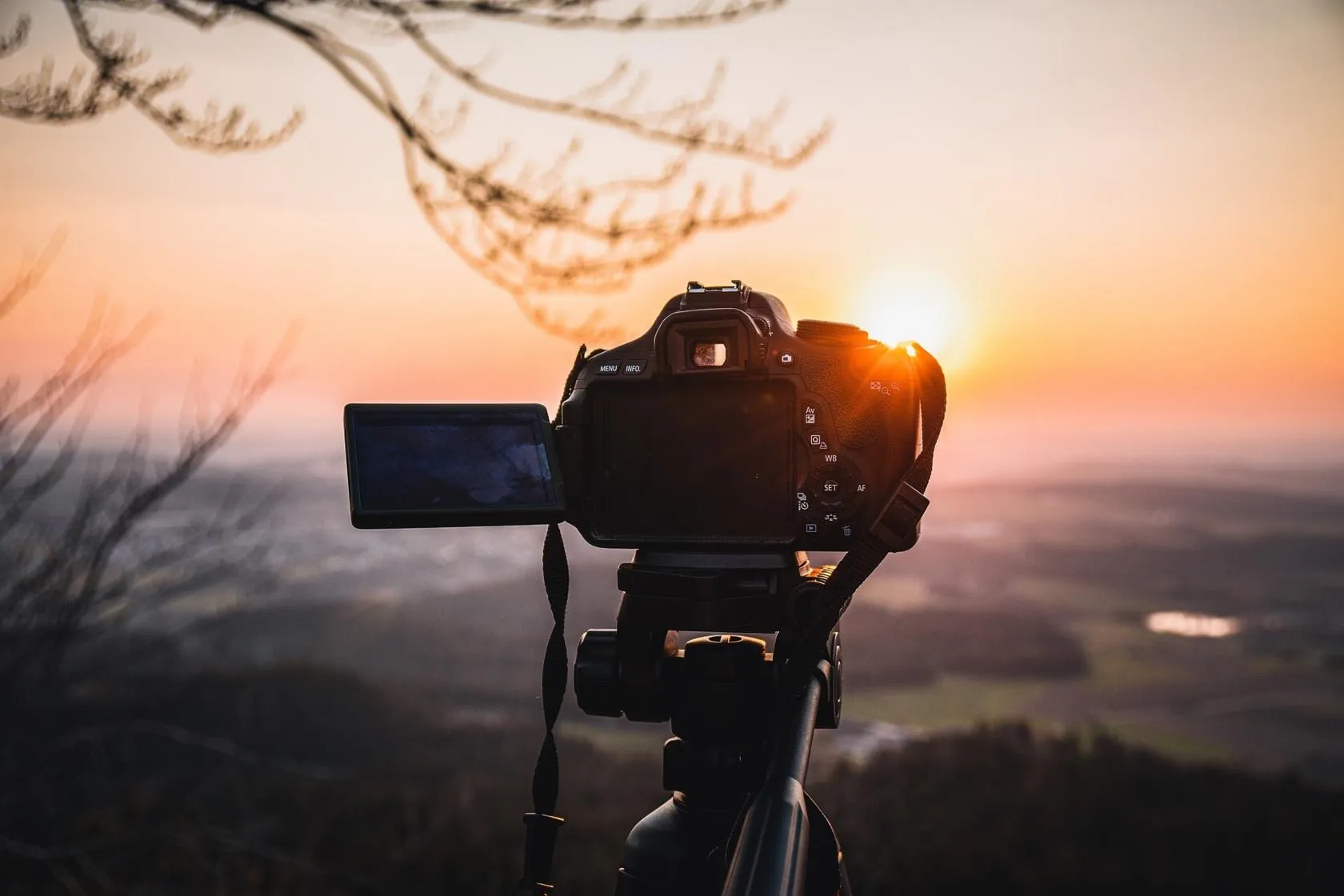
Learn the essential controls before departure: focus area, exposure compensation, playback magnification, and the file format. Practice switching between a static scene and a moving subject.
Plan a few sessions around suitable light rather than expecting new equipment to improve every midday view. This guide to golden hour photography explains timing and exposure decisions for low-angle light.
Keep the kit manageable enough to use regularly. Familiar handling and an available camera are often more valuable than a feature you never get around to using.
Your AI-Powered Photo Editor for MacOS and Windows
Edit Travel Photos Anywhere with Luminar

Travel photography often means working away from your usual setup. Luminar supports editing on a phone, tablet, desktop, and web, so you can make quick adjustments during the trip and spend more time on selected images afterward. Cross-device editing lets you start on mobile, continue on the web, and transfer your work to desktop.
For travel images, start with exposure and white balance, then check the sky, shaded areas, and skin tones separately. Use photo color editing tools to keep the collection consistent while preserving the different lighting conditions of each scene. A RAW photo editor provides more flexibility with compatible camera files, particularly when adjusting white balance and available highlight or shadow detail.
Choose the Camera That Fits the Trip
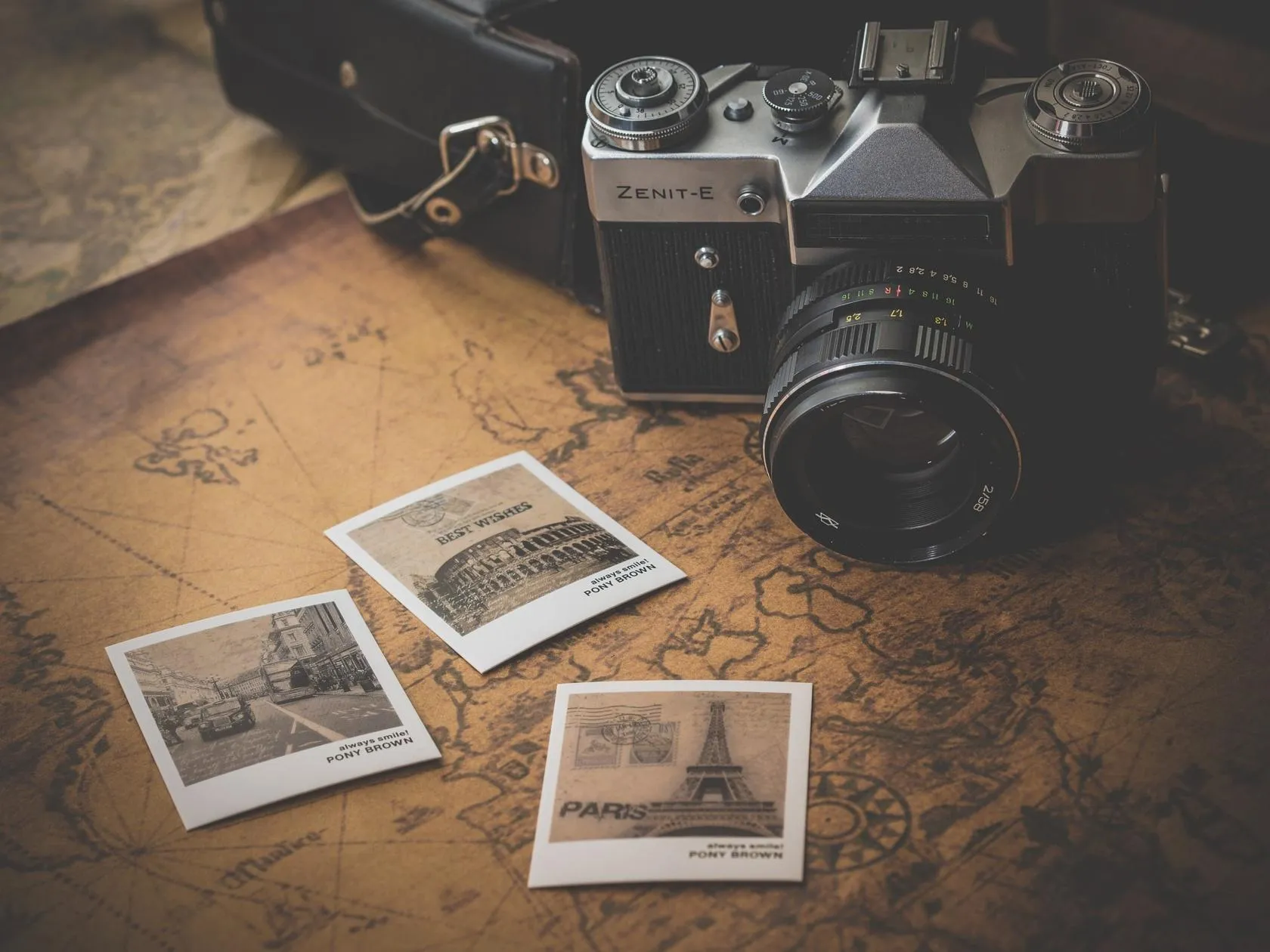
For a flexible system, evaluate the X-S20, R10, or OM-5 Mark II with the lens you would actually carry. For a smaller fixed-lens approach, compare the RX100 VII, ZV-1 II, and GR IV according to zoom, video, and stills priorities. For substantial reach in one camera, consider the FZ80D’s small-sensor trade-off.
There is no universal winner. The right travel camera makes the intended pictures possible while fitting your route, budget, and willingness to carry equipment.
FAQ
The Sony RX100 VII is worth considering for pocketable zoom coverage, while the Ricoh GR IV suits still photographers comfortable with a fixed wide lens. Choose according to whether zoom or a larger sensor matters more to you.
The Sony ZV-1 II offers a wide starting angle and a video-oriented compact design. The Fujifilm X-S20 provides interchangeable-lens flexibility and higher-resolution video options. Test stabilization crop, audio, and power needs before choosing.
Not automatically. Mirrorless systems offer many compact options, but the lens can make the total kit large. An existing DSLR with a manageable lens may still be the more practical choice than buying another system.
First check whether the current phone or camera covers the trip. If buying, compare the complete cost of a fixed-lens camera with a carefully checked used interchangeable-lens kit, including batteries, storage, and any needed lens.
It depends on the conditions. Rated resistance can be useful outdoors, but the lens and manufacturer’s restrictions matter. A rain cover and careful handling remain useful, and weather resistance should not be treated as permission to submerge the camera.