Turn windows, shadows, textures, and everyday objects into stronger compositions using repetition, thoughtful angles, and selective editing.
Rows of windows, overlapping leaves, and shadows across a staircase can become the strongest part of a photograph. Their repeated shapes give the image a structure that is easy to recognize, even when the subject itself is ordinary.
Repetition in photography means using recurring visual elements, such as lines, shapes, colors, or objects, to organize a composition. Those elements may appear at regular intervals, alternate, or change gradually as they move through the frame.
Repetition is a composition technique used across architecture, street, landscape, product, and other types of photography. It can fill an image with a continuous pattern or provide a setting for something that interrupts it: one open window, an empty chair, or a person walking through repeated columns.
The challenge is deciding what to include, where to stand, and whether the pattern needs a point of difference. This guide explains the main approaches and gives you practical ways to use them.
Don’t feel like reading the whole breakdown? We’ve pulled together a quick summary below.
Key Takeaways
- Repetition can involve objects, lines, colors, textures, or light. The elements need a recognizable relationship, rather than being exact copies.
- Repetition and symmetry are different. A pattern can repeat without being mirrored or centered.
- Framing determines how clearly a pattern reads. Camera position, background, and the edges of the image deserve as much attention as the subject.
- An interruption can create a focal point. Keep it when it gives the image meaning or useful contrast.
- Editing should support the arrangement. Refine cropping, tones, and distractions while checking that repeated lines and textures remain believable.
What Is Repetition in Photography?

Repetition occurs when a visual element appears more than once and the viewer can recognize a connection between its appearances. A photograph might repeat the rectangular shapes of windows, the red color of umbrellas, or the curved lines of ripples.
The elements do not have to be identical. Leaves can vary in size and orientation while still creating a recognizable sequence. A row of streetlights can appear progressively smaller as it recedes into the distance.
The relationship becomes clearer when you simplify the frame. Photographing an entire street may scatter attention across traffic, signs, and pedestrians. Framing only a sequence of balconies can turn the same location into a study of repeated shapes.
There is no fixed number of objects required. Two matching subjects can establish a relationship; a longer sequence may make a pattern more obvious. What matters is whether the repetition contributes to the composition.
Exclusive Tools of Endless Possibilities in One Editor
Repetition, Pattern, Rhythm, and Symmetry

These terms describe related ideas, but they are not interchangeable.
| Concept | What it describes | Example |
| Repetition | A recurring visual element | Several yellow umbrellas in a crowd |
| Pattern | A recognizable arrangement of repeated elements | Alternating light and dark floor tiles |
| Rhythm | A sense of visual flow produced by recurrence and variation | Arches becoming smaller toward a vanishing point |
| Symmetry | Corresponding elements arranged around an axis or center | A building facade mirrored across its central entrance |
Balance describes how visual weight is distributed. A symmetrical photograph can feel balanced, but an asymmetrical arrangement can also work: a large object on one side might be balanced by several smaller objects on the other.
Repetition therefore does not require perfect spacing, a central subject, or mirror-like halves. Understanding these differences gives you more options when using broader photography composition techniques.
Types of Repetition to Look For
The following categories overlap. A staircase can combine geometric shapes, alternating tones, and repeated shadows within the same image.
1. Geometric Repetition

Look for recurring circles, rectangles, triangles, or lines. Buildings, fences, tiled floors, and parking structures provide accessible examples.
For a window grid, try positioning the camera squarely toward the facade so the rows appear orderly. Then move to one side and compare the result. The angled version introduces perspective and may create a stronger sense of movement.
Check that the image contains a repeated element rather than only one interesting shape. A single triangular roofline demonstrates geometry; several similar rooflines establish repetition.
Try this: Frame a wall of windows tightly enough to remove unrelated street details. Compare a photograph with complete windows along the borders against one that deliberately crops through them.
2. Repeated Subjects

Similar objects can produce an immediate pattern: bicycles at a rack, chairs in a hall, jars on a shelf, or umbrellas along a beach.
Spacing influences how the arrangement reads. Even intervals can emphasize order. Irregular gaps may create a more informal rhythm. Overlap can suggest density, but excessive overlap can make individual shapes difficult to recognize.
An interruption may be the most interesting part. One occupied chair among empty seats tells a different story from a uniform row. Before removing a difference, ask whether it is the image’s focal point.
Try this: Photograph a row of objects uniformly, then make a second frame containing one different object. Compare where your attention goes in each version.
3. Natural Patterns

Leaves, petals, tree trunks, ripples, and rock formations repeat with varying degrees of regularity. Their differences are often part of the appeal.
Avoid expecting nature to behave like a manufactured grid. A group of leaves can create a recognizable arrangement without equal spacing or matching dimensions. Choose a viewpoint that makes their shared characteristics visible.
An orchard offers planted rows, while a woodland provides a less regular distribution of trunks. Both can work, but they communicate different kinds of order.
Try this: Find several leaves against a relatively simple background. Move until their outlines separate enough to be recognizable, then include or exclude surrounding foliage to change the density of the pattern.
4. Repeating Textures

Texture becomes a pattern when recurring surface details dominate the image. Examples include woven fabric, roof tiles, rippled sand, scales, and closely spaced wood grain.
Distance matters. From far away, a woven basket may read as a single object. Move closer and its repeating strands become the subject.
Light from an angle can make raised details more visible through small shadows. Softer light may suit a surface where color variation matters more than relief. These principles of light in landscape photography also apply when photographing natural textures outdoors.
Try this: Photograph the same textured surface under two light directions. Compare whether the repetition comes primarily from brightness changes, color, or physical edges.
5. Repeated Colors

A color can recur across objects that have different shapes. Red signs along a street, blue clothing in a crowd, or yellow flowers among green leaves can connect separate parts of an image.
The repeated color needs enough visibility to establish that connection. A cluttered background containing many equally strong colors may weaken it.
Look for a manageable palette before editing. Color adjustments can refine the photograph, but a coherent capture gives you a stronger starting point.
Try this: Choose one color and make a photograph containing several instances of it. Keep other strong colors limited so the recurring hue is easy to notice.
6. Alternating and Progressive Patterns

Alternation repeats a sequence, such as light-dark-light-dark or circle-square-circle-square. Progressive repetition changes an element gradually, perhaps through size, spacing, or brightness.
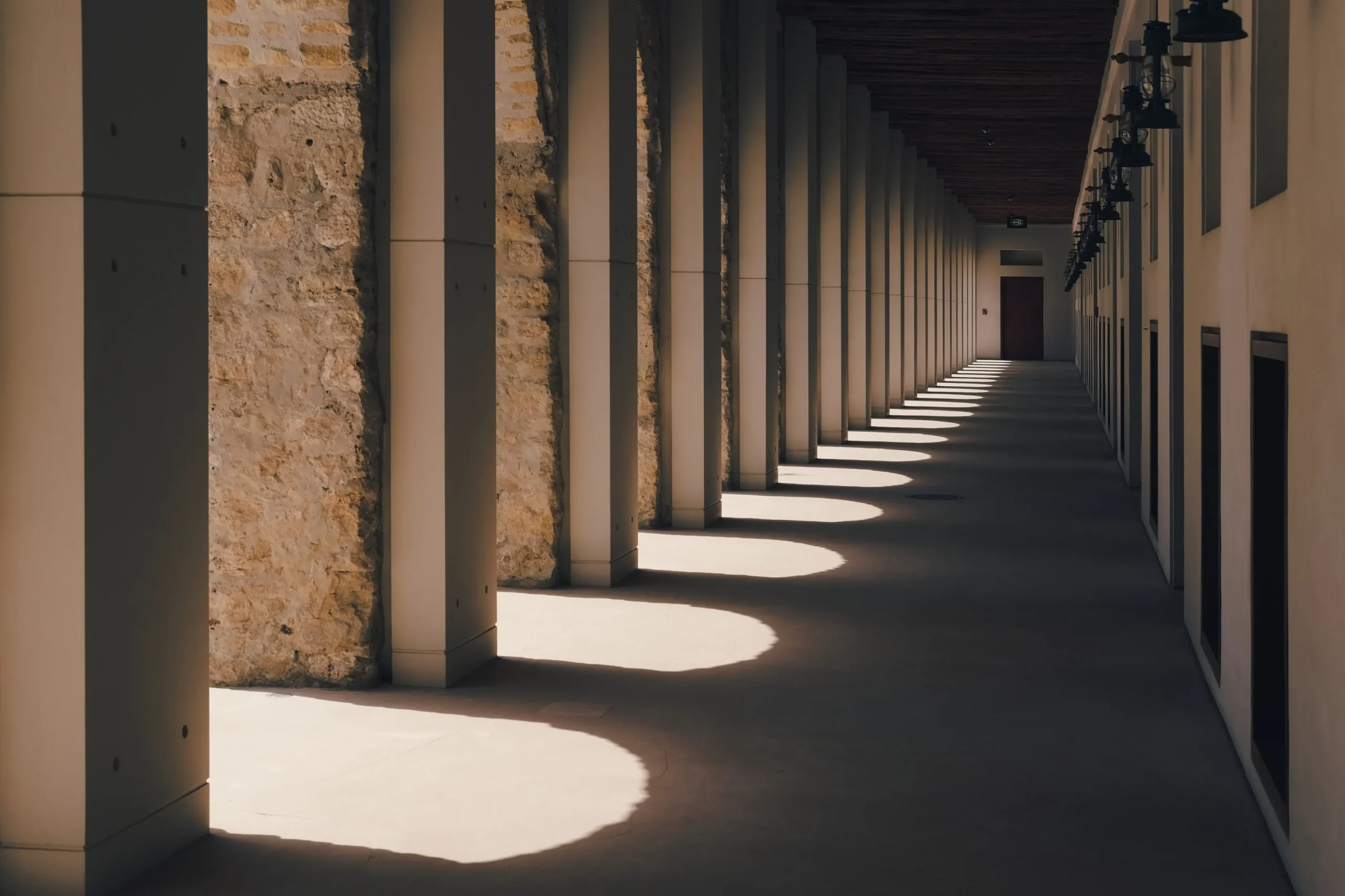
A row of arches receding into the distance combines repeated structure with changing apparent size. A staircase may alternate bright steps and dark risers. These arrangements can encourage the viewer to follow a sequence through the frame.
Try this: Photograph a corridor from one end, then from the side. Compare the progression toward the distance with the more even spacing of the side view.
Your AI-Powered Photo Editor for MacOS and Windows
7. Reflections and Symmetry

A reflection can duplicate a subject across water, glass, or a polished surface. It may create symmetry, though a single reflected mountain is not the same kind of repeating pattern as a grid of windows.
Some reflections also contain repetition within them: columns reflected in a puddle, for example, create both recurring subjects and a mirrored relationship.
Camera height changes how much reflection appears. Water movement can turn a clear duplicate into repeated streaks or fragments. Decide whether clarity or distortion better suits the photograph.
Try this: Photograph a reflection from several heights. Include the dividing line in one frame and crop it out in another to see how the relationship changes.
8. Repeated Shadows
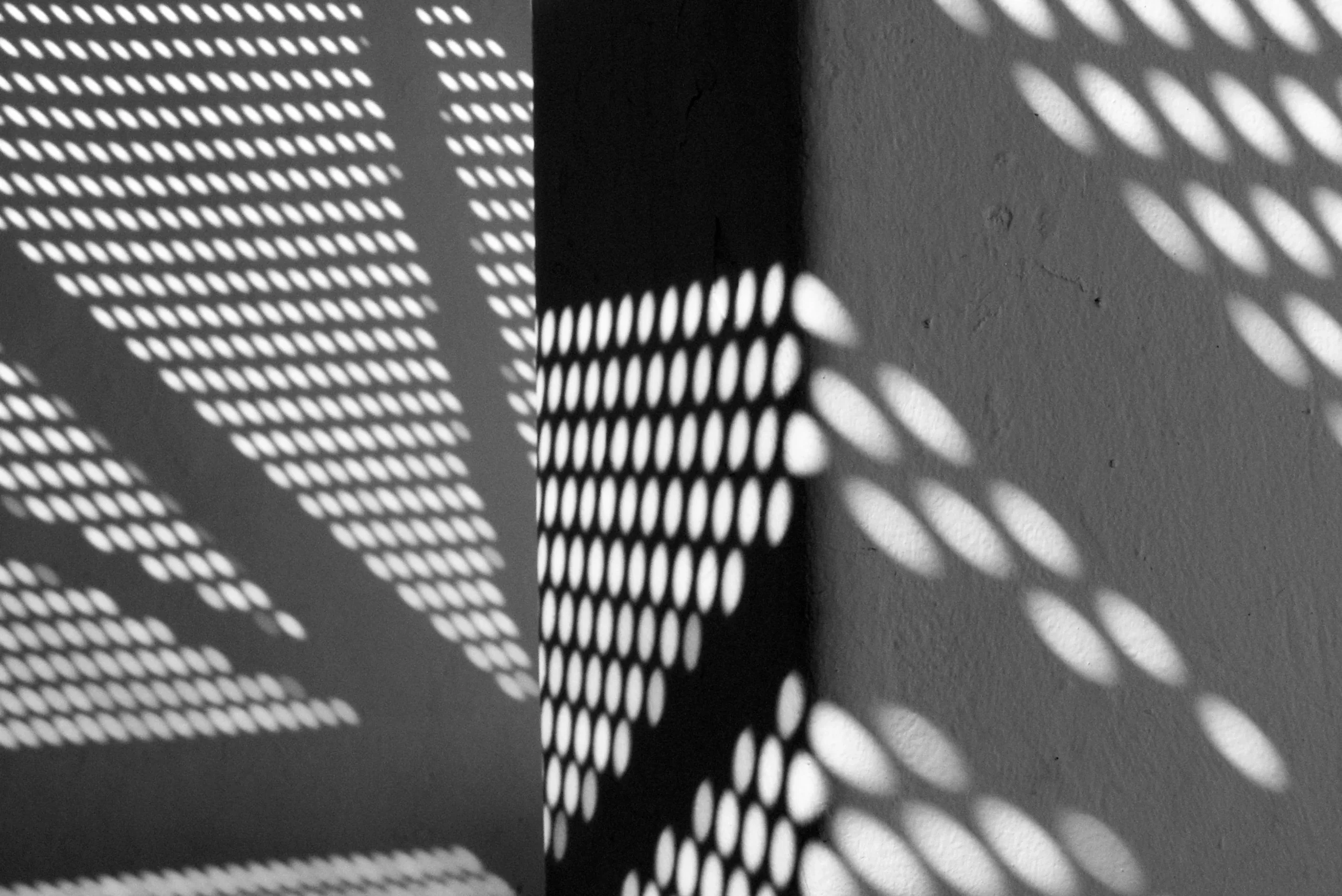
Railings, blinds, branches, and perforated screens can project repeated shapes onto another surface. Sometimes their shadows create a cleaner pattern than the objects themselves.
The sun’s direction and height change the length and placement of outdoor shadows. Check the actual scene rather than assuming that a particular time will produce the arrangement you want.
A plain wall or pavement can make the pattern easy to read. A person or object crossing it can introduce a focal point, provided that the interruption remains visually clear.
Try this: Frame only the shadows from a fence. Then include part of the fence in a second image to compare an abstract pattern with a more descriptive scene.
How to Compose a Repetition Photograph
Identify the Recurring Element
Describe the subject simply: repeated circles, alternating shadows, similar blue doors. If several unrelated elements compete, choose the one you want the photograph to emphasize.
This helps determine what to exclude. For a study of repeating doors, a bright parked car may draw attention away from the arrangement. Move, wait, or frame more tightly before relying on editing.

Choose Between a Flat Pattern and Receding Depth
For an even architectural grid, a position facing the surface squarely can reduce differences caused by perspective. Keep the camera level when you want vertical lines to remain orderly.
For a sense of depth, shoot along the sequence. Benches, columns, or trees can become progressively smaller and closer together in the image as they recede.
Neither approach is inherently better. The first emphasizes arrangement across the image; the second combines repetition with distance.
Fill the Frame or Leave Breathing Room
Filling the frame can make a pattern appear to continue beyond the photograph. It is useful for tiles, windows, leaves, and dense textures.
Negative space can instead give a smaller sequence room to stand out. Three repeated objects against a plain wall may need less visual density than a crowded field of flowers.
Check all four borders. A stray object at the edge or an awkward fragment can distract from an otherwise clear arrangement. Deliberately cropped elements are fine when they support the image’s structure.
Decide Whether to Break the Pattern
A broken pattern establishes an expectation and then introduces a difference. Examples include one open shutter among closed ones, a missing tile, or a person among identical seats.
The difference should be readable at the size the image will be viewed. If it disappears in a small preview, change the framing or wait for a clearer moment.
Do not assume every photograph needs an interruption. A continuous pattern may be the whole subject. Likewise, do not automatically erase an irregularity that gives the photograph its meaning.
Simplify the Background
Repeated subjects are easier to recognize when they do not merge into competing details. Try changing camera height, moving sideways, or selecting a background with a different brightness.
Background blur can help isolate a row of objects, but it can also blur parts of the repetition you need. Use enough depth of field to preserve the elements that matter.

Camera Settings and Capture Tips
You can practice repetition photography with a phone or an interchangeable-lens camera. Framing and light matter more than a particular camera model.
| Situation | Useful starting approach | What to check |
| A flat facade or tiled wall | Keep the camera aligned with the surface; on a camera, try a moderate aperture such as f/5.6–f/8 | Sharpness across the frame and unintended converging lines |
| Objects extending into the distance | Choose focus and aperture according to how much of the sequence needs to stay sharp | Whether distant elements remain readable |
| A close-up texture | Use precise focus and stabilize the camera when needed | Depth of field can become limited at close distances |
| Repeated moving subjects | Use a shutter speed appropriate to their movement | Motion blur and the timing of gaps or overlaps |
| A shadow pattern | Expose to retain important bright areas | Whether shadows describe the intended shapes |
These are starting points rather than fixed settings. Increase ISO when necessary to maintain a usable shutter speed. A sharp photograph with some noise is often more useful than an unintentionally blurred one.
Inspect fine repeated details, such as fabric or screens, for moiré: unwanted bands or false colors produced when the pattern interacts with the camera’s sampling. Changing distance, angle, or focal length may help, so make an alternative frame while you are there.
For phone photography, use the grid to check alignment. Portrait mode may introduce blur or edge errors around repeated shapes, so compare it with the normal photo mode when accurate geometry matters.
Editing Repetition Photos in Luminar
Luminar provides cropping, tonal adjustments, color controls, and object removal that can help make an existing pattern clearer. It is useful when the photograph needs tighter framing, more consistent brightness, or a small distraction removed. The strongest results still begin with a well-chosen viewpoint and a readable arrangement.
Start with framing. Use photo cropping tools to compare a dense, edge-to-edge pattern with a looser composition. Leave enough of the sequence to establish repetition, especially if the image includes an interruption.

Then adjust exposure and contrast. Keep separation between adjacent shapes without turning shadows into featureless black areas or bright surfaces into blank white patches. Excessive detail enhancement can make textured patterns look harsh and draw attention to noise.

When recurring color connects the composition, make restrained adjustments that preserve the relationship between those areas. Understanding color grading helps distinguish an intentional overall treatment from correcting an unwanted color cast.

Use Erase selectively when an incidental distraction weakens the frame. This guide to removing unwanted objects from photos explains the approach. Repeated architecture and fine textures deserve close inspection: a filled area may contain mismatched spacing, bent lines, or duplicated details.

Before removing a person, missing object, or contrasting element, check whether it is the point of the photograph. In documentary work, follow the intended publication’s rules on content changes.
The Photo Perspective Correction Tool You've Been Waiting For
A Short Exercise to Train Your Eye
Choose one location with several repeating elements: a building facade, a kitchen shelf, or a path lined with trees. Make three versions:
- A continuous pattern: Fill the frame with the repeated element and exclude unrelated details.
- A pattern with depth: Change position so the elements recede through the image.
- An interrupted pattern: Include a visible difference, such as a gap, contrasting color, or moving subject.
Review the images together. Which one makes the recurring element clearest? Which creates a useful focal point? What changes when the photograph is viewed as a small thumbnail?
Repeat the exercise with shadows or colors instead of objects. It encourages you to recognize repetition through more than subject count alone.
Build a Clear Composition From Everyday Patterns
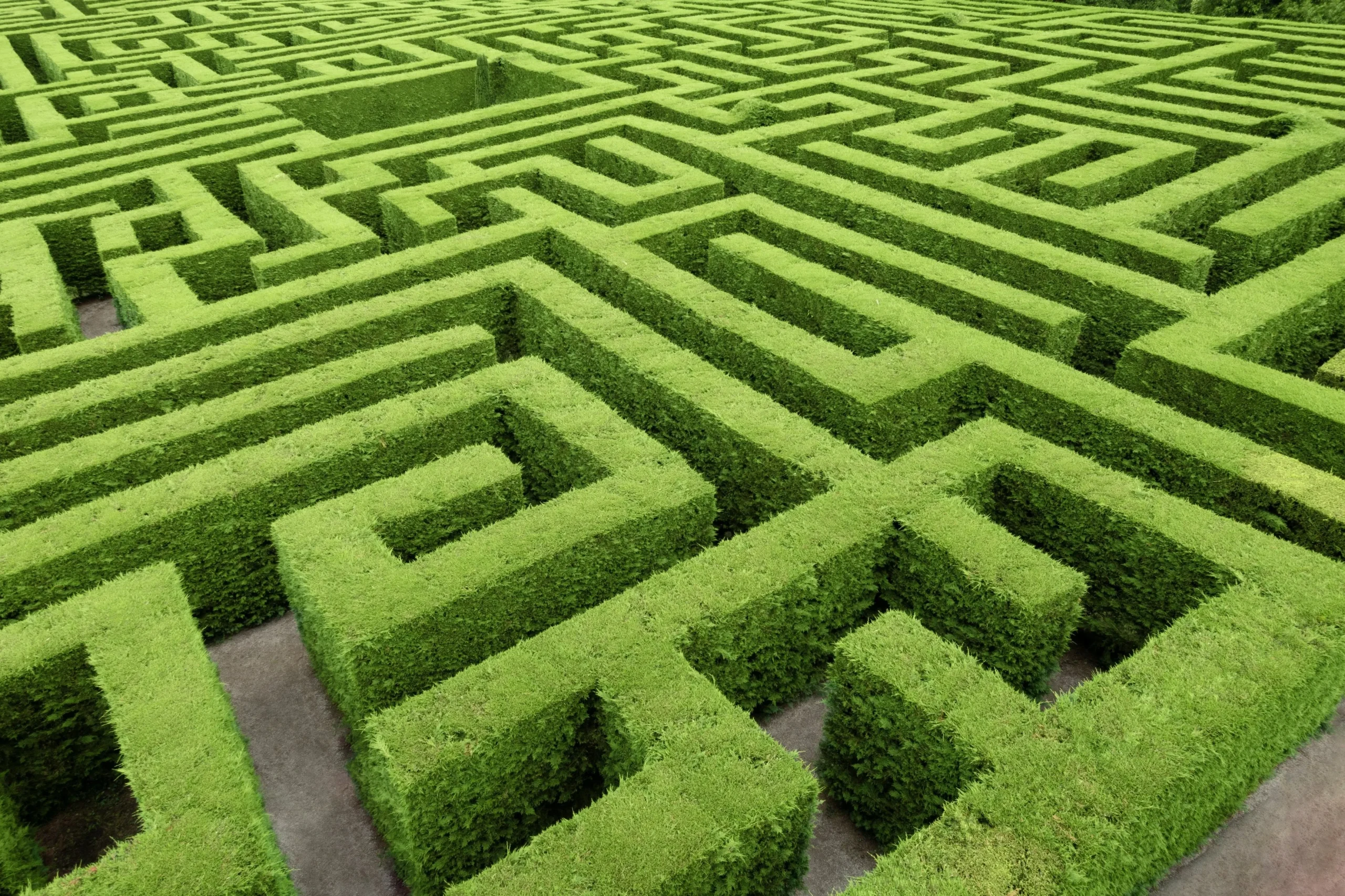
Repetition becomes useful when it gives the viewer something clear to follow. Find a recurring element, choose a viewpoint that reveals its relationship, and decide whether the image works best as a continuous pattern or a pattern with a difference.
Small decisions often make the biggest improvement: moving to separate overlapping shapes, waiting for a person to enter a sequence, or trimming a distracting edge. Start with familiar surroundings and compare several versions before settling on the frame.
Frequently Asked Questions
Repetition is the use of recurring visual elements to organize a photograph. Those elements may be objects, lines, shapes, colors, textures, or patches of light and shadow.
No. Repetition means that an element recurs. Symmetry describes a corresponding arrangement around an axis or center. A row of differently spaced trees can demonstrate repetition without symmetry.
Window grids, rows of chairs, roof tiles, leaves, repeated colors, and shadows from railings are accessible examples. Choose a viewpoint that makes the recurring feature easy to recognize.
An interruption can create a focal point or suggest a story. One different object stands out because the surrounding repetition establishes an expectation. Keep the interruption when it contributes to the image.
Yes. Use the grid to check alignment, keep the relevant elements in focus, and inspect the edges of the frame. Normal photo mode may preserve repeated structures more reliably than simulated background blur.