Review the sharpest Canon RF lenses on the market. Weigh autofocus performance, image stabilization, and overall value to choose your next lens.
The Canon RF mount has come a long way from its initial lineup, and by 2026, it covers nearly every focal length and price range. This is evident in lenses that are noticeably sharper at wide apertures compared to their EF counterparts. In this guide, we take a detailed look at the best RF lenses for maximum sharpness and low-light performance, and we’ll analyze how aperture choice affects real-world shooting conditions.
Don’t feel like reading the whole breakdown? We’ve pulled together a quick summary below.
Key Takeaways
- Match Gear to the Genre: Select lenses based on your specific shooting style. Wildlife photography requires long focal lengths and fast autofocus, while portrait work prioritizes wide apertures for maximum background blur.
- Aperture flaws: An f/2.8 zoom lets in twice the light of an f/4 lens, making it ideal for indoor events. Meanwhile, an f/4 alternative delivers comparable daylight performance at a fraction of the weight and cost.
- Prime Optical Advantages: Canon RF prime lenses maximize light transmission and edge-to-edge sharpness, consistently outperforming equivalent zoom models at the exact same focal lengths.
- Modern Mount Features: Recent RF designs incorporate voice coil motors (VCM) to reduce focus breathing in video, customizable control rings for quick setting adjustments, and internal zoom mechanisms for better physical balance.
- Post-Processing Utility: Shooting at maximum apertures (like f/1.2) or using ultra-wide lenses often introduces minor distortion. Applying specialized photo editing software quickly corrects these optical flaws and recovers edge details.
Top Canon RF Lenses for Every Photographer
The RF 24-105mm f/4L IS USM remains the most frequently recommended all-purpose zoom lens. It combines a focal length range, image quality, and compact size that are ideal for travel.
Photographers who prioritize low-light shooting and background blur typically choose the RF 24-70mm f/2.8L IS USM. In this case, they sacrifice some portability for an extra stop of light and better subject isolation.
In the budget segment, the RF 50mm f/1.8 STM provides sharpness in the center of the frame even at wide-open aperture. However, for perfect sharpness in the corners, you’ll need to stop down by one or two stops.
Exclusive Tools of Endless Possibilities in One Editor
Essential Features of Canon RF Lenses
Several design features distinguish RF lenses from older Canon EF lenses, most of which are related to the shorter flange focal length of the mount. Nano USM and the newer VCM (voice coil motors) focusing systems have replaced the older ring-type USM motors in several recent releases, reducing the “breathing” effect of focus during video recording.
- Internal-zoom designs. Models such as the RF 70-200mm f/2.8 L IS USM Z maintain a constant physical lens length throughout the entire focal length range.
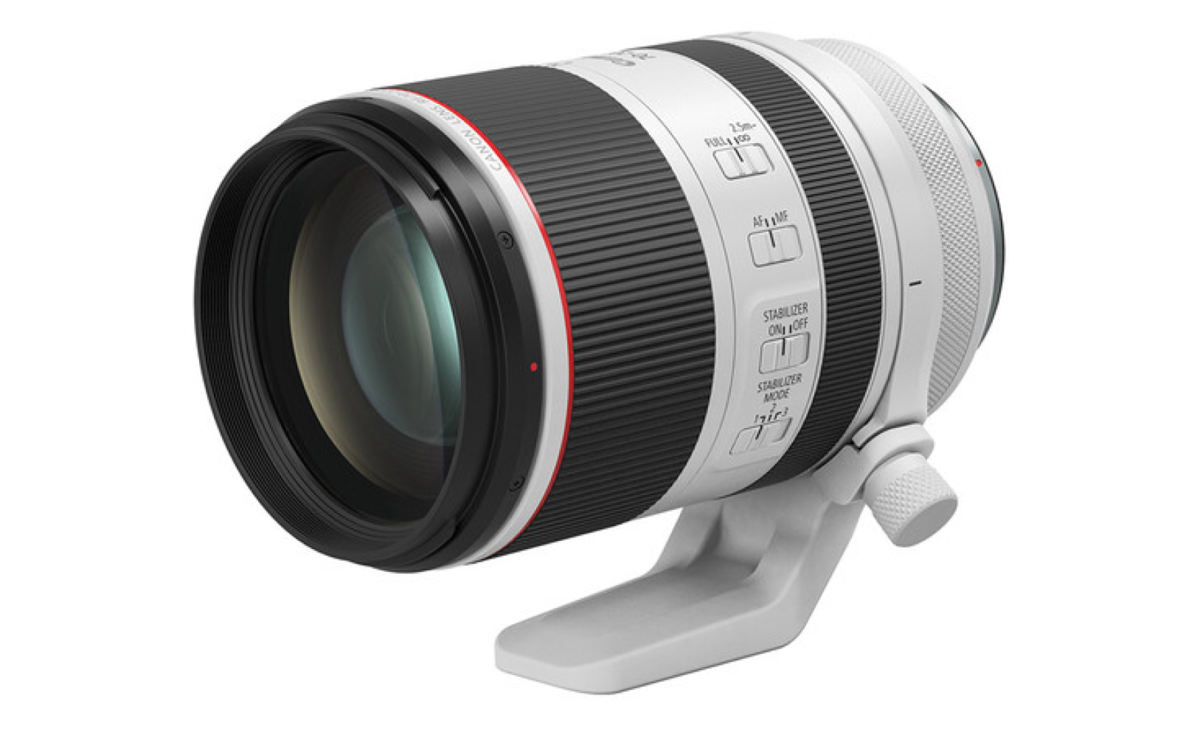
- Control rings. Built into most RF lenses, these enable photographers to adjust the aperture, exposure compensation, or ISO directly on the lens barrel.
- Fast optical designs. While zoom lenses offer flexibility, Canon RF prime lenses take full advantage of the mount’s design to deliver maximum light transmission and edge-to-edge sharpness.

Because these prime lenses naturally handle challenging lighting conditions, they produce clean images straight out of the camera. Photographers who edit large batches of images after a shoot often rely on RAW photo editor software to apply consistent color and exposure settings to hundreds of files at once.
Comparing Apertures: f/2.8 vs f/4 in Canon RF Lenses

The amount of light or the separation of the subject from the background depends on f/2.8 and f/4. A lens with an f/2.8 aperture lets in about twice as much light as an f/4 lens at the same settings. This directly translates to lower ISO settings and cleaner images in dimly lit rooms, at events, or during evening shoots.
- Portrait and event photography. The f/2.8 aperture provides natural background blur as soon as the action moves to a dimly lit room.
- Outdoor and architectural photography. Canon RF wide angle lenses are often used for daytime architectural photography. f/4 delivers comparable sharpness at a significantly lower weight.
- Weight and budget. Extra light comes at a price. Fast f/2.8 zooms typically weigh nearly twice as much as their f/4 counterparts and cost hundreds of dollars more.
Whether you’re shooting wide open at f/2.8 or stopping down to f/4, unpredictable lighting means that some images will require post-processing. Many creators rely on software like Luminar to quickly remove noise from high-ISO shots and balance exposure across an entire gallery without manually adjusting each individual frame.
Versatile Zooms and Prime Lenses in the Canon RF Lineup
Canon RF prime lenses have become some of the sharpest options in the entire system, often outperforming equivalent zoom lenses at any given focal length. They generally have the edge in sharpness and low-light performance, while variable focal length lenses win out in versatility, and most professional photographers end up carrying at least one of each type.
| Lens type | Pros | Cons |
| RF 35mm f/1.8 Macro IS STM | Compact, fast, doubles as a macro lens | Fixed focal length limits framing options |
| RF 24-105mm f/4L IS USM | Covers wide to short telephoto in one lens | Slower aperture than f/2.8 alternatives |
| RF 50mm f/1.8 STM | Cheapest entry into fast prime shooting | Softer corners wide open |
Photographers weighing the pros and cons of a kit focused on primes or zooms usually settle somewhere in the middle once they see how often each type actually comes out of the bag during a real shoot. And portrait or still-life photographers who prefer prime lenses often finish their sessions in Luminar to quickly adjust skin tones and details before delivering their work. If you come across references or links to Luminar AI, note that Skylum stopped selling it in October 2022 and completely replaced it with Luminar.
Your AI-Powered Photo Editor for MacOS and Windows
Selecting the Right Canon RF Lens for Your Style
Shooting with a wide-angle lens requires different priorities than portrait photography or using Canon RF telephoto lenses. For astrophotography and night sky photography, you can count on the RF 14mm f/1.4L VCM. It maintains sharp detail from edge to edge even at the widest aperture.
Whereas the RF 16mm f/2.8 is suitable for vlogging or everyday wide-angle shots, though with more noticeable softness in the corners and barrel distortion that requires post-processing correction.
The best Canon RF lens for portraits belongs to the RF 85mm f/1.2L USM for maximum background blur. Or use the more affordable RF 85mm f/2 Macro IS STM if you don’t need the widest aperture.
Images shot at f/1.4 or f/1.2 often exhibit noticeable distortion or softness toward the edges of the frame, which cannot be corrected by standard sharpening. So processing these images using lens correction usually lets you recover more useful details than simply adjusting the sharpness.
Understanding Lens Choices and Photography Needs
Choosing a lens for a specific genre gives better results than choosing based solely on budget. Wildlife and sports photographers need a long focal length and fast autofocus more than they need a wide aperture, since most of these shoots take place outdoors in bright light.
Portrait and photojournalism photographers have opposite priorities. For them, aperture and bokeh quality take precedence over zoom range, and the subjects are usually at a fairly close working distance.
Still life and architectural photographers need both a wide field of view and high sharpness in the corners at a narrow aperture (f/8 or f/11), which is actually where most of these shots are taken.
Spotlight on Canon RF Macro and Telephoto Options
Macro photography in the RF system centers around the RF 100mm f/2.8L Macro IS USM. It combines true 1:1 magnification with the build quality of the L-series.
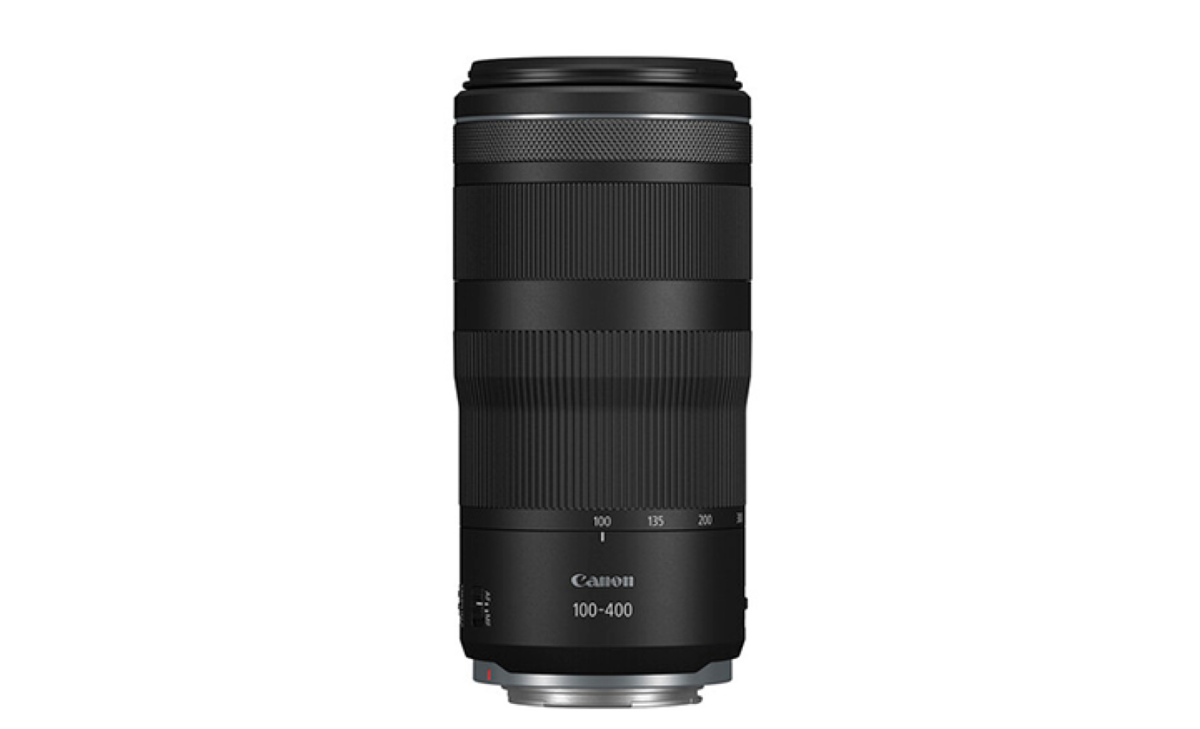
- A lightweight option for travel. The RF 100-400mm f/5.6-8 IS USM is ideal for photographers who need a long focal length without the flagship price tag.
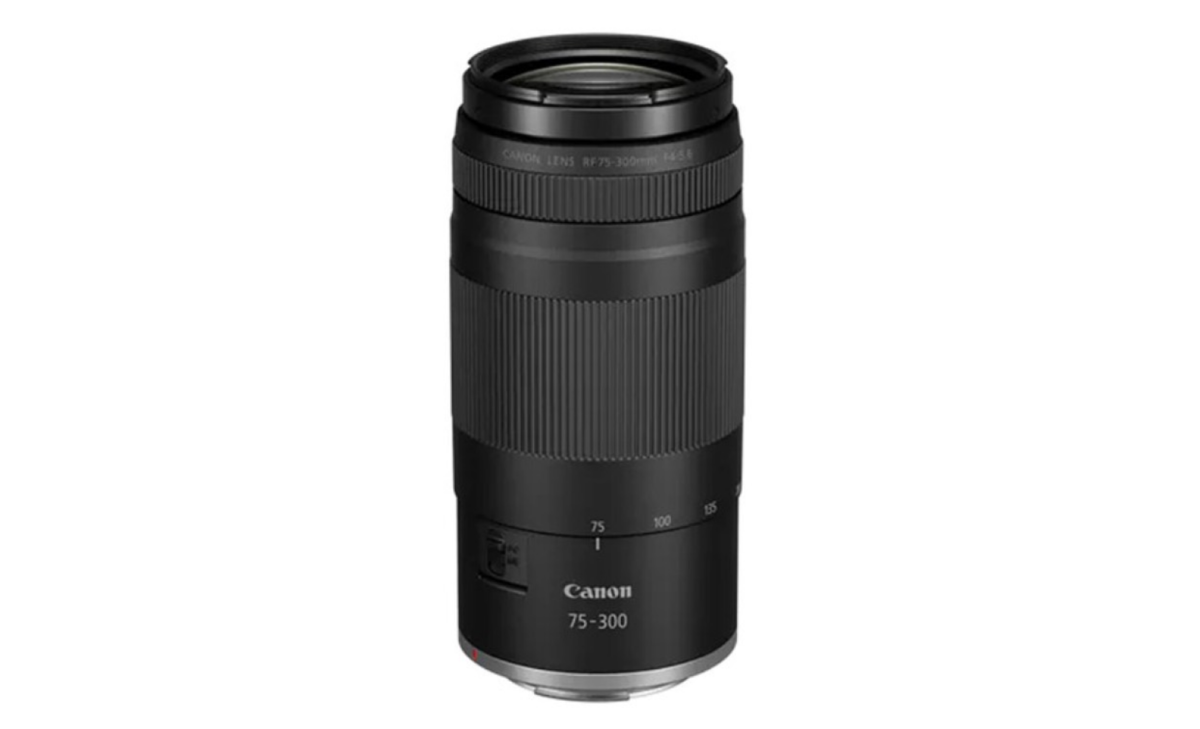
- Budget-friendly option. The RF 75-300mm f/4-5.6 is designed for beginners who primarily need a zoom lens for shooting children’s sports or amateur wildlife photography.
- High-end segment. The RF 70-200mm f/2.8L IS USM lives up to its reputation as the sharpest telephoto lens in Canon’s history. It relies on an extending barrel to stay compact when packed away, unlike the older EF model, which kept a constant physical length.
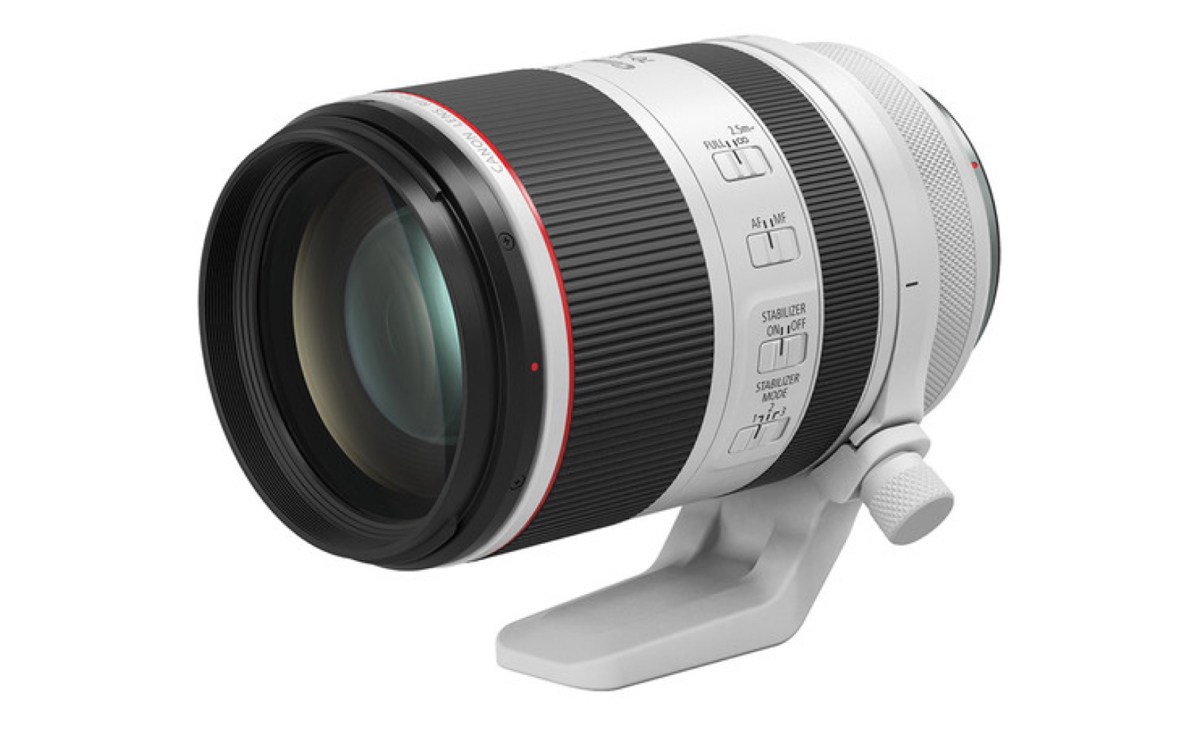


Since using budget lenses or shooting at extreme focal lengths is often accompanied by vignetting or chromatic aberrations, photographers apply photo corrections during post-processing to instantly correct these optical flaws.
Elevate Your Photography with Our Advanced Software
Tips for Building a Balanced Canon RF Lens Collection

A well-thought-out RF lens kit is all about filling in the gaps in what you already have. So consider all flaws before making your next purchase.
- Start with one versatile zoom lens and one fast prime lens, and then add specialized lenses when you encounter a gap in your workflow.
- Honestly evaluate the trade-off between f/2.8 and f/4—the extra light is much more useful for indoor and event photography.
- Include correction tools in your budget along with fast prime lenses, since both wide apertures and ultra-wide focal lengths create distortion that requires further correction.
- Rent or borrow a lens before buying anything more expensive than $1,500, since the actual experience of using it often changes a decision that seemed final on paper.
- Review your kit once a year, as the Canon RF lineup is constantly expanding, and a gap that made sense to leave open in 2024 may now have a worthy option to fill it.
This approach to building a kit usually makes it possible to assemble a set of lenses that you’ll use regularly, rather than an expensive collection of lenses that you only take off the shelf for rare, specialized shoots.