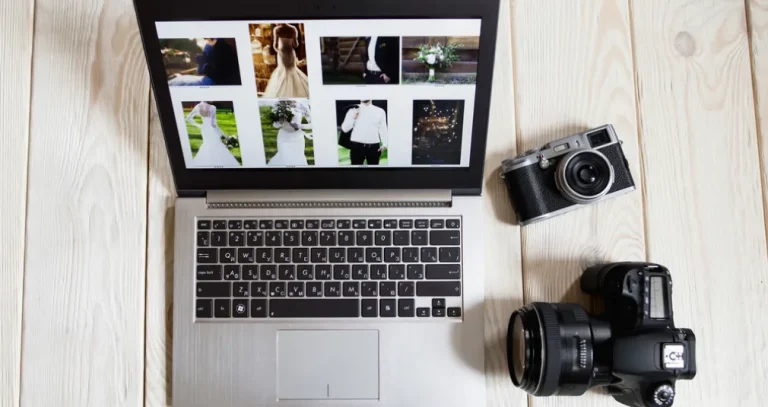
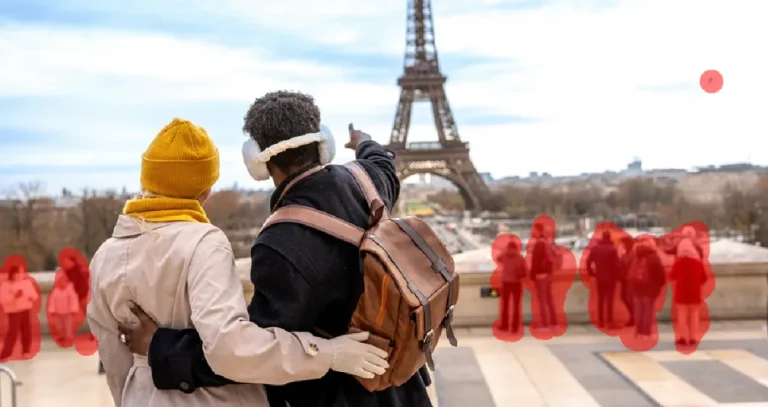
Not sure which type of photography to explore next? I’ll walk you through popular genres, what makes each one different, and practical ways to get started.
Photography offers many ways to tell a story. I’ll walk through 24 popular and specialist approaches, explain what makes each different, and suggest simple ways to try them.
If you are choosing a direction, start with what you enjoy photographing: people, places, movement, or objects. You can explore several genres with your existing camera or phone before deciding whether specialist equipment would help.
Don’t feel like reading the whole breakdown? We’ve pulled together a quick summary below.
Key Takeaways
- Genres, styles, and techniques overlap. Portrait describes a subject, black and white describes an approach to color, and film describes a recording medium.
- Start with accessible subjects. Portraits, still life, food, and local landscapes provide useful practice without an elaborate setup.
- Choose equipment around a real limitation. Macro, underwater, and some astrophotography work may require specialist tools.
- Practice one skill at a time. Light, composition, timing, and communication matter across different types of photography.
- Edit according to the image’s purpose. Creative composites allow invention; documentary and scientific work require attention to accuracy.
What Is Photography?
Photography records light using a light-sensitive medium, such as a digital sensor or photographic film. Creatively, it combines choices about subject, viewpoint, timing, framing, and exposure.
A modern camera can automate focus and exposure, but it cannot decide what a photograph should communicate. That remains the photographer’s work.
I find it more useful to think about photography as a set of choices than as a collection of equipment. The same location can become a landscape, a documentary scene, or the setting for a portrait.
Exclusive Tools of Endless Possibilities in One Editor
Photography Genres vs. Styles and Techniques
There is no single official number of photography genres. Categories overlap, and photographers organize them differently.
| Category | What it describes | Examples |
| Genre or subject | What you photograph | Portrait, landscape, wildlife, architecture |
| Purpose | Why the image is made | Commercial, documentary, scientific |
| Style | How the photograph looks or expresses an idea | Black and white, fantasy, fine art |
| Technique or medium | How you capture or construct it | Macro, infrared, composite, film |
A black-and-white film portrait belongs to several categories at once. “Contemporary photography” is also a broad description of current photographic practice, rather than one specific shooting method.
The list below includes genres, styles, and techniques so you can compare practical options without treating them as mutually exclusive.
People, Events, and Everyday Life
1. Portrait Photography

Portrait photography centers on a person or group. It can communicate personality, relationships, identity, or a particular role, from a family photograph to a professional headshot.
The challenge is balancing light and composition with the subject’s comfort. A technically sharp image may still feel awkward if the person looks uncomfortable.
Try it: Photograph someone beside a window. Ask them to turn slightly toward and away from the light, and compare how the face changes. I recommend giving simple directions rather than demanding a “natural” expression.
2. Fashion Photography

Fashion photography presents clothing, accessories, and a visual identity. Editorial shoots may tell a story; catalog images prioritize clear, consistent views of garments.
Styling, posing, location, and lighting all contribute to how the clothing reads. The outfit should remain legible even when the photograph is highly creative.
Try it: Build a small series around one outfit. Include a full-length view, a closer portrait, and a detail photograph. Check fabric texture and fit before moving on to effects.
3. Wedding Photography

Wedding photography combines portraits, events, details, and documentary storytelling. Photographers must work through changing light while capturing moments that cannot simply be repeated.
Preparation includes understanding the schedule, coordinating with the couple, and planning equipment backups. Consistency matters across the whole delivered collection.
Try it: Practice at a smaller gathering first. I would assist an experienced wedding photographer before accepting responsibility for a complete wedding.
4. Dance Photography

Dance photography explores movement, gesture, form, and expression. It can freeze a leap or use controlled blur to show the path of a movement.
Anticipation matters as much as shutter speed. Learning the choreography helps you recognize where the strongest shape will occur.
Try it: Work with a dancer on a repeatable movement. Compare a sharp frame with a slower exposure, and discuss which poses represent their technique accurately. Coordinate lighting with the venue and performer.
5. Sports Photography

Sports photography captures competition, effort, interaction, and reaction. A strong photograph might show decisive action, but it can also reveal the tension before a play or relief afterward.
Fast-moving subjects require practiced tracking and timing. A fast shutter helps freeze motion, while panning can deliberately blur the background.
Try it: Photograph a local practice session where permitted. Follow one player through a sequence and review focus, framing, and timing separately. Keep clear of play and follow venue rules.
6. Documentary Photography

Documentary photography tells stories about real people, places, and situations. A project often develops over time rather than relying on one dramatic image.
Context, captions, and the relationship with the subject are central to the work. Editing should preserve what happened, with any staging or reconstruction clearly explained.
Try it: Document a familiar routine in five images: an establishing scene, an interaction, a portrait, a detail, and a closing frame. I recommend choosing a subject you can revisit.
7. Street Photography

Street photography observes everyday life in public spaces. Gesture, light, coincidence, and the arrangement of people within a scene can become the subject.
It overlaps with documentary work, but a street photograph may focus on a brief visual encounter rather than a sustained story.
Try it: Choose one public location with interesting light and wait for the scene to develop. Consider privacy, local rules, and how your presence affects the people you photograph.
Nature, Places, and the Night Sky
8. Landscape Photography

Landscape photography explores natural scenery, from coastlines and mountain ranges to small woodland scenes. The challenge is turning a broad view into a deliberate composition.
Weather, light, and viewpoint often make more difference than a wider lens. Foreground elements can create depth, but they should support the scene rather than crowd it.
Try it: Revisit a nearby location in different conditions. Compare side light, overcast light, and the period around sunset. For a deeper approach, explore nature photography through light, composition, and timing.
9. Wildlife Photography

Wildlife photography follows animals in their environment. Images may emphasize behavior, habitat, relationships, or a close view of an individual.
Knowing the species helps you anticipate action and recognize signs of disturbance. Longer focal lengths can provide distance, but they do not replace responsible field practice.
Try it: Begin with common birds from a suitable distance. Observe their behavior before photographing them. Avoid baiting, disturbing nests, or moving closer simply to fill the frame.
10. Macro Photography

Macro photography explores small subjects at high magnification, such as insects, flowers, and tiny structures. Life-size reproduction, or 1:1, means the subject’s image on the sensor is the same physical size as the subject.
Close-up photography is a broader category; not every close view reaches this magnification. At short working distances, accurate focus and controlled light become especially important.
Try it: Start with a stationary leaf or small object. Stabilize the camera and compare different focus points. I would practice on still subjects before attempting moving insects.
11. Architecture Photography

Architecture photography presents buildings, structures, and their relationship to the surrounding space. It can document a design or interpret its lines, patterns, and scale.
Camera position affects perspective. Tilting upward makes vertical lines converge, which can be a deliberate choice or something to reduce through viewpoint and correction.
Try it: Photograph one building from several positions. Include an overall view and details that explain its character. Compare a level camera with an upward angle instead of assuming one approach is always correct.
12. Interior Photography

Interior photography shows rooms and how they function. Furniture, materials, spatial relationships, and light all need to remain understandable.
Bright windows and dim interiors can exceed what a single exposure records comfortably. Bracketed exposures may help when the scene is static, but merging cannot correct careless composition.
Try it: Photograph a tidy room from a natural viewing height. Keep the camera level and inspect the edges of the frame. Avoid making the room look misleadingly large through excessive wide-angle distortion.
13. Underwater Photography

Underwater photography includes marine wildlife, close-ups, environments, and portraits. Water affects color, contrast, and light differently from air.
Equipment must suit the depth and conditions. A waterproof camera or correctly rated housing is essential, while lighting needs vary with subject distance and available light.
Try it: Begin in controlled shallow conditions appropriate to your swimming ability and equipment. I would prioritize water skills and familiarity with the housing before pursuing a difficult photograph.
14. Astrophotography

Astrophotography includes the Moon, planets, star fields, and deep-sky objects. Night landscapes combine a terrestrial scene with the sky above it.
Different subjects require different setups. A wide star field can be a starting point with a suitable camera and tripod; detailed planetary or deep-sky work may involve additional optics, tracking, and stacking.
Try it: Choose a dark location and photograph a star field. Focus carefully and inspect test frames for trailing. Do not apply one fixed exposure rule to every focal length or sensor.
The Photo Perspective Correction Tool You've Been Waiting For
Objects, Food, and Commercial Work
15. Still Life Photography

Still life photography arranges inanimate objects into a deliberate composition. It offers control over placement, background, light, and the relationships between shapes.
This makes it a useful learning genre: the subject waits while you test an idea. It can be artistic, commercial, or simply an exercise in observation.
Try it: Arrange three household objects beside a window. Change only one element at a time—camera position, spacing, or light direction—and compare the results.
16. Food Photography

Food photography communicates texture, freshness, shape, and atmosphere. It ranges from everyday cooking photographs to restaurant campaigns and editorial recipes.
Lighting and viewing angle should suit the dish. An overhead view can explain a flat arrangement, while a lower angle may better show height and layers.
Try it: Photograph one dish beside a window with overhead room lights switched off. Use a neutral surface and compare side and back light. This food photography lighting guide explains useful setups.
17. Commercial Photography

Commercial photography creates images for business use, including product listings, advertisements, hospitality, and brand campaigns. It describes an intended use and overlaps with many other genres.
The brief determines what makes a successful image. A creative campaign photograph and a clear catalog image may serve very different requirements.
Try it: Write a mock brief for a household product. Specify audience, image dimensions, background, and space for copy. Produce a consistent set rather than relying on one attractive frame.
18. Water Drop Photography

Water drop photography captures droplets, impacts, and splashes. It combines still-life composition with precise timing.
Some images depend on short flash duration to freeze motion rather than shutter speed alone. A simple drop can be photographed without an automated collision setup; elaborate shapes require more control.
Try it: Photograph individual drops falling into a shallow tray. Keep electrical equipment away from spills and begin with repeatable framing. I recommend mastering a basic splash before trying collisions between multiple drops.
Creative Styles, Techniques, and Media
19. Black-and-White Photography

Black-and-white photography removes color to emphasize tonal relationships, form, texture, and gesture. It can be applied to almost any genre.
Monochrome does not automatically make an image more emotional or require extreme contrast. Soft gray transitions can suit a quiet scene just as well as deep blacks suit a graphic composition.
Try it: Convert an image with distinct textures and shapes. Check whether important areas separate by brightness after color disappears. Learn more about contrast in black-and-white photography.
20. Composite Photography

Composite photography combines elements from multiple images. A composite can use just two photographs; it does not require dozens or hundreds of frames.
The challenge is making the relationship between the elements convincing or deliberately expressive. Perspective, scale, light direction, edge quality, and shadows all matter.
Try it: Combine two photographs with compatible viewpoints and lighting. I would start with a simple subject and background before introducing many elements. Describe an invented scene as a composite when viewers might otherwise mistake it for a record of an event.
21. Fantasy or Fairy-Tale Photography

Fantasy photography uses styling, setting, staging, and sometimes compositing to suggest an imagined world. It can begin with a real location and props rather than extensive digital effects.
A clear idea helps the visual elements work together. More overlays do not necessarily create a stronger story.
Try it: Plan a scene around one character, one location, and a small color palette. If you combine images, match their lighting. Luminar’s photo layers and masking tools can help control how elements appear together.
22. Infrared Photography

Infrared photography records near-infrared light rather than relying only on the visible spectrum. It can produce unusual relationships between foliage, sky, skin, and other materials.
A compatible filter and camera setup—or a converted camera—may be required. The result depends on the filter, scene, and processing; pink or purple foliage is a false-color interpretation, not an inevitable capture result.
Try it: Check your camera’s infrared suitability before buying equipment. A digital effect that resembles infrared does not capture the same information as an infrared photograph.
23. Film Photography

Film photography uses a light-sensitive film medium rather than a digital sensor. It can be used for portraits, landscapes, street photographs, and many other subjects.
The workflow includes choosing film, exposing it, developing it, and making prints or scans. Limited frames and delayed feedback can encourage deliberate shooting, although digital photography can also be practiced thoughtfully.
Try it: Use one film stock and record your exposure choices. I recommend learning the camera’s operation before making important photographs. Allow for development and scanning costs.
24. Scientific Photography

Scientific photography records subjects for research, measurement, education, or technical documentation. It can include microscopy, specimen photographs, time-lapse studies, and astronomical imaging.
A striking image is not enough if the purpose requires reproducibility or measurement. Scale, lighting, calibration, metadata, and a documented processing method may be necessary.
Try it: Photograph a specimen under consistent conditions with an appropriate scale reference. Keep originals and record your procedure. Do not remove or invent details that could change the interpretation of evidence.
Which Type of Photography Should You Try First?
I recommend choosing by access and interest before buying equipment.
| If you enjoy… | Try… | First skill to practice |
| Working with people | Portraits | Communication and light direction |
| Quiet, controlled experiments | Still life or food | Composition and shaping light |
| Exploring outdoors | Landscape | Timing and viewpoint |
| Observing everyday situations | Street or documentary | Anticipation and context |
| Following movement | Sports or dance | Tracking and timing |
| Building imagined scenes | Fantasy or composite | Planning and visual consistency |
| Studying small details | Close-up, then macro | Focus and stability |
Choose one small project and repeat it. A series gives you more useful feedback than an unrelated collection of subjects because you can see whether your decisions are becoming more consistent.
Your AI-Powered Photo Editor for MacOS and Windows
Editing Different Photography Genres With Luminar
Luminar is a photo editor for adjusting light, color, detail, and composition. It also offers masks and layers for selective edits and creative combinations.

I would consider it when you want photo adjustments and creative tools within the same workflow. Its RAW photo editor can provide a starting point for supported camera files, while local adjustments help direct attention within an image.
The appropriate edit depends on the genre. For a landscape, you might balance bright and dark areas. For a portrait, you might correct color and apply restrained retouching. For a fantasy scene, layers can support a more extensive transformation.
Documentary and scientific work need a different standard: follow the project’s rules and preserve factual content. Sky replacement or object removal can change what a scene communicates.
| Pros | Cons |
| Combines general photo adjustments with creative tools. | It is paid software; feature access depends on the plan. |
| Masks support selective corrections. | Automatic selections and enhancements still require review. |
| Layers can help build creative compositions. | It is not a substitute for specialist scientific analysis or capture equipment. |
| RAW support gives compatible files editing flexibility. | Editing cannot reliably rescue missed focus, absent detail, or poor timing. |
My suggested workflow is simple: correct exposure and white balance, refine the composition, make selective adjustments where needed, and review the result at its intended size. Keep the original so you can revisit the edit.
Build a Style Through Practice
A personal style can develop across several genres. You might return to similar light, color relationships, subjects, or ways of framing even when the subject changes.
Start with photographs you can make regularly. Repeat a small project, identify what worked, and change one decision in the next session. That gives you a practical route from exploring photography types to developing your own approach.
FAQ
There is no fixed total. Genres, purposes, styles, and techniques overlap, and different guides group them differently. This article covers 24 useful categories.
Still life, food, portraits, and local landscapes are accessible starting points. Choose something you can photograph repeatedly with the equipment you already have.
Yes. A smartphone can be useful for portraits, food, still life, street scenes, and landscapes. Small or distant subjects, low-light action, and specialist work may reveal equipment limitations.
It is more precisely a visual approach that can be applied across genres. A portrait, landscape, or documentary photograph can all be black and white.
No. Exploring several can help you discover what interests you. If you later build a portfolio for a particular audience, a focused selection can make your work easier to understand.