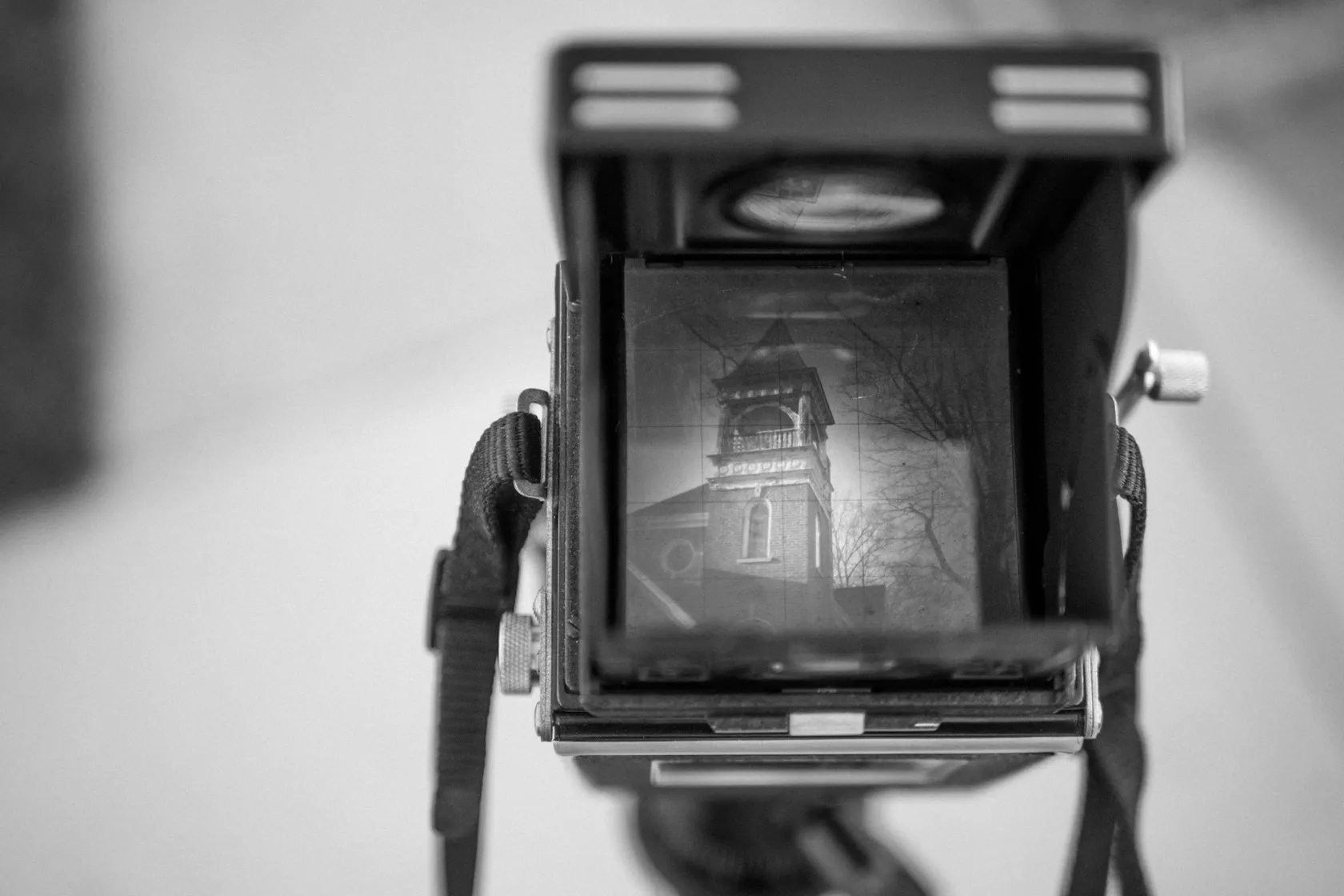
Discover fascinating facts about photography, from early cameras and famous images to digital technology and AI-powered editing. Explore the inventions, techniques, and milestones that shaped the medium.
Photography has transformed dramatically in less than two centuries. What began with long exposures on metal plates has evolved into digital cameras, smartphones, computational photography, and AI-powered editing tools.
Along the way, photographers developed new techniques, invented faster lenses and smaller cameras, documented major historical events, and created images that became cultural icons.
Here are some fascinating photography facts covering the history of the medium, camera technology, famous photographs, and the ways photography continues to evolve.
The history of photography is filled with experiments, unexpected discoveries, and technological breakthroughs. Some of the earliest photographic processes required hours of exposure, while later innovations gradually made cameras faster, smaller, and easier to use.
1. The Oldest Surviving Photograph Took Hours to Make
Joseph Nicéphore Niépce created View from the Window at Le Gras, generally dated to around 1826 or 1827. The photograph was made using a process called heliography and required an exceptionally long exposure.
The exact exposure time is debated, but it is commonly estimated to have been several hours. The resulting image is now regarded as the earliest surviving photograph produced with a camera.
2. Early Portraits Required People to Stay Very Still
Early photographic processes were relatively insensitive to light. Long exposure times made spontaneous portraits difficult, so subjects often had to remain motionless for extended periods.
The idea that people in old photographs never smiled simply because they were unhappy is therefore misleading. Technical limitations were a major reason early portraits tended to look serious and posed.
3. The First Photograph of a Person Was an Accident of Exposure
Louis Daguerre’s Boulevard du Temple, made in Paris in the late 1830s, is famous for containing one of the earliest recognizable photographic images of a person.
The exposure was long enough that most moving pedestrians disappeared from the image. A man having his shoes polished remained visible because he stayed in approximately the same position long enough to register.
4. The First Successful Color Photograph Dates to 1861
Scottish physicist James Clerk Maxwell demonstrated the principle behind an early color photograph in 1861, with photographer Thomas Sutton producing the image.
The process used three separate exposures through red, green, and blue filters. This was an important scientific demonstration, although practical color photography would take much longer to become accessible to ordinary photographers.
5. Kodak Helped Bring Photography to a Wider Audience
George Eastman’s Kodak camera, introduced in 1888, helped make photography considerably more accessible.
Instead of requiring photographers to prepare photographic plates and process them themselves, Kodak’s system used roll film and a relatively simple camera. Customers could send the camera and film back to Kodak for processing.
This helped move photography away from being an activity reserved mainly for specialists.
6. Pictorialism Treated Photography as an Art Form
In the late 19th and early 20th centuries, Pictorialist photographers deliberately used soft focus, atmospheric effects, and printing techniques that gave photographs a painterly appearance.
The movement challenged the idea that photography was valuable only for accurately recording reality and helped strengthen its position as a fine-art medium.
Technological Innovations That Changed Photography
Camera technology has repeatedly changed what photographers can capture and how they work.
7. The Camera Obscura Predates Photography
The basic optical principle behind a camera is much older than photography itself.
A camera obscura is essentially a darkened space with a small opening through which light projects an image of the outside scene onto an interior surface. Artists and scientists used the principle centuries before photographic materials existed.
Photography added a crucial ingredient: a light-sensitive surface capable of permanently recording the projected image.
8. The Petzval Lens Made Portrait Photography Faster
In 1840, mathematician Joseph Petzval designed a lens specifically suited to portrait photography.
The Petzval lens was dramatically faster than the lenses used with the earliest daguerreotype cameras, reducing exposure times and making portrait photography more practical. The Smithsonian notes that it could reduce exposure times to a minute or less under suitable conditions.
9. The Leica I Helped Popularize Compact 35mm Photography
The Leica I was publicly introduced at the Leipzig Spring Trade Fair in 1925.
Its compact design and use of 35mm film helped establish a new approach to photography. Smaller cameras made it easier to photograph everyday life, contributing to the development of modern reportage and street photography.
10. Instant Photography Became a Reality in 1948
The first Polaroid instant camera was introduced in 1948.
Instead of sending film away for processing, photographers could produce a print shortly after taking the picture. Instant photography later became popular for family snapshots, creative experimentation, and professional applications.
11. The First Digital Camera Prototype Was Built at Kodak
In 1975, Kodak engineer Steve Sasson built an experimental digital camera.
The prototype used a CCD sensor and recorded black-and-white images to a cassette tape rather than film. It was far from the compact digital cameras that would eventually become commonplace, but it demonstrated a fundamentally different way of capturing photographs.
The development marked an important step toward the digital photography era.
12. One Early Digital Camera Stored Only a Handful of Images
Fujifilm’s FUJIX DS-1P, announced in 1988, was an early digital camera prototype that recorded images onto a 2MB SRAM memory card.
According to Japan’s National Museum of Nature and Science, the prototype could store up to 10 field images or five frame images on the card. It was not commercially marketed.
That sounds tiny by today’s standards, but at the time it represented a major shift: images could be recorded electronically rather than on film.
Elevate Your Photography with Our Advanced Software
13. Photography Has Been Manipulated Almost Since Its Beginning
Photo manipulation did not begin with Photoshop or AI.
Early photographers experimented with negatives, prints, multiple exposures, retouching, and compositing. In the 19th century, photographers could alter negatives by painting or scratching them, demonstrating that photographs were never completely immune to human intervention.
This history is useful to remember when discussing modern AI editing: digital manipulation is new in scale and speed, but not in principle.
14. SLR Cameras Let Photographers See Through the Taking Lens
Single-lens reflex cameras use a mirror and prism system that allows photographers to view the scene through the same lens used to make the exposure.
This made framing and focusing more direct and helped SLR cameras become an important tool for generations of photographers.
15. CompactFlash Became an Important Digital Storage Format
CompactFlash was introduced in 1994 and became widely used in digital cameras and other electronic devices.
Memory cards dramatically changed photography by allowing photographers to store many images in a tiny physical space. Today, much higher-capacity SD, CFexpress, and other cards are used in modern cameras.
16. Polarizing Filters Can Reduce Reflections
A polarizing filter can reduce certain reflections and glare while affecting the appearance of skies and other surfaces.
The effect depends on the angle of the light and the photographer’s position relative to the sun. Unlike simply increasing saturation in an editor, a polarizer changes the light entering the lens before the photograph is captured.
Photographs That Changed How We See the World
Some photographs are remembered not because of the technology used to make them, but because of what they communicate.
17. “Migrant Mother” Became an Icon of the Great Depression
Dorothea Lange photographed Florence Owens Thompson and her children in Nipomo, California, in 1936.
The image known as Migrant Mother was part of a larger series Lange made while documenting migrant farm workers. It later became one of the most recognizable photographs associated with the Great Depression.
The photograph is also a reminder that famous images have complex histories. The Library of Congress collection includes several photographs from the same session, providing a broader context than the single iconic frame.
18. “Pale Blue Dot” Shows Earth From Billions of Miles Away
On February 14, 1990, NASA’s Voyager 1 spacecraft photographed Earth from approximately 3.7 billion miles, or about 6 billion kilometers, away.
Earth appears as a tiny point of light in the resulting image, which became known as Pale Blue Dot. The photograph was part of a larger series of images showing several planets in what NASA calls the first family portrait of our solar system.
19. “Rhein II” Became One of Photography’s Most Valuable Works
Andreas Gursky’s Rhein II, created in 1999, sold at Christie’s in 2011 for approximately $4.3 million.
The photograph is also an interesting example of photographic manipulation: Gursky digitally removed elements from the scene to create the minimalist composition. Christie’s records the work as a 1999 chromogenic color print and identifies it as one of an edition of six.
20. “Bliss” Became One of the Most Recognizable Digital-Era Photographs
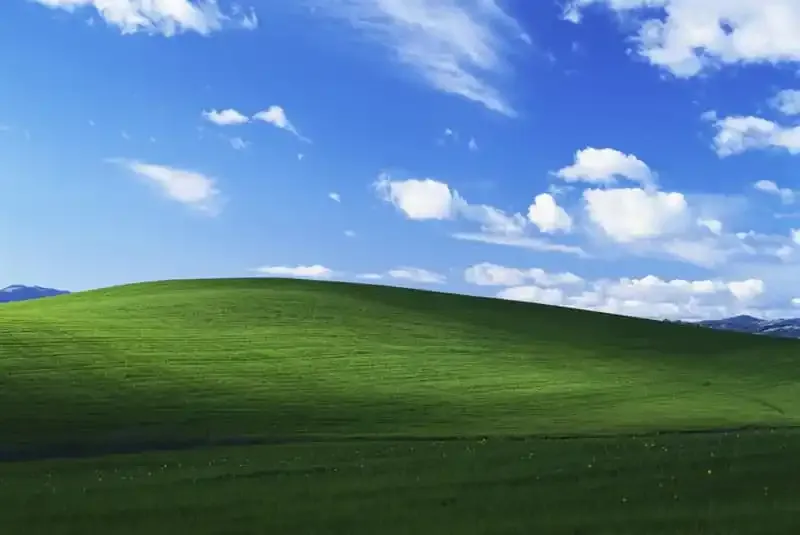
Charles O’Rear photographed the California landscape that became Bliss in 1996.
Microsoft later selected the image as the default Windows XP wallpaper. The photograph became extraordinarily familiar to computer users around the world, although claims that it was definitively the “most viewed photograph in history” are difficult to verify and are better treated as popular speculation rather than an established statistic.
The story is a fascinating example of how a photograph created as a landscape image can acquire a completely different cultural identity through technology.
21. Aerial Photography Began Before Aircraft Became Common
Early photographers experimented with taking photographs from elevated positions, including balloons.
In 1858, French photographer Nadar is credited with making aerial photographs from a balloon over Paris. The oldest surviving aerial photograph is generally credited to James Wallace Black, who photographed Boston from a balloon in 1860.
The technique opened a completely new perspective for mapping, journalism, science, and eventually military reconnaissance.
Your AI-Powered Photo Editor for MacOS and Windows
The biggest changes in photography today are not necessarily happening inside the camera. Much of the innovation is taking place in computational photography and image processing.
22. Smartphones Use Computational Photography
Modern smartphones can combine multiple exposures, frames, sensors, and computational algorithms to produce a single photograph.
Features such as HDR, night modes, portrait effects, and computational noise reduction can improve an image beyond what a single traditional exposure could achieve.
This means that a modern smartphone photograph can be the result of considerable processing before it even reaches an editing app.
23. AI Can Now Modify Photographs in Ways That Were Once Difficult
AI-powered editing tools can remove objects, extend compositions, enhance details, and generate new visual elements.
For example, Luminar includes GenErase, which can remove unwanted elements and generate replacement content based on the surrounding image. Its GenExpand tool can extend an image beyond its original frame.
These tools can be useful for creative photography and image cleanup, but they also make the distinction between editing and generating increasingly important.
If an edit changes the actual content of a documentary or journalistic photograph, the alteration should be disclosed or avoided according to the standards of the relevant publication or organization.
24. Film Photography Has Not Disappeared
Digital cameras dominate most everyday photography, but film continues to attract photographers interested in its physical process, distinctive rendering, and deliberate shooting experience.
The continued popularity of film also demonstrates that technological progress does not necessarily make older photographic processes irrelevant.
Sometimes photographers choose a slower or less convenient method precisely because it changes how they approach the image.
Conclusion
Photography has never been a static technology. In less than 200 years, it has evolved from lengthy exposures on early photographic plates to instant film, compact 35mm cameras, digital sensors, smartphones, computational photography, and AI-assisted editing.
Some of the most interesting photography facts are therefore not just about old cameras. They show how every technological change has influenced the way people see, record, edit, and share the world.
Whether you shoot on film, use a dedicated camera, photograph with a smartphone, or refine images with tools such as Luminar, the basic idea remains remarkably consistent: photography gives us a way to preserve a moment and give it meaning.
Frequently Asked Questions
When was the first photograph taken?
The oldest surviving photograph was created by Joseph Nicéphore Niépce in the 1820s. His View from the Window at Le Gras is generally dated to around 1826 or 1827.
Who invented the digital camera?
Kodak engineer Steve Sasson built an early digital camera prototype in 1975. It used a CCD sensor and recorded black-and-white images electronically rather than on film.
When was the first color photograph taken?
An early successful color photograph was demonstrated in 1861 by James Clerk Maxwell and photographer Thomas Sutton using three separate color-filtered exposures.
What is the most famous photograph in history?
There is no objective answer because “most famous” depends on the audience and how fame is measured. Images such as Migrant Mother, Pale Blue Dot, and Bliss are among the photographs that have achieved exceptional cultural recognition.
Can AI-generated images still be considered photography?
It depends on how the image was created. AI can assist with capturing, editing, or extending a photograph, but an image generated primarily from artificial content is better described as an AI-generated image rather than a conventional photograph. The distinction is especially important in journalism, documentary work, and other contexts where factual representation matters.
Subscribe to know first
Our delivery owl will bring you our best deals and news about Skylum news.