
Photography composition often comes down to how the elements in a frame relate to one another. One simple technique that can help organize those elements is the rule of odds.
The rule of odds suggests that an odd number of subjects—such as three, five, or seven—can create a more engaging composition than an even number. You can use it with people, objects, plants, buildings, or other visual elements.
It is not a strict rule, and an even number of subjects can work beautifully when symmetry, balance, or a particular story is the goal. The value of the rule of odds is that it gives you another compositional option to consider when arranging a scene.
Don’t feel like reading the whole breakdown? We’ve pulled together a quick summary below.
Key Takeaways
- The rule of odds uses an odd number of visual subjects, commonly three, five, or seven.
- Three subjects are often an easy starting point because they can form a natural triangular arrangement.
- Odd-numbered groups can create visual variety without requiring a complicated composition.
- Spacing, scale, depth, and positioning matter just as much as the number of subjects.
- The technique works in portrait, landscape, still-life, street, and product photography.
- You do not have to follow the rule when symmetry or an even grouping better suits the image.
- You can strengthen an existing composition through cropping, masking, tonal adjustments, and selective edits.
- The best way to learn the rule of odds is to photograph the same scene with different arrangements and compare the results.
What Is the Rule of Odds in Photography?
 The rule of odds in photography is a composition technique based on using an odd number of prominent subjects in a frame. Three, five, and seven are common choices, although there is no fixed maximum.
For example, you might photograph three flowers, five stones, or three people. Instead of arranging the subjects as identical pairs, you can vary their position, size, distance, or orientation to create a more interesting visual relationship.
Why can this work? An odd-numbered group does not divide as easily into pairs. That can encourage the viewer to move their attention between the subjects rather than immediately grouping them into equal sets.
However, the effect depends on the entire composition. An image with three poorly positioned objects will not automatically be stronger than an image with four well-arranged objects. The rule of odds should therefore be treated as a compositional guideline rather than a formula for better photographs.
Your AI-Powered Photo Editor for MacOS and Windows
How to Apply the Rule of Odds in Photography
There are several ways to incorporate odd-numbered subjects into a composition. The simplest approach is to look for natural groups of three, five, or seven and then experiment with how they are positioned in the frame.
Triangular Composition
 Three subjects can naturally form a triangle, making triangular composition a useful way to apply the rule of odds.
For a group portrait, for example, you could position one person slightly closer to the camera while placing the other two behind and to either side. The resulting arrangement gives the viewer a clear visual path through the group.
The triangle does not need to be perfectly symmetrical. In fact, small differences in height, posture, and distance can make the composition feel more natural.
When reviewing the image, pay attention to:
- The distance between each subject
- Differences in height and scale
- Where each person is looking
- Overlapping shapes
- Empty space around the group
If the arrangement feels crowded, a small crop can help improve the balance. You can also use photo editing software to make subtle tonal adjustments that separate the subjects from their surroundings.
Linear Composition
 Odd-numbered subjects do not have to form a triangle. You can also arrange them along a visual line.
Imagine three birds sitting on a fence or five stones following the edge of a river. The line gives the composition structure, while differences in spacing prevent the subjects from looking like identical points in a row.
Try changing the distance between subjects rather than placing them at equal intervals. For example, two objects can sit relatively close together while the third is farther away.
During editing, Luminar can help you refine contrast, exposure, and color so the subjects remain visually connected to the composition without becoming artificially prominent.
Framing and Positioning
 The number of subjects is only one part of the composition. Their position inside the frame can have an even greater effect.
Suppose you are photographing three sailboats. Rather than placing all three in the center, you could distribute them across the frame while leaving enough negative space around them.
You can also combine the rule of odds with other composition techniques, including:
- Rule of thirds
- Leading lines
- Negative space
- Foreground and background layering
- Symmetry and asymmetry
- Framing
Perspective is another useful variable. A low viewpoint can make three trees appear more imposing, while a high viewpoint can emphasize the arrangement of three objects on the ground.
If several exposures are needed to achieve sufficient depth of field, focus stacking can also be useful for scenes where foreground and background subjects need to remain sharp.
Rule of Odds in Different Photography Styles
The rule of odds can be used across many genres of photography, but the way you apply it changes depending on the subject.
Landscape Photography
 Landscapes often contain naturally occurring groups of three or five elements: trees, rocks, peaks, boats, or other objects.
For example, three prominent rock formations can provide visual anchors in a wide desert landscape. Five trees distributed across a field can create a rhythm that leads the eye through the scene.
Look for naturally occurring groups rather than forcing additional objects into the frame. If the scene already works with three elements, there is usually no reason to add more.
During editing, you can use a photo editor to refine exposure, contrast, and color while keeping the original relationships between the elements intact.
Portrait Photography
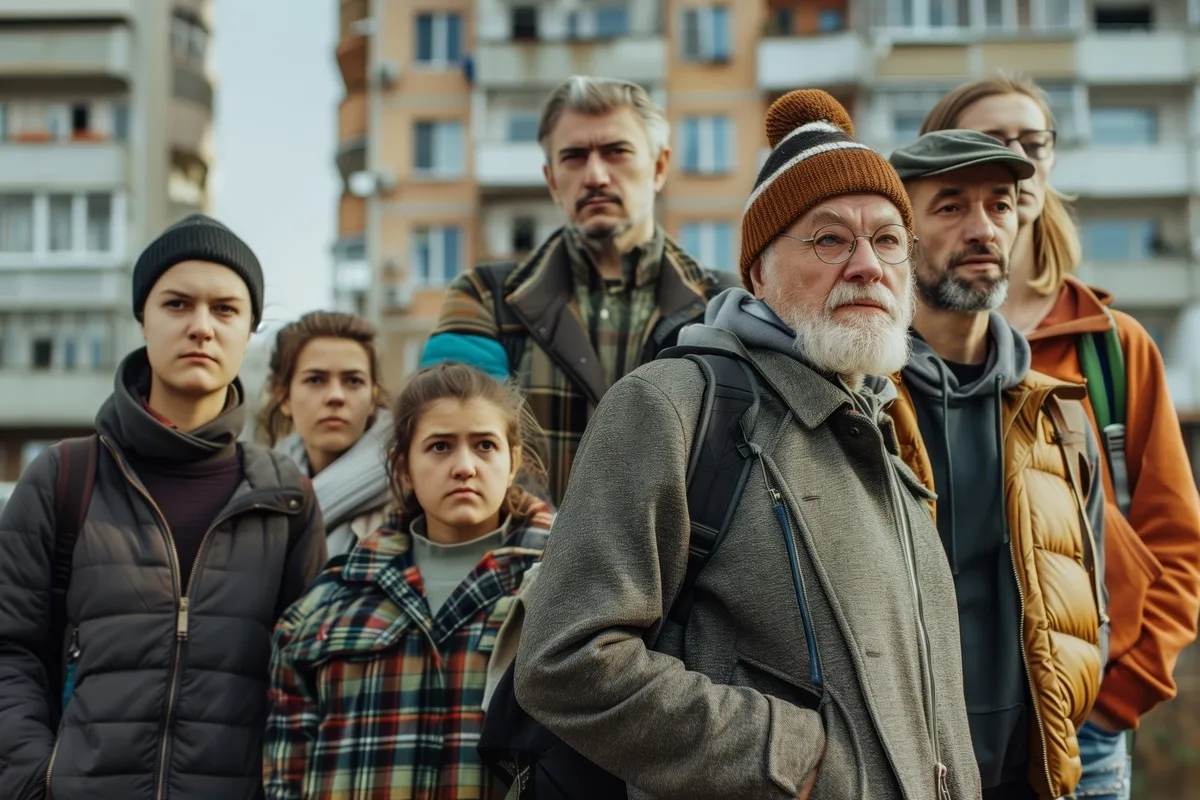 The rule of odds can be especially useful for group portraits.
Three people, for example, can be arranged in a triangle or staggered across different depths. This can create more visual variety than placing everyone shoulder-to-shoulder in a straight line.
For a family portrait, you might position one person slightly forward and place the other two behind them. Varying body angles and head positions can prevent the composition from looking rigid.
The goal is not simply to count the people. Pay attention to their relationships within the frame and make sure faces are not blocked or placed awkwardly.
Elevate Your Photography with Our Advanced Software
Still Life and Product Photography
 Still-life photography makes the rule of odds easy to practice because you can control every element.
Try arranging three apples, five candles, or three pieces of pottery. Then change their heights, angles, and distances from one another.
You can create depth by placing one object closer to the camera and the others farther back. You can also use differences in size to establish a clear visual hierarchy.
For product photography, the number of objects should support the purpose of the image. If the goal is to showcase one product, adding several unnecessary objects may distract from it. In a creative still life, however, an odd-numbered arrangement can provide useful structure.
If you need to isolate an object from a distracting background, Luminar’s Background Removal AI can help separate the subject before you refine the composition.
Street and Documentary Photography
 Street photographers rarely have control over how many people or objects enter the frame. That makes the rule of odds more of a way to recognize interesting compositions than something you deliberately construct.
You might notice three people waiting at a crossing, five birds sitting along a railing, or three bicycles parked near a wall.
In documentary photography, avoid changing the scene simply to create an odd-numbered arrangement. The composition should come from the moment rather than interfering with it.
When editing documentary images, restrained adjustments to exposure, contrast, color, and cropping can help clarify the composition while preserving the character of the original scene.
When the Rule of Odds Does Not Work
 The rule of odds is not something you need to follow in every photograph.
An even number of subjects can be more effective when the composition depends on symmetry, repetition, pairing, or balance. Two people holding hands, for example, can create a strong emotional image precisely because they form a pair.
Minimalist photography can also benefit from a single subject. A lone person in a large landscape may communicate isolation more effectively than a group of three.
Use the rule of odds when it improves the visual structure of the photograph—not simply because the number happens to be odd.
| Pros | Cons |
| Easy to experiment with | Does not automatically create a better composition |
| Works across many photography genres | Can feel forced if subjects are rearranged unnaturally |
| Three subjects are relatively easy to arrange | Less useful when symmetry or pairing is central to the image |
| Can create visual variety and rhythm | The number of subjects is only one compositional factor |
Practical Tips for Using the Rule of Odds
 You can practice the rule of odds almost anywhere. Start with simple objects and concentrate on how their relationships change when you move them.
Start With Three Subjects
Three is usually the easiest number to work with.
Place three objects on a table and photograph them several times. Change their spacing, height, and orientation. Then compare the images.
Ask yourself:
- Which object attracts your attention first?
- Do your eyes move naturally between the subjects?
- Is one object clearly dominant?
- Is there enough negative space?
- Does the background compete with the arrangement?
Once you are comfortable with three subjects, try five.
Vary Scale and Distance
Objects do not need to have equal visual weight.
Place one object closer to the camera and two farther away. Or make one subject larger while keeping the others smaller.
Differences in scale can create a clear hierarchy and prevent an odd-numbered group from looking repetitive.
Use Uneven Spacing
Equal spacing can make a composition feel predictable. Try moving the subjects closer together in one area and leaving more space elsewhere.
Uneven spacing can work particularly well with linear arrangements such as trees, stones, people, or architectural elements.
Use Negative Space
Negative space is the empty area surrounding your subjects. It can prevent an odd-numbered group from feeling crowded.
For example, three birds placed toward one side of the frame can work well when the remaining space suggests where they are looking or moving.
Add Depth
Instead of keeping every subject on the same plane, use foreground, middle ground, and background.
For example:
- Place one tree close to the camera.
- Position a second tree farther into the scene.
- Include a third tree in the distance.
Leading lines such as roads, fences, paths, or rivers can further connect the different areas of the frame.
Practice With Everyday Objects
You do not need a special location to learn the rule of odds.
Try photographing:
- Three coffee mugs
- Five flowers
- Three books
- Five stones
- Three chairs
- Three pieces of fruit
Photograph each arrangement from several viewpoints. This makes it easier to see how composition changes when the camera position changes.
Editing Rule-of-Odds Photos in Luminar
 Composition should primarily be solved while taking the photograph, but editing can help refine an arrangement that is already working.
With Luminar, you can crop an image, adjust exposure and contrast, refine color, or make selective adjustments to guide attention toward an important subject. Luminar also supports layer masking, which allows adjustments to be applied to selected areas rather than the entire image.
For example, if three flowers are arranged well but one blends into the background, you can make a subtle local adjustment to improve separation.
A simple editing workflow could look like this:
- Crop the image to remove distracting edges and improve the overall balance.
- Correct exposure and white balance before making creative adjustments.
- Adjust contrast and color so the main subjects remain distinct from the background.
- Use masking when only one area needs an adjustment.
- Remove distractions carefully if they interfere with the intended composition.
- Review the image at a smaller size to see whether the eye still moves naturally through the frame.
If you remove or replace a background, remember that this changes the original scene rather than simply correcting exposure or composition. Such edits may be appropriate for creative or commercial photography, but they should be disclosed or avoided when maintaining documentary accuracy is important.
Exclusive Tools of Endless Possibilities in One AI Editor
How to Know When the Rule of Odds Is Working
 The best way to evaluate a rule-of-odds composition is not simply to count the subjects.
Look at the image as a whole.
A successful composition usually has a clear visual hierarchy. One element may attract attention first, while the other subjects support it. The spacing should feel intentional, and the viewer should be able to move through the frame without getting stuck.
Try making two versions of the same photograph: one with three subjects and another with four or two. Compare them side by side.
Ask:
- Which version feels more balanced?
- Which one has a clearer focal point?
- Does the eye move through the frame naturally?
- Does the arrangement support the subject or story?
- Is the composition too symmetrical or too chaotic?
This experiment is more useful than blindly following a rule.
Conclusion
The rule of odds is a useful way to think about photo composition, especially when you have control over the number and placement of subjects. Start with three objects or people, experiment with triangular and linear arrangements, and pay attention to spacing, scale, depth, and negative space.
Most importantly, treat the rule as a starting point rather than a formula. Sometimes three subjects will create the strongest image; other times, two or one will tell the story better. Use the technique as a prompt to examine your composition more carefully, then make the final decision based on what the photograph needs.
Frequently Asked Questions
The rule of odds is a composition technique that uses an odd number of prominent subjects, such as three, five, or seven, to create visual variety and structure.
Odd-numbered groups can make it less obvious for the viewer to divide subjects into pairs, which may encourage the eye to move between them. However, the effect depends on the overall composition, not just the number of subjects.
Three is a practical starting point because it is easy to arrange and can form a triangle. Five or seven subjects can also work, provided the frame does not become cluttered.
Yes. The rule of odds is a guideline, not a requirement. Two subjects can be especially effective for portraits, relationships, symmetry, and minimalist compositions.
Yes. Cropping, tonal adjustments, color correction, and selective masking can help clarify an existing composition. Editing should support the relationships already present in the photograph rather than compensate for a fundamentally confusing arrangement.


