The best travel drones combine strong camera performance with a compact, lightweight design. Here are the top models to consider in 2026 for capturing aerial photos and videos on the go.
A good travel drone can turn an ordinary trip into a collection of aerial photos and videos that are difficult to capture from the ground. Mountains, coastlines, city streets, forests, and architectural landmarks can all look completely different from above.
But the best travel drone isn’t necessarily the biggest or most expensive model. For most travelers, portability matters just as much as image quality. A useful travel drone should be:
- Lightweight and compact
- Easy to pack and transport
- Equipped with a capable camera
- Stable in flight
- Long-lasting enough for practical shooting
- Easy to control and quick to set up
Modern compact drones can now combine small dimensions with 4K video, RAW photography, mechanical gimbals, obstacle sensing, and intelligent flight features. That makes them much more practical for travel than many older models.
Don’t feel like reading the whole breakdown? We’ve pulled together a quick summary below.
Travel Drone Comparison
| Drone | Weight | Camera | Max rated flight time | Best for |
| DJI Mini 5 Pro | 249 g | 1-inch, 50 MP | Up to 52 min* | High-quality travel photography |
| DJI Mini 4 Pro | <249 g | 1/1.3-inch, 48 MP | Up to 34 min | Lightweight all-round travel |
| DJI Flip | <249 g | 1/1.3-inch, 48 MP | Up to 31 min | Easy, casual travel shooting |
| DJI Neo 2 | 151 g | 4K video | Up to 19 min | Selfie and follow-me content |
| DJI Air 3S | 724 g | 1-inch + 1/1.3-inch | Up to 45 min | Travel photography with dual cameras |
| DJI Mavic 3 Pro | 958 g | Triple camera, 4/3 main | Up to 43 min | Advanced photo and video work |
- *The longer flight-time figure for the Mini 5 Pro depends on the battery configuration and local availability. Actual flight time varies with conditions.
Exclusive Tools of Endless Possibilities in One Editor
What Makes a Good Travel Drone?
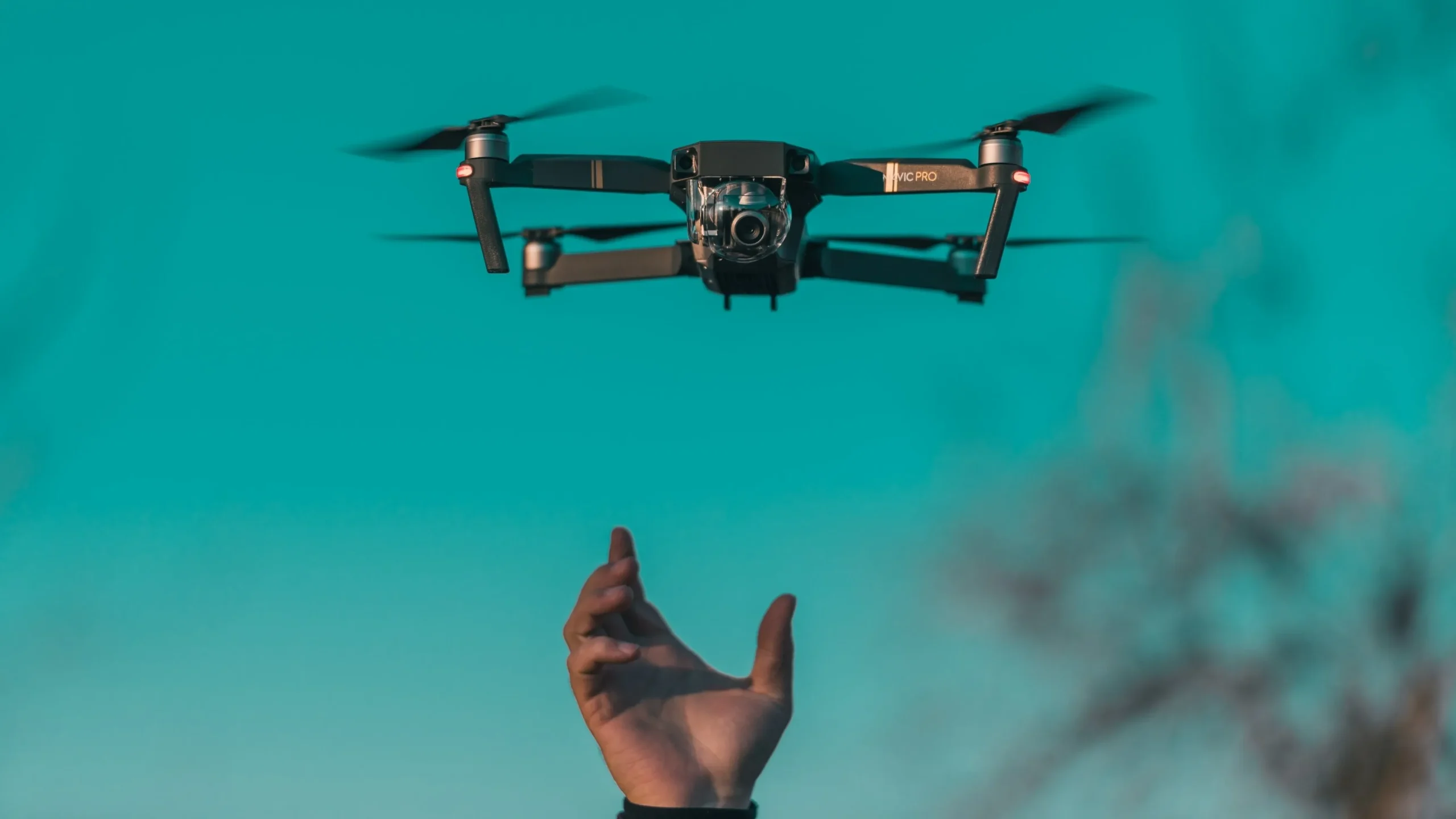
Travel photography places different demands on a drone than professional aerial work. You may have limited space in your luggage, only a short amount of time at a location, and no convenient way to recharge several large batteries.
Here are the most important things to consider.
Size and Weight
A compact drone is easier to carry through airports, hiking trails, cities, and other destinations. Foldable models are especially useful because they take up much less space when packed.
Weight can also matter from a regulatory perspective. In some jurisdictions, drones below certain weight thresholds fall into different regulatory categories. However, a lightweight drone is not automatically exempt from local registration or flight restrictions, so always check the rules where you plan to fly.
Camera Quality
If photography is your priority, don’t judge a drone camera by resolution alone.
Look for:
- Sensor size
- RAW photo support
- Lens quality
- Aperture
- Dynamic range
- Gimbal stabilization
- Video resolution and frame rates
- Color profiles for video
For serious travel photography, a RAW-capable camera is especially useful because it gives you more flexibility when editing highlights, shadows, and color.
Flight Time
Manufacturers quote maximum flight times under controlled conditions, so real-world flight time will usually be shorter.
For travel, around 30 minutes of rated flight time is already useful. Carrying additional batteries can be more practical than choosing a much larger drone simply for a longer single flight.
Obstacle Sensing
Obstacle sensing can make flying easier, particularly when you’re traveling somewhere unfamiliar.
It shouldn’t replace careful piloting, though. Sensors have limitations, especially around thin branches, wires, low-contrast surfaces, and difficult lighting conditions.
Portability
Think about the complete travel setup rather than the aircraft alone. The drone, controller, batteries, charging hub, spare propellers, filters, and cables all take up space.
A slightly larger drone may still be a good travel option if its entire kit fits comfortably into your bag.
Best Travel Drones for Photos and Videos
1. DJI Mini 5 Pro — Best Overall for Travel Photography

The DJI Mini 5 Pro is one of the strongest options for travelers who want excellent image quality without carrying a large drone.
Its 1-inch CMOS sensor captures 50 MP photos and supports RAW files, while video recording reaches 4K at up to 120 fps. The drone also features a 3-axis mechanical gimbal, omnidirectional obstacle sensing, and a forward-facing LiDAR sensor.
DJI lists its takeoff weight as approximately 249.9 g, although the actual weight may vary slightly. With the standard battery, the maximum rated flight time is 36 minutes.
The combination of a large sensor, compact folding body, and advanced safety features makes the Mini 5 Pro particularly suitable for landscape photographers and travel creators.
| Pros | Cons |
| Large 1-inch, 50 MP sensor | More expensive than most compact drones |
| RAW photography and 4K/120 fps video | Actual weight can vary around the 250 g threshold |
| Omnidirectional obstacle sensing | Battery Plus increases weight and may change its regulatory category |
| Compact and easy to pack | Real-world flight time is shorter than the advertised maximum |
2. DJI Mini 4 Pro — Best Lightweight All-Rounder

The DJI Mini 4 Pro remains a capable travel drone thanks to its weight of under 249 g, compact folding design, 48 MP camera, and 3-axis mechanical gimbal.
It supports RAW photography, standard 4K recording at up to 60 fps, and slow-motion 4K video at up to 100 fps. DJI also lists omnidirectional obstacle sensing and a maximum flight time of 34 minutes with the standard battery.
Although its 1/1.3-inch sensor is smaller than the Mini 5 Pro’s 1-inch sensor, the Mini 4 Pro still offers a strong balance of portability, image quality, and flight safety.
| Pros | Cons |
| Weighs under 249 g with the standard battery | Smaller sensor than the Mini 5 Pro |
| RAW photography and 48 MP photo mode | Maximum flight time is limited to 34 minutes with the standard battery |
| Omnidirectional obstacle sensing | Older model with fewer advanced features |
| Compact and easy to transport | Battery Plus pushes the weight above 249 g |
3. DJI Flip — Best for Easy Travel Shooting

The DJI Flip takes a different approach to portable drone design. It weighs less than 249 g and features a foldable, full-coverage propeller guard, making it particularly appealing to beginners and casual travelers.
Its 1/1.3-inch CMOS sensor can capture 48 MP photos and 4K/60 fps HDR video. A 3-axis mechanical gimbal provides stabilization, while subject tracking and palm takeoff make it easier to record yourself without a complicated setup.
DJI rates its maximum flight time at 31 minutes. The integrated propeller protection improves convenience, although it also makes the folded drone bulkier than some Mini models.
| Pros | Cons |
| Weighs less than 249 g | Shorter flight time than the Mini Pro models |
| Full-coverage propeller guards | Less advanced obstacle sensing |
| Palm takeoff and subject tracking | Folded design is relatively bulky |
| 48 MP photos and 4K/60 fps HDR video | Less suitable for advanced aerial photography |
4. DJI Neo 2 — Best for Selfie-Style Travel Content

The DJI Neo 2 is designed primarily for travelers who want to record themselves rather than capture traditional aerial landscapes.
At approximately 151 g, it is extremely light and easy to carry. It offers 4K video, subject tracking, gesture control, return-to-palm functionality, and omnidirectional obstacle sensing. DJI lists a maximum flight time of 19 minutes.
Its compact design is particularly convenient for hiking, cycling, sightseeing, and other activities where carrying a conventional camera drone would be inconvenient. However, its shorter flight time and more limited camera system make it less suitable for demanding aerial photography.
| Pros | Cons |
| Extremely lightweight and portable | Maximum flight time is only 19 minutes |
| Convenient subject tracking and gesture control | Less capable camera than larger DJI models |
| Return-to-palm functionality | Not the best choice for serious aerial photography |
| Suitable for solo travel content | Lightweight body is more affected by strong wind |
5. DJI Air 3S — Best for Dual-Camera Travel Photography

The DJI Air 3S is considerably larger than the Mini series, but the extra weight provides more capable imaging hardware.
It weighs 724 g and combines a 1-inch, 50 MP wide-angle camera with a 1/1.3-inch, 48 MP medium telephoto camera offering a 70 mm equivalent focal length. DJI rates its maximum flight time at 45 minutes.
The second camera is useful for compressing perspective and isolating distant subjects without flying closer to them. This makes the Air 3S a versatile option for landscapes, architecture, and more carefully composed travel footage.
| Pros | Cons |
| Dual-camera system with wide and telephoto perspectives | Much heavier than the Mini series |
| 1-inch sensor on the main camera | Requires more space in a travel bag |
| Up to 45 minutes of rated flight time | Subject to stricter rules in many locations |
| Strong low-light and obstacle-sensing capabilities | More expensive than lightweight travel drones |
Elevate Your Photography with Our Advanced Software
6. DJI Mavic 4 Pro — Best for Advanced Aerial Photography

The DJI Mavic 4 Pro is designed for photographers and filmmakers who prioritize image quality, camera flexibility, and flight performance over minimum weight.
Its triple-camera system includes a 100 MP 4/3 Hasselblad main camera, a 48 MP 70 mm medium telephoto camera, and a 50 MP 168 mm telephoto camera. The main camera records video at up to 6K/60 fps, while DJI lists a maximum flight time of 51 minutes.
The three focal lengths make it possible to capture wide landscapes, compressed perspectives, and distant details without constantly repositioning the aircraft.
At approximately 1,063 g, however, the Mavic 4 Pro is significantly heavier and less convenient for casual travel than the Mini or Flip models.
| Pros | Cons |
| Three cameras with distinct focal lengths | Heavy and relatively bulky for travel |
| 100 MP 4/3 Hasselblad main camera | Considerably more expensive than compact drones |
| Up to 6K/60 fps video | Subject to stricter registration and operating rules |
| Maximum rated flight time of 51 minutes | Excessive for travelers who only need simple aerial shots |
How to Choose the Right Travel Drone
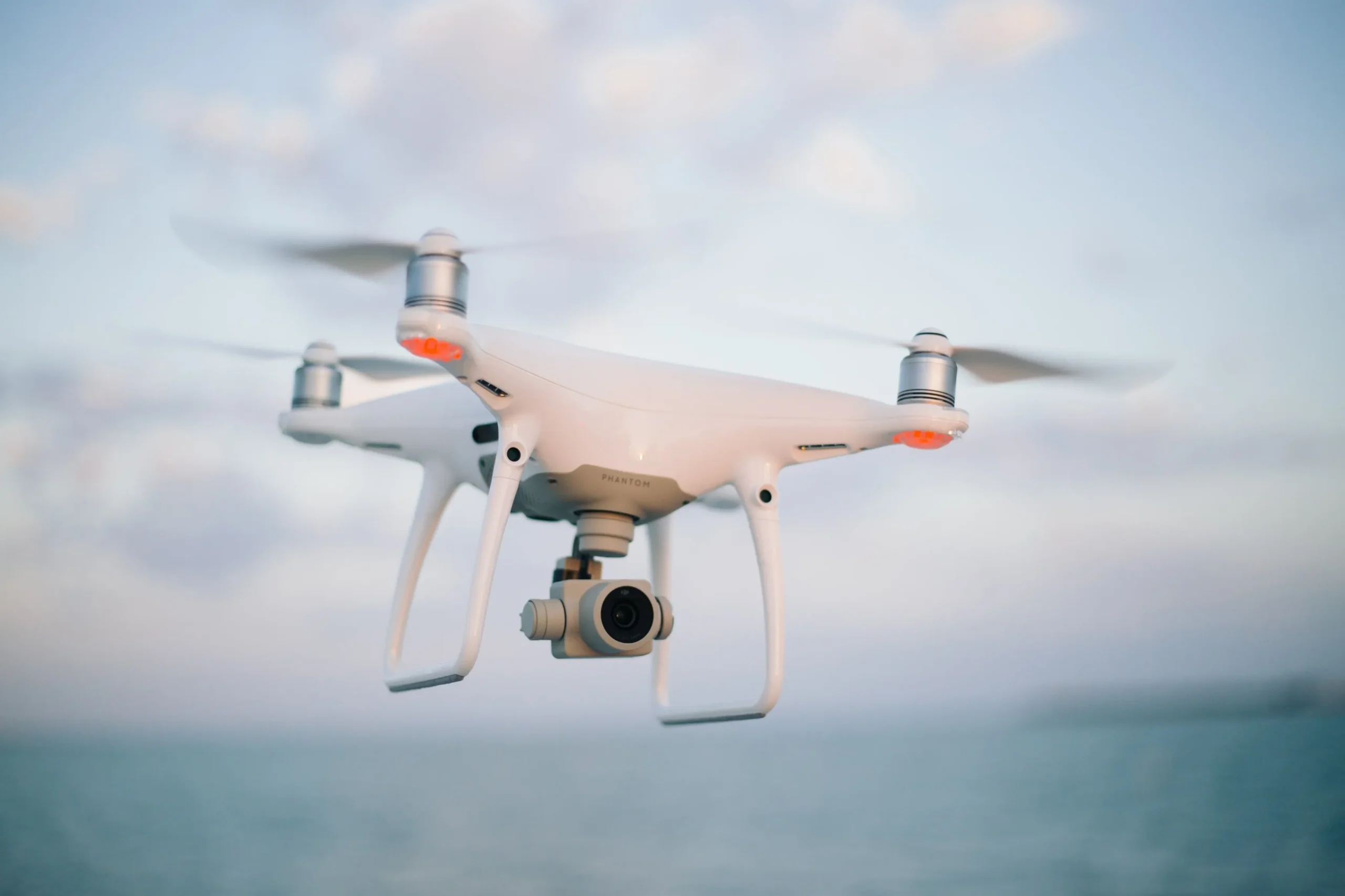
There isn’t one best drone for every traveler.
Choose a Mini-class drone if:
- You want to keep your luggage light.
- You hike or move between locations frequently.
- You mainly photograph landscapes and cities.
- You want a compact drone with a serious camera.
- You don’t want to carry a large dedicated drone bag.
Choose a larger drone if:
- Image quality is your top priority.
- You want multiple focal lengths.
- You frequently shoot in challenging lighting.
- You need more advanced camera controls.
- You don’t mind the extra weight.
For most travelers, the smaller option is often the more practical one. A drone that stays in your backpack is more useful than a larger model that you leave at the hotel because it is inconvenient to carry.
Tips for Better Drone Photos While Traveling

1. Check the Rules Before You Fly
Drone regulations vary between countries and sometimes between individual locations within the same country.
Check:
- Registration requirements
- Maximum flight altitude
- No-fly zones
- Airport restrictions
- Rules around people and buildings
- Requirements for remote identification where applicable
- National park and protected-area restrictions
Never assume that a small drone can be flown anywhere simply because it weighs less than 250 g.
2. Plan Your Location
Think about your composition before launching.
Maps and satellite imagery can help you identify coastlines, roads, unusual buildings, viewpoints, and other potential subjects. But always confirm that the location is actually legal and safe for drone operation.
3. Shoot Around Sunrise or Sunset
Aerial landscapes can look especially interesting when the sun is low.
Early and late light can create:
- Long shadows
- More dimensional landscapes
- Warm highlights
- Stronger textures
- More visual separation between objects
Blue hour can also work well for cityscapes.
4. Use RAW for Important Photos
If your drone supports DNG/RAW, use it when you plan to edit the image later.
RAW files give you more flexibility when adjusting exposure, highlights, shadows, white balance, and color.
This is particularly useful when the sky is much brighter than the landscape below.
5. Don’t Rely on Automatic Exposure for Every Shot
Automatic settings are convenient, but difficult lighting can confuse the exposure system.
Try photographing the same scene with slightly different exposures, especially when you have bright clouds, water, snow, or a dark foreground.
6. Keep the Horizon Straight
A crooked horizon can make an otherwise strong aerial photo feel unfinished.
Use the drone’s grid or level indicators when available, and correct small alignment issues during editing.
7. Look for Patterns
Drone photography is particularly good for finding patterns that aren’t obvious from ground level.
Try photographing:
- Roads and intersections
- Waves and shorelines
- Fields
- Boats
- Buildings
- Shadows
- Bridges
- Repeating architectural elements
Sometimes the best aerial photograph isn’t a huge landscape. It may be a simple graphic pattern seen from directly above.
8. Edit Your Aerial Photos
A good aerial photo doesn’t necessarily need heavy editing. Small adjustments to exposure, contrast, color, and detail can often make a bigger difference.
For RAW files, you can use Luminar to refine exposure and color, enhance details, and remove distracting elements when necessary.
Tools such as GenErase can be useful when an otherwise clean landscape contains unwanted visual distractions.
Your AI-Powered Photo Editor for MacOS and Windows
Common Travel Drone Mistakes
| Mistake | Why it can be a problem | Better approach |
| Buying based only on camera megapixels | Sensor size and lens quality also matter | Compare the complete camera system |
| Choosing the biggest drone | Extra weight makes travel harder | Match size to your actual needs |
| Ignoring local regulations | You may be prohibited from flying | Check official local rules before departure |
| Flying in strong wind | Can reduce stability and battery life | Check conditions before takeoff |
| Carrying only one battery | Shooting time can be limited | Consider spare batteries and charging options |
| Shooting everything from maximum altitude | Photos can lose detail and visual impact | Vary height and perspective |
| Forgetting storage | High-resolution photos and 4K video fill cards quickly | Carry suitable microSD cards |
| Editing too heavily | Landscapes can quickly look unnatural | Make targeted adjustments |
Final Thoughts
The best travel drone is the one that gives you the right balance of image quality, portability, flight time, and price.
For many travelers, a compact Mini-class drone makes the most sense because it can provide high-quality aerial imagery without taking up much space. Models such as the DJI Mini 5 Pro and Mini 4 Pro are particularly compelling when portability is a priority. The DJI Flip is another practical choice for beginners and casual creators, while the Air 3S and Mavic 3 Pro make more sense when camera flexibility matters more than weight.
Whatever model you choose, remember that good aerial photography starts before takeoff. Check the regulations, study the weather, plan your composition, and leave enough battery for a safe return.
Once you’re back from the trip, thoughtful editing can help your aerial images look their best. A photo editor such as Luminar can help you refine color, exposure, contrast, and distracting details without turning the image into something completely different.
FAQ
The DJI Mini 5 Pro is one of the strongest choices for travelers who want a compact drone with a high-quality camera. The DJI Mini 4 Pro is another excellent lightweight option.
The DJI Mini 5 Pro, DJI Mini 4 Pro, and DJI Flip are all compact options weighing around or below the 249 g threshold, depending on the specific configuration. Local regulations still need to be checked before flying.
4K is not mandatory for every traveler, but it is a useful standard if you plan to edit or crop video. It provides considerably more detail than 720p or 1080p and gives you more flexibility in post-processing.
Not necessarily. Larger drones can offer larger sensors, multiple cameras, and longer flight times, but smaller drones are much easier to carry. The right choice depends on whether portability or maximum image quality is more important to you.
Usually, drones can be transported by air, but battery rules and airline policies apply. Spare lithium batteries are commonly subject to specific carry-on requirements, so check the airline’s current rules before your trip.