Ready to take off? Here’s how to pick the best drone for beginners without the stress.
Buying your first drone can feel overwhelming. Some models prioritize image quality, while others focus on easy controls, obstacle detection, portability, or affordability.
The best beginner drone should be stable in the air, simple to control, and suitable for what you actually want to capture. This guide compares the best drones for beginners in 2026, including affordable camera drones, selfie models, and an entry-level FPV kit.
Key Takeaways
- The DJI Mini 4K offers the best overall value for beginners who want stabilized 4K video.
- The DJI Neo 2 is one of the easiest drones to fly, with palm takeoff, subject tracking, and obstacle sensing.
- The Potensic ATOM 2 is a strong non-DJI alternative for beginner drone photography.
- The DJI Mini 5 Pro offers the best camera and safety features but costs considerably more.
- The HoverAir X1 Pro is designed for hands-free selfies and tracking rather than traditional piloting.
- The BetaFPV Cetus X is suitable for learning FPV flight but not for high-quality aerial photography.
- Sub-250g drones may avoid FAA registration during qualifying recreational flights, but pilots must still follow airspace rules and complete TRUST in the US.
- Luminar can help improve exposure, color, composition, and detail in aerial photos.
Best Beginner Drones at a Glance
|
Drone |
Best for |
Weight |
Maximum flight time* |
Main limitation |
|
DJI Mini 4K |
Overall value |
Approx. 246g |
31 minutes |
No obstacle avoidance |
|
DJI Neo 2 |
Easiest operation |
Approx. 151g |
19 minutes |
Less versatile than a traditional camera drone |
|
Potensic ATOM 2 |
Non-DJI alternative |
Under 249g |
Approx. 32 minutes |
No full obstacle-avoidance system |
|
DJI Mini 3 |
Travel photography |
Under 249g |
38 minutes |
No obstacle avoidance |
|
DJI Mini 5 Pro |
Premium photography |
Approx. 249g |
36 minutes |
High price |
|
HoverAir X1 Pro |
Selfies and tracking |
Approx. 191.5g |
16 minutes |
Short flight time |
|
BetaFPV Cetus X |
Beginner FPV flying |
Varies by kit |
Around 5 minutes |
Not intended for polished aerial photography |
*Manufacturer figures measured under controlled conditions. Wind, temperature, flight mode, and battery age can reduce real-world flight time.
Prices vary considerably by region, retailer, controller, and bundle, so check current listings before purchasing.
1. DJI Mini 4K: Best Beginner Drone Overall
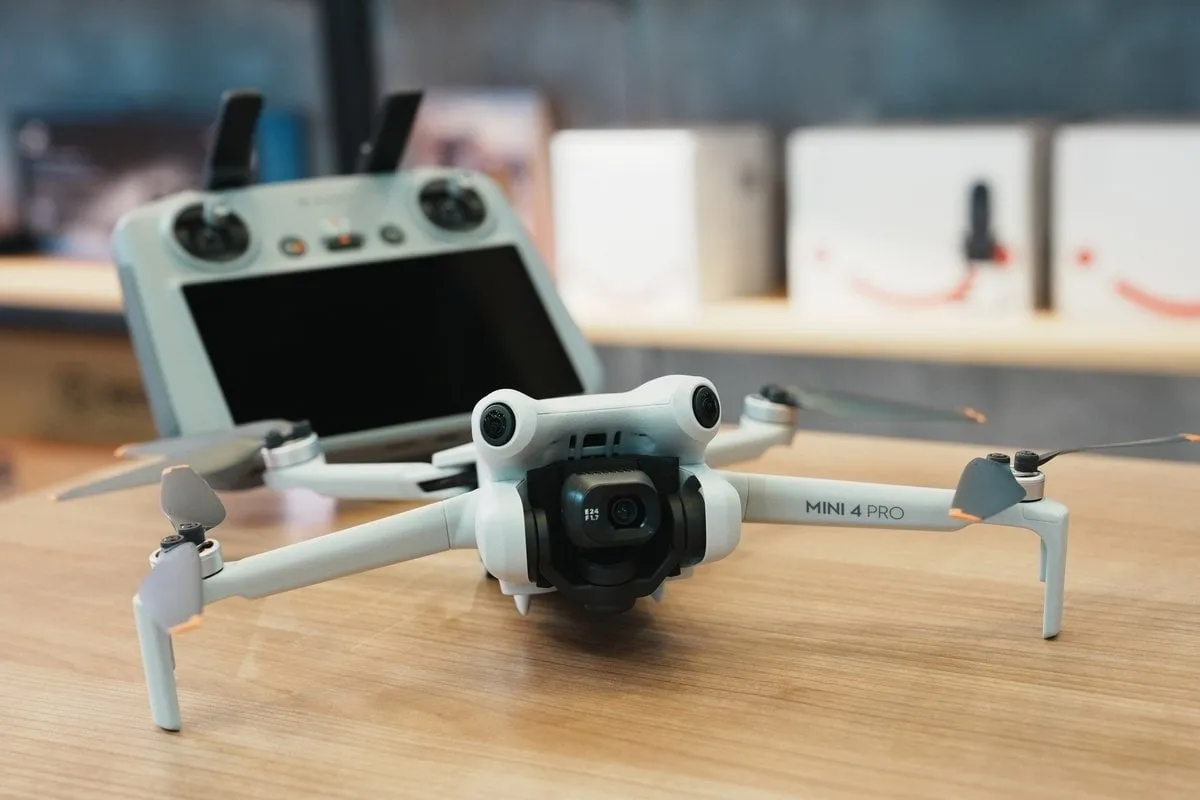
The DJI Mini 4K remains one of the best drones for beginners who want a traditional camera drone without paying for premium features.
It weighs approximately 246g and combines GPS-assisted hovering, automatic return-to-home, a three-axis mechanical gimbal, and 4K video. These features make it easier to capture smooth aerial footage while learning the basic controls.
DJI rates its maximum flight time at 31 minutes and wind resistance at 10.7 m/s. Actual flight time will normally be shorter, especially in windy or cold conditions.
| Pros | Cons |
| Stabilized 4K video | No obstacle-avoidance sensors |
| GPS and return-to-home | Limited advanced tracking features |
| Three-axis gimbal | |
| Compact, sub-250g design | |
| Straightforward DJI Fly app |
Your AI-Powered Photo Editor for MacOS and Windows
2. DJI Neo 2: Easiest Drone for Beginners

The DJI Neo 2 is designed for people who want to start recording without immediately mastering a traditional remote controller.
It weighs approximately 151g and supports palm takeoff, gesture control, subject tracking, and return-to-palm. Its integrated propeller guards and omnidirectional obstacle-sensing system provide additional protection during close-range flights.
The drone uses a 12MP, 1/2-inch sensor and records up to 4K/60fps video. It also includes 49GB of internal storage and offers a maximum flight time of approximately 19 minutes.
| Pros | Cons |
| Palm takeoff and landing | Shorter flight time than Mini-series drones |
| Obstacle sensing | Small sensor compared with premium camera drones |
| Built-in propeller guards | Better suited to social content than serious landscape photography |
| Subject-tracking modes | |
| Multiple control options | |
| 49GB internal storage |
3. Potensic ATOM 2: Best Non-DJI Beginner Drone

The Potensic ATOM 2 is a compelling choice for beginners who want a conventional camera drone from a brand other than DJI.
Its sub-250g body, GPS positioning, return-to-home function, three-axis gimbal, and stabilized 4K recording cover the features most first-time pilots need. The dedicated beginner mode can limit flight distance and altitude while the pilot becomes familiar with the controls.
The ATOM 2 is particularly appealing to travelers and casual aerial photographers who want solid image quality without moving into the premium price range.
| Pros | Cons |
| Sub-250g design | No comprehensive obstacle-avoidance system |
| Three-axis gimbal | Smaller accessory and service ecosystem than DJI |
| Stabilized 4K video | |
| GPS and return-to-home | |
| Beginner flight mode | |
| Competitive price |
4. DJI Mini 3: Best for Beginner Travel Photography

The DJI Mini 3 is a useful step up for beginners who care more about photography than automated safety features.
It weighs under 249g with the standard battery and uses a 1/1.3-inch sensor capable of recording 4K video and capturing RAW photos. The camera can rotate vertically, making it convenient for social media content without cropping a horizontal frame.
DJI rates the standard battery for up to 38 minutes of flight. An optional Battery Plus can extend the flight time, but it also pushes the drone above the 250g threshold and may change the applicable regulations.
| Pros | Cons |
| Sub-250g design | No comprehensive obstacle-avoidance system |
| Three-axis gimbal | Smaller accessory and service ecosystem than DJI |
| Stabilized 4K video | |
| GPS and return-to-home | |
| Beginner flight mode | |
| Competitive price |
5. DJI Mini 5 Pro: Best Premium Drone for Beginners

The DJI Mini 5 Pro is the strongest option for beginners who want advanced image quality and safety features from the start.
It combines a 50MP one-inch sensor with 4K HDR recording, a flexible gimbal, tracking modes, and omnidirectional obstacle sensing designed to work in more challenging light. The standard battery provides up to 36 minutes of flight, while some regional bundles offer a larger battery with a longer advertised duration.
Although the safety systems can reduce the risk of a collision, they cannot detect every branch, wire, reflective surface, or low-contrast obstacle. The pilot remains responsible for the flight.
| Pros | Cons |
| Sub-250g design | No comprehensive obstacle-avoidance system |
| Three-axis gimbal | Smaller accessory and service ecosystem than DJI |
| Stabilized 4K video | |
| GPS and return-to-home | |
| Beginner flight mode | |
| Competitive price |
6. HoverAir X1 Pro: Best Selfie Drone for Beginners
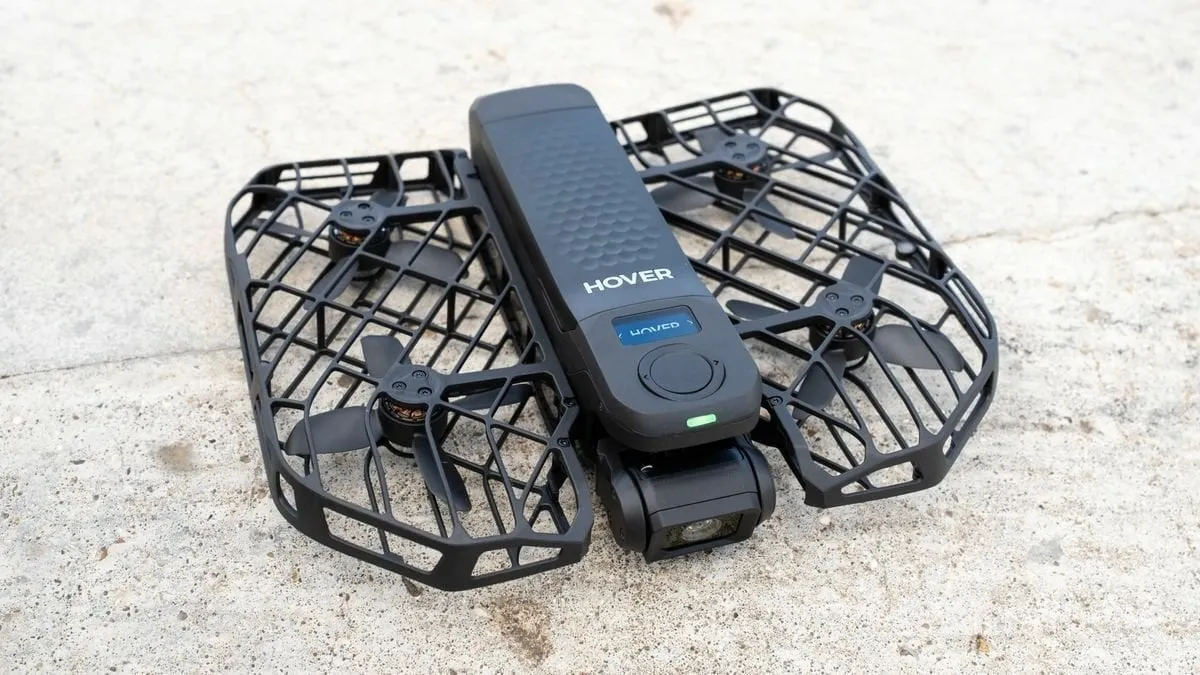
The HoverAir X1 Pro is built for automated filming rather than traditional long-distance piloting. It can take off from your palm, follow a subject, and record short clips without requiring a conventional controller.
Its enclosed propellers make it more suitable for close-range use, while 4K/60fps recording provides enough resolution for travel videos, social media, and everyday action shots.
The main limitation is its approximate 16-minute maximum flight time. It works best for planned tracking shots rather than extended aerial exploration.
| Pros | Cons |
| Hands-free operation | Short battery life |
| Automated subject tracking | Limited manual flight experience |
| Enclosed propellers | Less suitable for traditional aerial landscape photography |
| Compact design | |
| 4K/60fps recording |
7. BetaFPV Cetus X: Best Beginner FPV Drone

The BetaFPV Cetus X introduces beginners to first-person-view flying. Kits typically include the drone, controller, goggles, batteries, and carrying case, although the exact components depend on the version.
Unlike GPS camera drones, FPV models require more active control and have a steeper learning curve. The Cetus X offers several flight modes, allowing new pilots to progress toward more manual operation.
Flight time is only around five minutes per battery. The regular analog version is intended primarily for piloting rather than recording high-quality video, while the Cetus X HD kit includes a digital FPV system.
| Pros | Cons |
| Complete FPV starter kit | Very short flight time |
| Durable and compact | Steeper learning curve |
| Multiple flight modes | No GPS return-to-home |
| Replaceable components | Not the best choice for aerial photography |
| Suitable for learning manual control |
Elevate Your Photography with Our Advanced Software
How to Choose the Best Drone for Beginners
The right beginner drone depends on how and where you plan to use it.
Flight Stability and Return-to-Home
GPS-assisted hovering helps a drone maintain its position without constant control input. Return-to-home can bring it back when the battery is low or the signal is interrupted.
These features are particularly useful for first-time pilots, although return-to-home must be configured with an appropriate altitude to avoid trees and buildings.
Obstacle Detection
Obstacle sensors can reduce the risk of collisions, but they are not a substitute for careful flying. Thin branches, power lines, transparent surfaces, and obstacles in poor light may still go undetected.
For maximum assistance, consider the DJI Neo 2, Mini 4 Pro, or Mini 5 Pro. Budget models such as the Mini 4K and Potensic ATOM 2 require more caution.
Camera and Gimbal
For drone photography and video, look for:
- A three-axis mechanical gimbal
- 4K video recording
- RAW photo support
- Manual exposure controls
- A sensor large enough for the expected lighting conditions
A high resolution alone does not guarantee better results. Stabilization, dynamic range, lens quality, and color processing are equally important.
Flight Time
A manufacturer’s maximum flight time is measured under controlled conditions. Expect less time during real flights and plan to land with a safe battery reserve.
For regular outdoor use, consider buying a bundle with two or three batteries.
Weight and Regulations
A lightweight drone is easier to transport and may face fewer registration requirements. However, being under 250g does not mean that every rule disappears.
In the United States:
- Recreational pilots must complete the free TRUST safety test.
- Recreational drones under 250g generally do not require FAA registration.
- Drones flown under Part 107 must be registered regardless of weight.
- Registered drones must comply with Remote ID requirements unless a specific exception applies.
- Pilots must follow airspace restrictions and maintain visual line of sight.
Rules differ by country and can change. Check official local requirements before flying and use reliable drone apps to research airspace and flight conditions.
How to Edit Drone Photos in Luminar
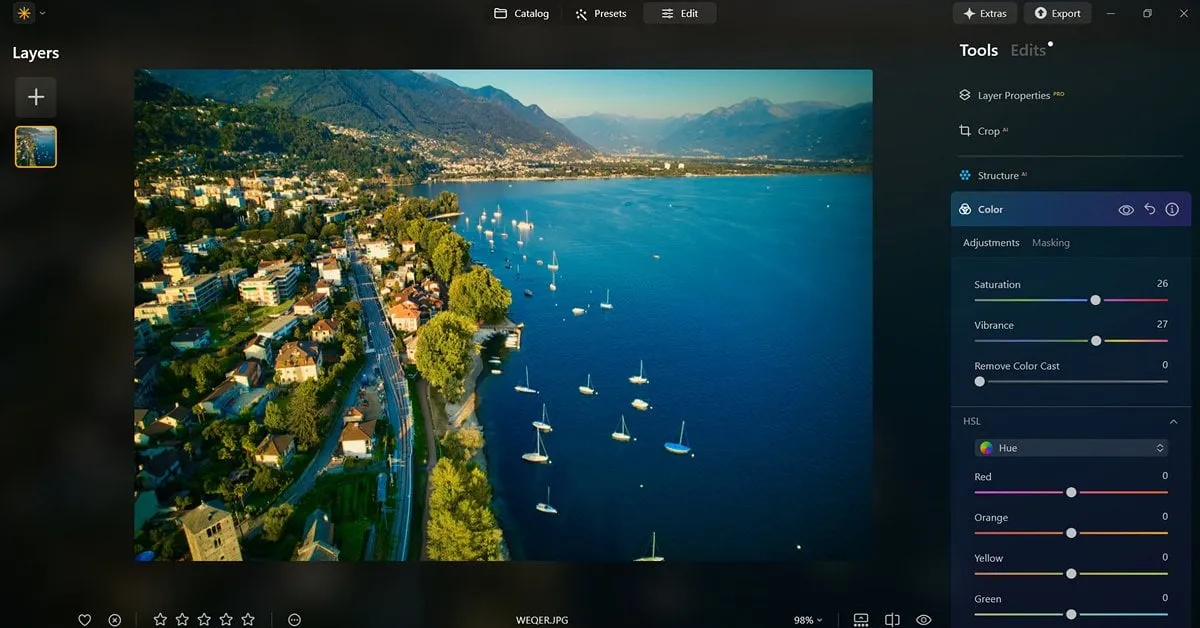
Drone photographs often need adjustments because aerial scenes can contain haze, bright skies, deep shadows, or distracting objects.
Luminar can be used as a landscape photo editor for processing RAW and JPEG aerial images. Its tools can help improve:
- Exposure and white balance
- Contrast and color
- Haze and distant detail
- Composition and horizon alignment
- Noise in low-light photographs
- Small distractions in the landscape
Exclusive Tools of Endless Possibilities in One AI Editor
Enhance AI provides a quick starting point for balancing an image, while Structure AI can bring out detail in terrain and architecture. Apply structural adjustments carefully because excessive clarity can make foliage, water, and distant landscapes look unnatural.
For small distractions such as isolated wires, signs, or objects near the edge of the frame, Luminar’s Erase tool can help clean up the composition.
Luminar is primarily a photo editor, so references to editing drone “footage” should not imply a complete video-editing workflow.
Which Beginner Drone Should You Buy?
Choose according to your main goal:
- Best overall value: DJI Mini 4K
- Easiest to operate: DJI Neo 2
- Best non-DJI alternative: Potensic ATOM 2
- Best for travel photography: DJI Mini 3
- Best premium camera: DJI Mini 5 Pro
- Best for hands-free selfies: HoverAir X1 Pro
- Best for learning FPV: BetaFPV Cetus X
For most beginners who want traditional aerial photography, the DJI Mini 4K offers the best balance of price, stability, and image quality. The DJI Neo 2 is easier for quick automated shots, while the Mini 5 Pro makes more sense for photographers who already know they will use its advanced camera and safety features.
Frequently Asked Questions
The DJI Mini 4K is the best starting point for someone who wants to learn conventional drone controls and capture stabilized 4K footage. The DJI Neo 2 is easier for users who prefer automated tracking, palm takeoff, and minimal manual control.
A drone under 250g generally does not require FAA registration when flown only under the recreational exception. It must be registered when used under Part 107 or another non-recreational framework. All recreational pilots must complete TRUST and follow FAA operating rules.
No, but it can provide an additional safety layer. Many affordable beginner drones fly reliably without it. Even advanced obstacle sensing cannot detect every wire, branch, or transparent surface, so careful piloting remains essential.
Luminar is designed primarily for editing photographs. It can improve RAW and JPEG aerial images, but a dedicated video editor is more appropriate for assembling, cutting, stabilizing, or color-grading drone video.
Two or three batteries are practical for most beginners. Advertised flight times are maximum laboratory figures, and real flights are shorter once wind, maneuvering, temperature, and a safe landing reserve are considered.