Discover how the golden ratio shapes art, photography, and iconic brand logos like Twitter, Pepsi, and Mercedes-Benz, creating perfect balance and visual harmony.
The golden ratio is a mathematical proportion of approximately 1.618 to 1. Artists, architects, designers, and photographers use it as a framework for arranging visual elements and creating a sense of balance within a composition.
The golden ratio is not a universal formula for beauty. Some artists have deliberately incorporated it into their work, while many famous examples attributed to the ratio are based on retrospective analysis rather than documented artistic intent.
Don’t feel like reading the whole breakdown? We’ve pulled together a quick summary below.
Key Takeaways
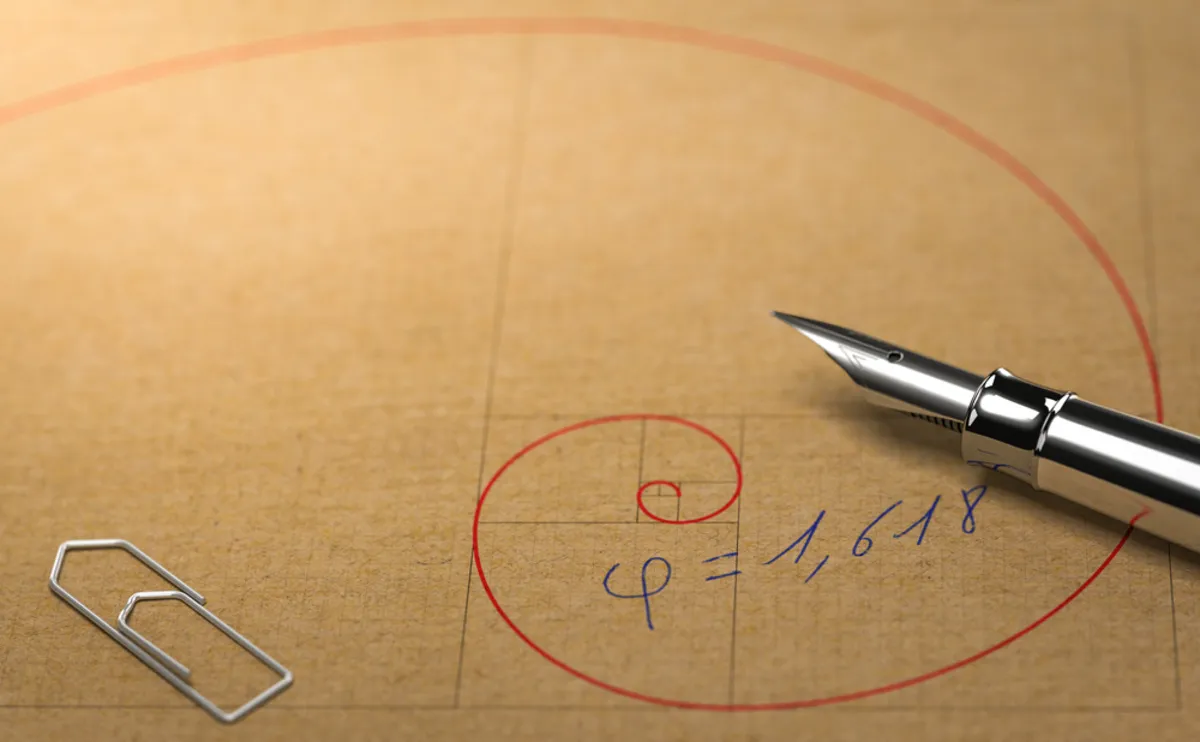
- The golden ratio is approximately equal to 1.618 and is represented by the Greek letter phi, or φ.
- It describes a relationship in which the whole is to the larger part as the larger part is to the smaller part.
- Golden rectangles, spirals, and grids can be used as compositional guides.
- Ratios between consecutive Fibonacci numbers approach the golden ratio.
- The claim that people automatically prefer golden-ratio compositions is not conclusively supported.
- Many popular examples in art, architecture, nature, and logo design are disputed.
- In photography, the golden ratio can help position a focal point and create a natural path through the frame.
What is the Golden Ratio in Art?
The golden ratio in art is a compositional proportion of approximately 1:1.618. Artists and designers may use this relationship to divide a canvas, position a focal point, or establish relationships between visual elements.
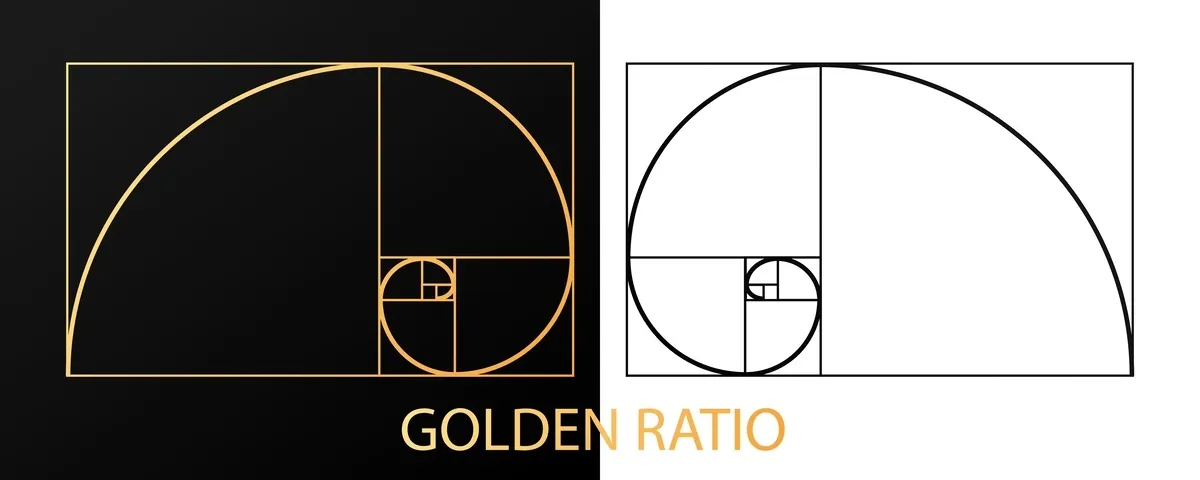
Two lengths are in the golden ratio when the relationship between the whole length and the larger section is the same as the relationship between the larger section and the smaller one.
If the longer section is represented by and the shorter section by , the relationship can be written as:
The value of phi is:
The mathematical relationship was formally described in Euclid’s Elements around 300 BCE as a division “in extreme and mean ratio.” The modern terms golden ratio and golden section appeared much later.
Golden Ratio, Golden Section, and Golden Proportion
Golden ratio, golden section, and golden proportion usually refer to the same mathematical relationship, but the terms emphasize different applications.
- Golden ratio: The numerical relationship represented by φ, approximately 1.618.
- Golden section: A line divided into two parts according to the golden ratio.
- Golden proportion: A broader term commonly used when discussing the ratio in art, design, and architecture.
- Divine proportion: A historical name popularized by Luca Pacioli’s 1509 book Divina Proportione.
These names do not describe separate formulas. They provide different ways of discussing the same proportion.
How Is the Golden Ratio Connected to the Fibonacci Sequence?
The ratio between consecutive Fibonacci numbers gets progressively closer to the golden ratio as the sequence continues.
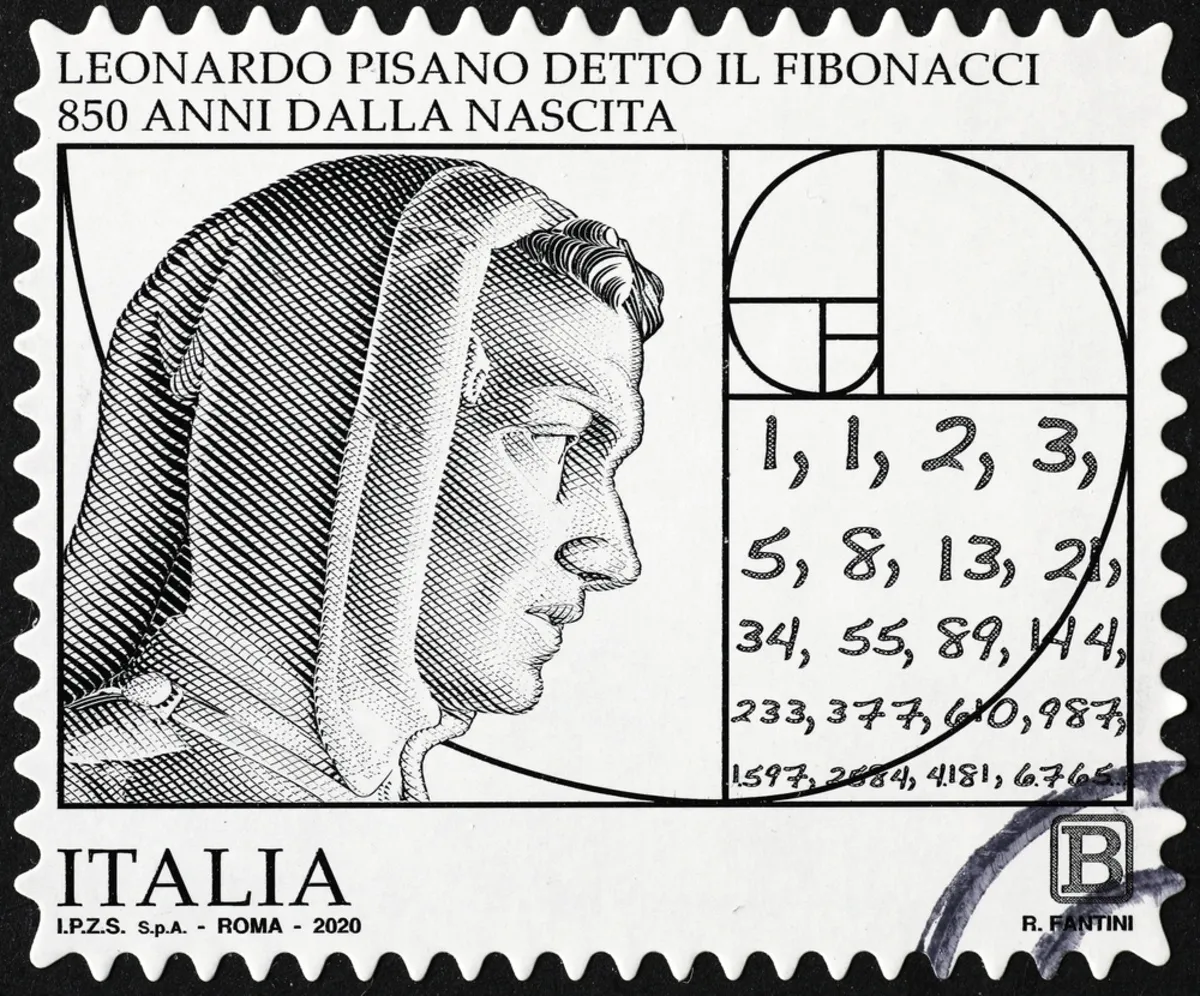 The Fibonacci sequence begins like this:Each number is the sum of the two preceding numbers. Dividing one number by the previous number produces ratios that gradually approach φ:
The Fibonacci sequence does not produce the exact golden ratio at every step. Instead, the ratios between consecutive numbers converge toward it.
Why Is the Golden Ratio Used in Art?
The golden ratio gives artists a repeatable structure for dividing space and positioning important elements. It can help organize a complex composition, but it does not automatically make an artwork beautiful.
Artists may use the golden ratio to:
- Establish proportions between large and small areas
- Position a focal point away from the exact center
- Guide the viewer through a composition
- Connect several visual elements
- Create a structured but asymmetrical layout
- Develop consistent proportions across a series
The ratio is best treated as a compositional tool, not a test that determines whether an artwork is successful.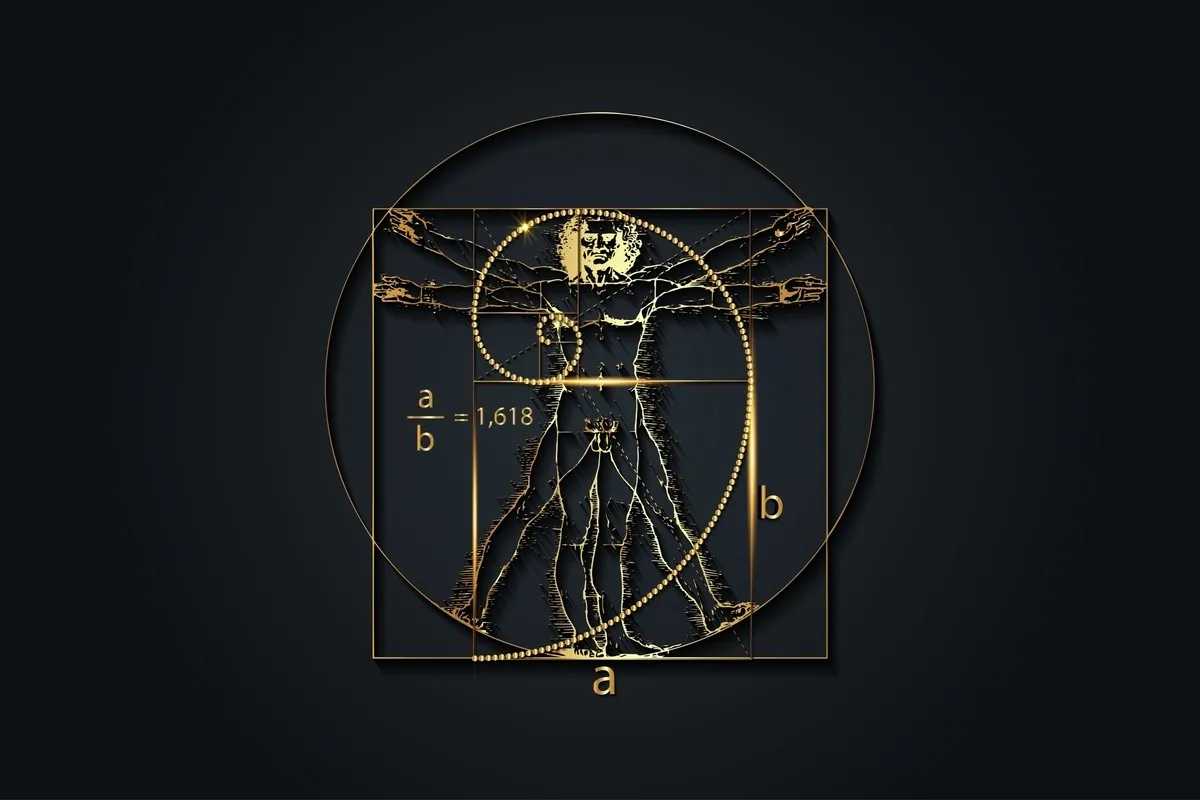
Is the Golden Ratio Scientifically Proven to Be Beautiful?
No universal aesthetic preference for the golden ratio has been conclusively established. Some experiments have found that people prefer proportions near 1.618, while others have found no automatic preference for the golden ratio over similar rectangles or compositions.
Personal taste is influenced by culture, context, familiarity, color, subject matter, balance, contrast, and many other factors. A ratio alone cannot account for the emotional or aesthetic effect of an artwork.
Claims that golden-ratio compositions automatically reduce anxiety, improve concentration, or trigger a specific neurological response should therefore be avoided unless supported by research relevant to that exact claim.
Does the Golden Ratio Appear in Nature?
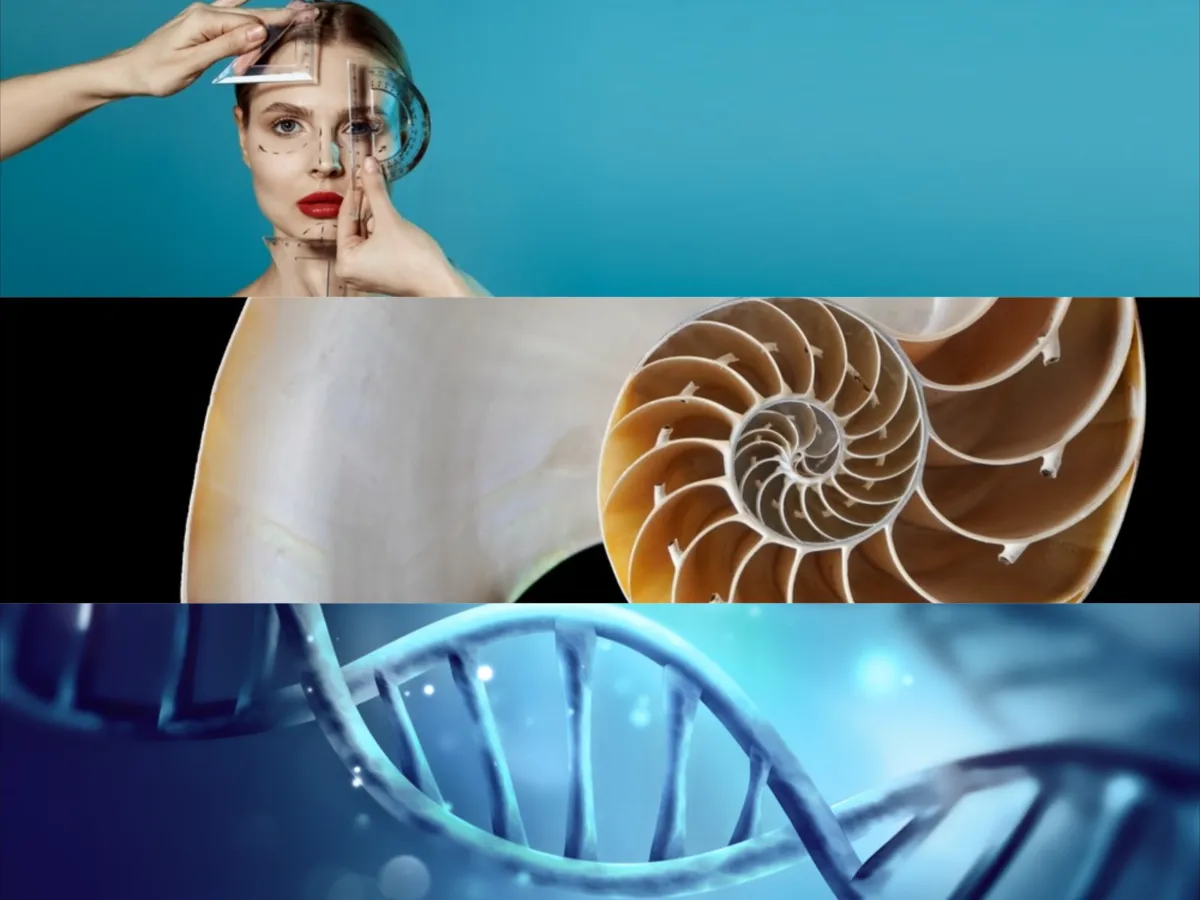
Golden-ratio relationships appear in some natural growth patterns, particularly in forms connected to phyllotaxis, but not every natural spiral follows the golden ratio.
Examples related to Fibonacci numbers or golden-angle arrangements can occur in:
- Sunflower seed patterns
- Pinecones
- Leaf arrangements
- Some flower structures
- Branching growth patterns
However, several popular claims are misleading:
- A nautilus shell follows a logarithmic spiral, but it is not necessarily a golden spiral.
- Hurricanes and galaxies are not automatically examples of the golden ratio simply because they contain spiral shapes.
- Human faces and bodies vary significantly and cannot be reduced to one universal “ideal” proportion.
- The structure of DNA should not be presented as proof that the golden ratio is a universal law of nature.
The golden ratio occurs in specific mathematical relationships within nature, not in every object that resembles a spiral.
Famous Examples of the Golden Ratio in Art and Architecture
The strongest examples are works whose creators documented their use of the ratio or whose dimensions establish a clear mathematical connection. Retrospective overlays alone are not proof that an artist intentionally used the golden ratio.
Salvador Dalí: The Sacrament of the Last Supper
Salvador Dalí’s The Sacrament of the Last Supper is one of the clearest examples of the golden ratio in modern art. The dimensions of the canvas form a golden rectangle, and the composition includes a large dodecahedron, a geometric solid closely connected to golden-ratio relationships.
This example should not be confused with Leonardo da Vinci’s The Last Supper. Although golden rectangles are sometimes overlaid on Leonardo’s fresco, there is no conclusive evidence that Leonardo deliberately based the entire composition on the golden ratio.
Le Corbusier and the Modulor
Le Corbusier explicitly incorporated the golden ratio into the Modulor, his system of architectural proportions.
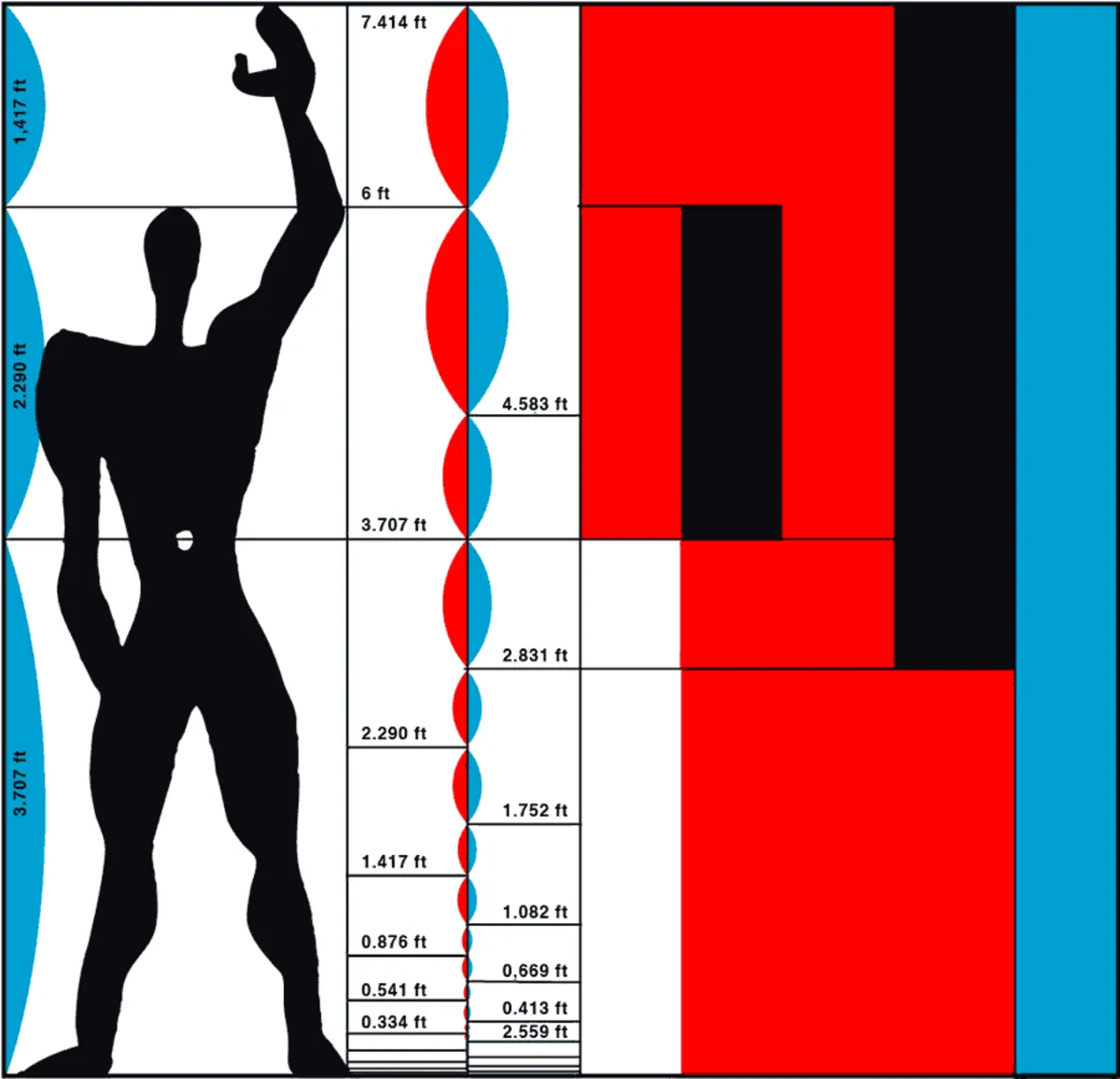
The Modulor combined:
- Human measurements
- The golden ratio
- Fibonacci relationships
- A system of red and blue proportional scales
Le Corbusier intended the system to connect architecture with the dimensions and movement of the human body. It influenced the proportions of rooms, façades, furniture, and other architectural elements.
Luca Pacioli and Leonardo da Vinci
Luca Pacioli examined the mathematical and geometric properties of the ratio in Divina Proportione. Leonardo da Vinci created illustrations of polyhedra for the book.
This collaboration connects Leonardo directly to the mathematical study of the proportion. However, it does not prove that every famous Leonardo artwork was constructed according to the golden ratio.
Hokusai: The Great Wave off Kanagawa
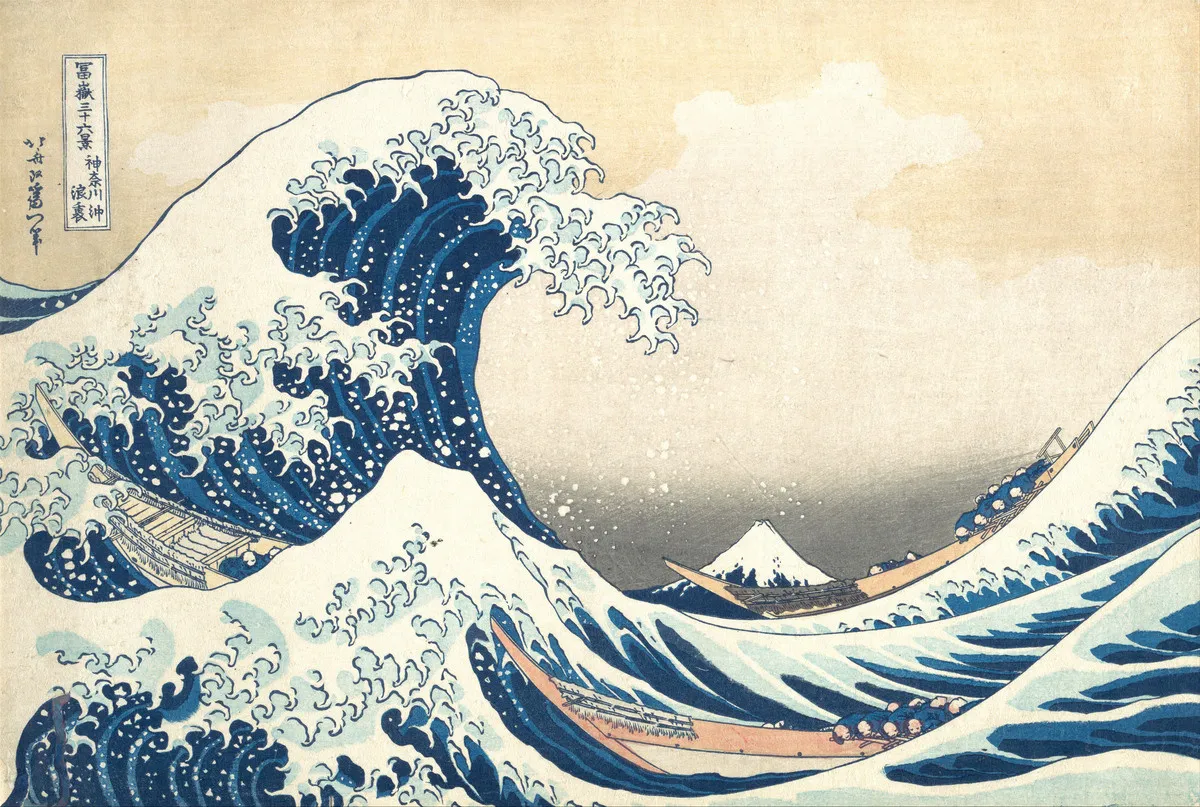 The curve of the wave in Hokusai’s The Great Wave off Kanagawa is sometimes compared with a golden spiral. The comparison provides an interesting way to analyze the image’s movement, but it does not demonstrate that Hokusai constructed the print using the golden ratio.
The composition is effective because of its scale, curves, repetition, negative space, and contrast between the wave and Mount Fuji. A golden-spiral overlay is only one possible interpretation.
Piet Mondrian and Geometric Composition
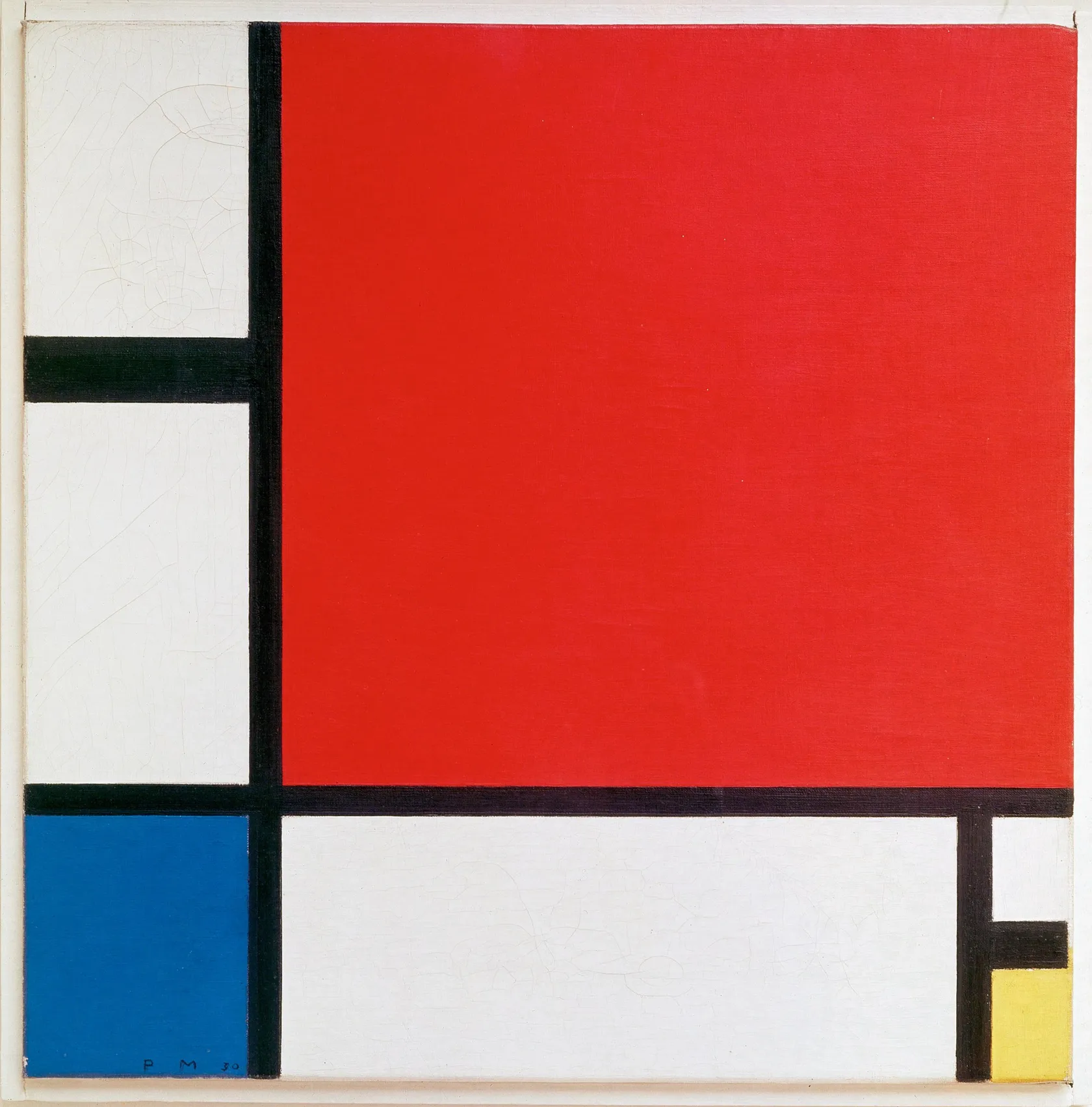
Piet Mondrian used carefully structured grids, asymmetrical balance, and relationships between rectangular forms. His work is sometimes analyzed through the golden ratio, but claims that he consistently built his paintings around it remain disputed.
It is safer to describe Mondrian’s work as an example of geometric proportion and visual balance rather than a confirmed application of the golden section.
Vitruvian Man: A Common Misconception
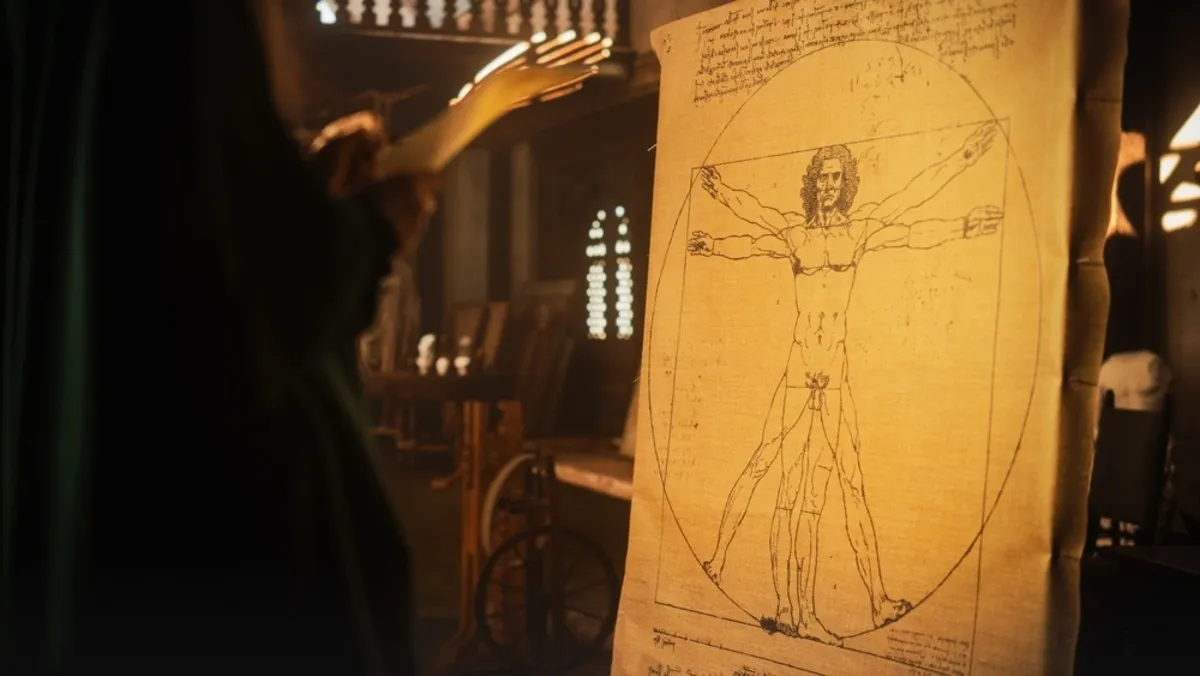 Leonardo’s Vitruvian Man is frequently presented as an illustration of the golden ratio. In reality, the drawing is based primarily on the human proportions described by the Roman architect Vitruvius.
The accompanying notes discuss proportional relationships between body parts, but they do not identify the golden ratio as the drawing’s organizing principle. The connection is therefore better described as a later interpretation rather than an established fact.
Was the Golden Ratio Used in Famous Logos?
Many online diagrams place golden-ratio circles over famous logos, but those overlays do not prove that the original designers used the ratio.

Logos frequently associated with the golden ratio include:
- The former Twitter bird
- Pepsi
- Apple
- Mercedes-Benz
Some of these logos were constructed using circles, geometric grids, and proportional systems. However, circles of different sizes can be fitted retrospectively over many curved designs.
Unless the designer or official brand documentation confirms the method, the golden-ratio connection should be described as an interpretation rather than a design fact.
How Can Artists Use the Golden Ratio?
Artists can apply the golden ratio through a rectangle, grid, spiral, or proportional division. The method should support the subject instead of forcing every element into a mathematical template.
1. Use a Golden Rectangle
A golden rectangle has sides in a ratio of approximately 1:1.618.
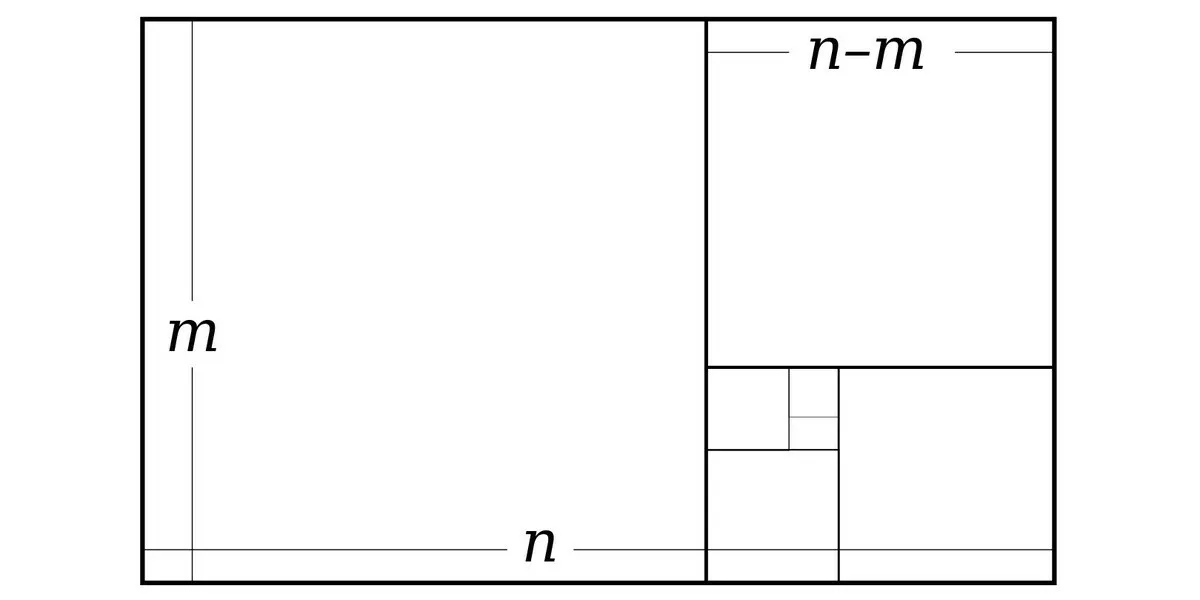
A golden rectangle can help establish:
- The dimensions of a canvas
- The size of a central image
- Relationships between content blocks
- The division between a subject and negative space
- A hierarchy between large and small elements
Removing a square from a golden rectangle leaves a smaller rectangle with the same proportions. Repeating this process creates the foundation commonly used to draw a golden spiral.
2. Use a Golden Spiral
A golden spiral is a logarithmic spiral whose growth is connected to the golden ratio.
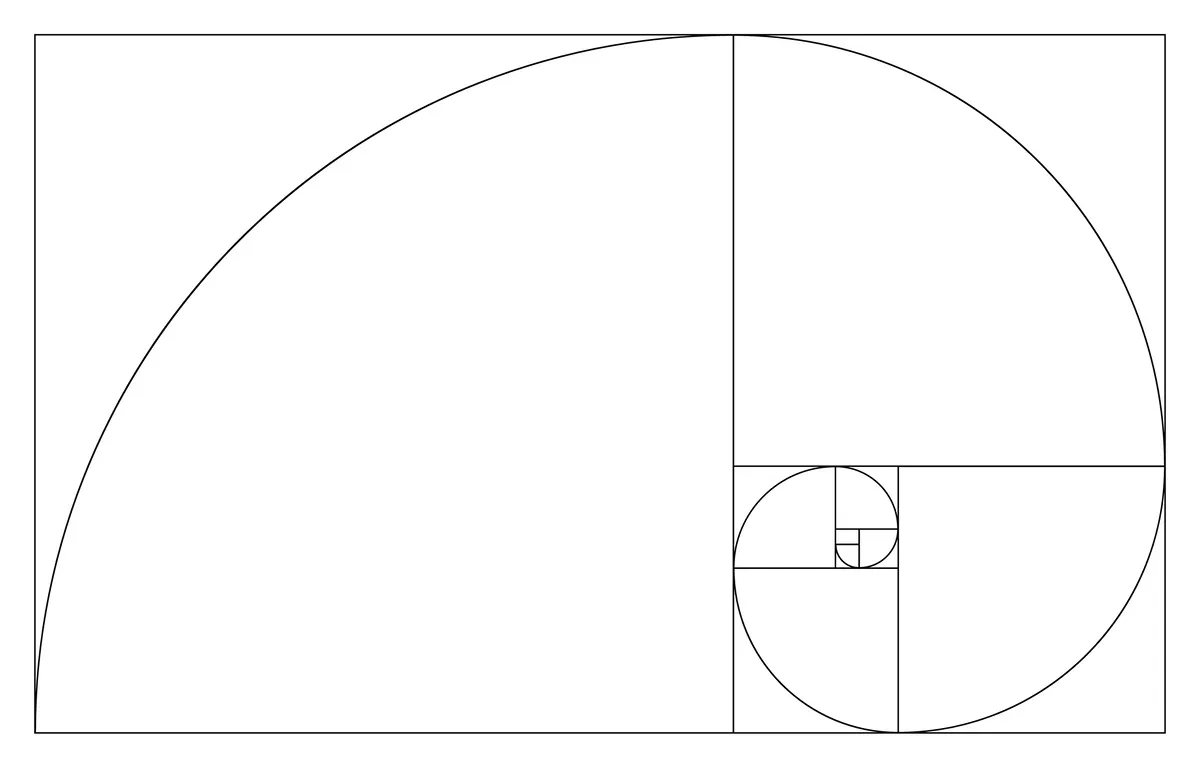
Place the main focal point near the smallest section of the spiral. Arrange secondary shapes, lines, or movement along its expanding curve.
A golden spiral works particularly well when a composition contains:
- A curved subject
- Circular movement
- Layered visual information
- A strong focal point surrounded by context
- A landscape with a winding path, river, or shoreline
The objects do not need to follow the spiral exactly. It should provide direction rather than become a rigid constraint.
3. Divide the Composition Into Golden Sections
A canvas can be divided horizontally or vertically according to the golden ratio. Instead of placing an important division exactly in the center, position it around 38.2% or 61.8% of the way across the frame.
These divisions can help position:
- A horizon
- A figure
- A large shape
- A transition between colors
- A boundary between positive and negative space
4. Use Diagonals and Triangular Structures
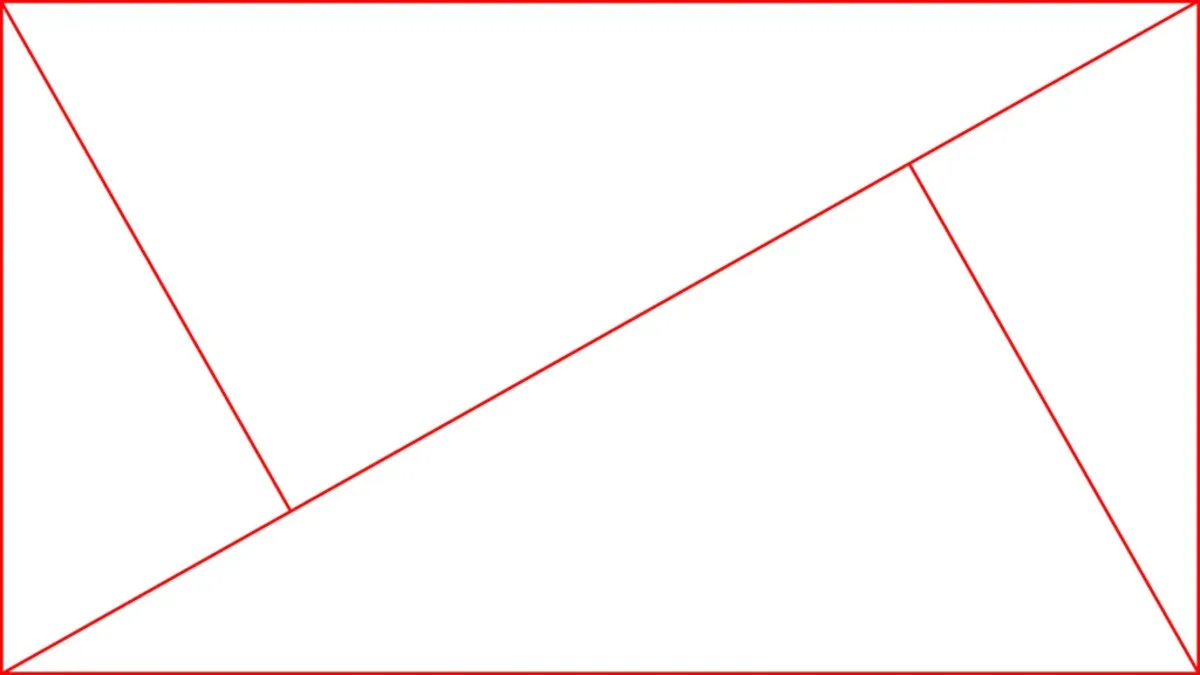
Diagonal divisions and triangular groupings can create movement and connect subjects across the frame. In practical composition guides, the term golden triangles is often used for a grid created from a main diagonal and intersecting perpendicular lines.
This compositional grid should not be confused with the precise mathematical definition of a golden triangle: an isosceles triangle whose side-to-base relationship corresponds to the golden ratio.
5. Combine the Golden Ratio With Other Composition Techniques
The golden ratio is only one of several ways to organize an image. It can be combined with:
- The rule of thirds
- Leading lines
- Symmetry
- Negative space
- Visual triangles
- Repetition
- Color contrast
- Centered composition
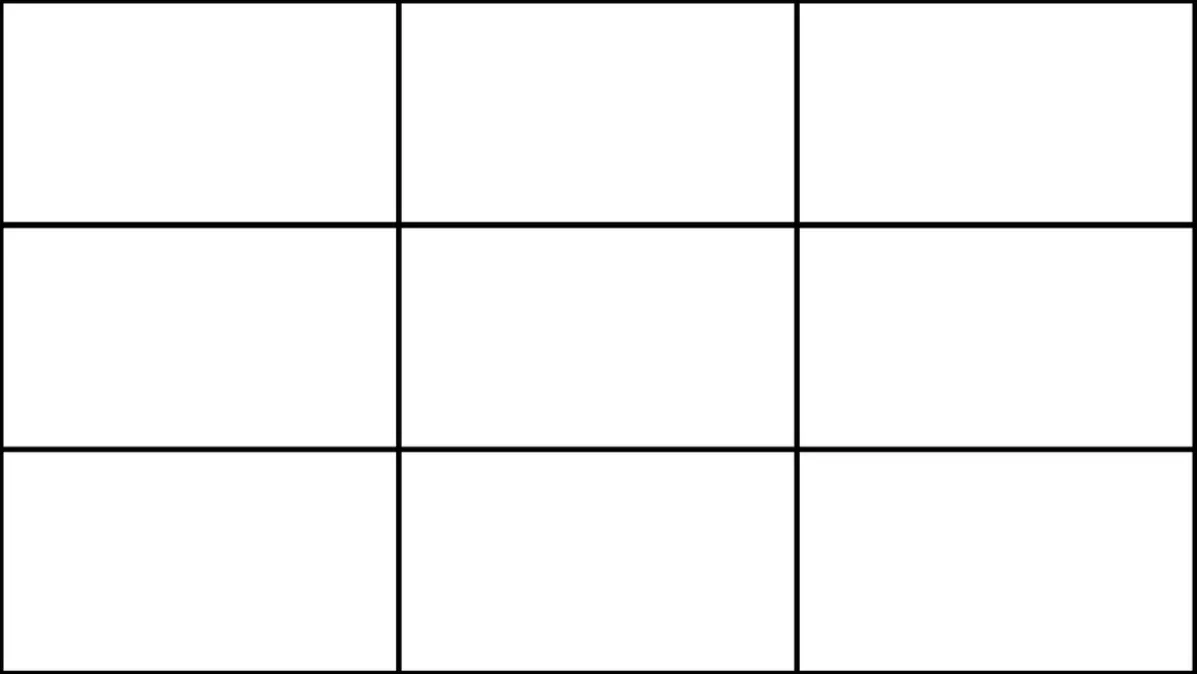
The rule of thirds is simpler and easier to apply quickly. The golden ratio creates divisions closer to the center and may produce a subtler sense of movement.
Golden Ratio vs Rule of Thirds
Both techniques divide the frame and help position important elements, but their grids are not identical.
| Technique | Division | Best suited for |
|---|---|---|
| Golden ratio | Approximately 38.2% and 61.8% | Flowing, layered, or spiral compositions |
| Rule of thirds | 33.3% and 66.7% | Quick framing and clearly separated subjects |
| Centered composition | 50% | Symmetry, reflections, patterns, and frontal subjects |
Neither technique is inherently superior. The best option depends on the subject and the intended visual effect.
How Can Photographers Apply the Golden Ratio?
Photographers can use the golden ratio while shooting or refine the composition later by cropping the image.
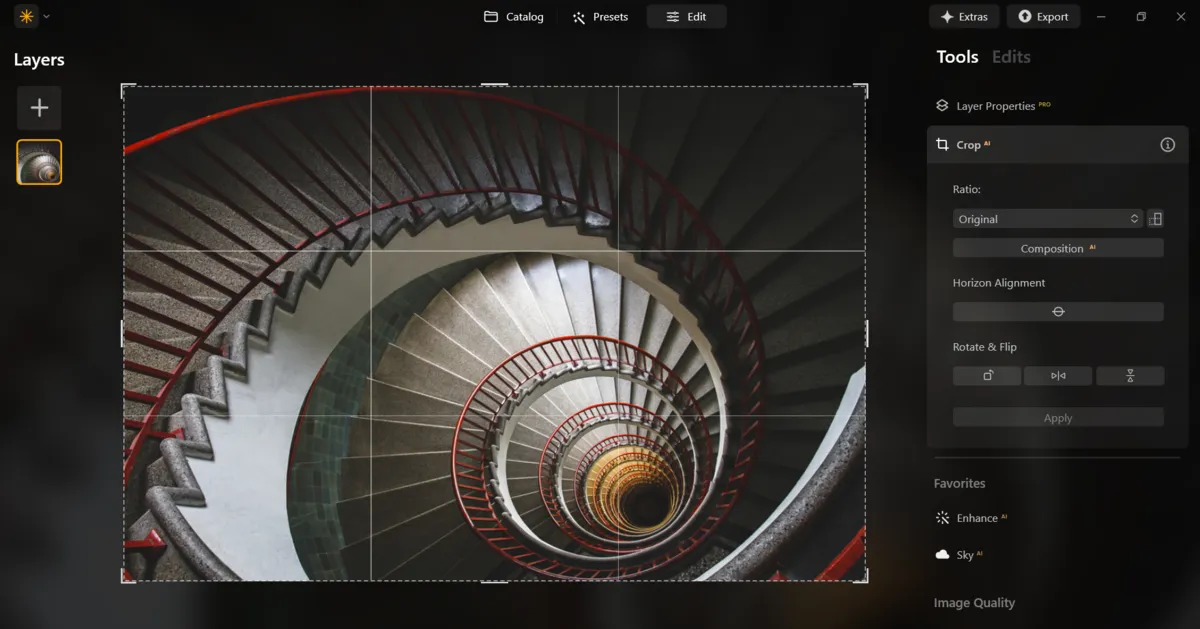 You can apply the app Luminar by Skylum to improve the golden ratio. The app has features that you can use to frame your image to ensure accuracy and enhance your composition. This is how it can be done:
A practical workflow is:
- Identify the main subject or focal point.
- Look for curves, diagonals, or visual movement around the subject.
- Imagine a golden-ratio grid or spiral over the frame.
- Position the focal point near an important intersection or the center of the spiral.
- Arrange secondary elements along the visual path.
- Check the edges for distractions.
- Compare the result with a rule-of-thirds or centered crop.
- Choose the composition that best supports the photograph.
The golden ratio is useful for landscapes, portraits, architecture, still life, and abstract photography. It is less useful when applying the grid would weaken an intentional symmetry or remove important context.
How Can Luminar Help Improve Composition?
Luminar’s Composition AI analyzes a photo and suggests adjustments to its crop, composition, and perspective. The suggestion can serve as a starting point and then be refined manually.
Luminar Composition AI can help photographers:
- Remove distracting areas near the frame
- Reposition the main subject
- Straighten a tilted horizon
- Correct perspective
- Test a tighter composition
- Create a stronger balance between the subject and negative space
The previous article claimed that Luminar provides dedicated Golden Ratio and Fibonacci Spiral overlays inside Crop AI. I did not retain that instruction because the current Composition AI landing does not confirm the availability of those specific overlays.
Instead, photographers can use Composition AI to generate an initial crop and then adjust the frame manually according to golden-ratio principles.
Improve the Focal Point After Cropping
Composition determines where the viewer looks, while tonal and color adjustments determine how strongly the subject stands out.
After refining the crop, you can use:
- Enhance AI to establish a balanced starting point for tone and color
- Structure AI to reveal detail selectively
- AI photo masking to apply adjustments to specific areas
Keep the adjustments consistent with the composition. If every area is equally bright, saturated, and detailed, the intended focal point may lose its visual importance.
When Should Artists Ignore the Golden Ratio?
Artists should ignore the golden ratio whenever another structure communicates the idea more effectively.
A centered composition may strengthen symmetry. An intentionally unbalanced frame may create tension. Cropping a subject near the edge can suggest movement or discomfort. Minimalist art may depend more on negative space than proportional divisions.
Breaking a guideline is most effective when the decision is intentional. Understanding the golden ratio provides another compositional option; it does not impose an obligation to use it.
Conclusion
The golden ratio is a mathematical proportion of approximately 1:1.618 that can be used to divide space, position focal points, and create visual movement. Its relationship with golden rectangles, spirals, and Fibonacci numbers makes it a flexible tool for art, design, architecture, and photography.
However, the golden ratio is not a universal formula for beauty. Its use is explicitly documented in works by figures such as Salvador Dalí and Le Corbusier, while many associations with Leonardo da Vinci, Hokusai, Mondrian, natural spirals, and famous logos remain speculative or disputed.
The most practical approach is to use the golden ratio as one compositional framework among many. Test it, compare it with alternative arrangements, and keep it only when it strengthens the artwork.
Frequently Asked Questions
The golden ratio in art is a proportion of approximately 1:1.618 used to organize space and establish relationships between visual elements. Artists may apply it through golden rectangles, grids, or spirals.
The golden ratio is represented by the Greek letter phi, written as φ. Its value is approximately 1.6180339887.
No. The Fibonacci sequence is a series of numbers in which each number is the sum of the previous two. The ratios between consecutive Fibonacci numbers gradually approach the golden ratio.
Leonardo studied related geometry and illustrated Luca Pacioli’s Divina Proportione. However, claims that works such as Vitruvian Man or The Last Supper were deliberately constructed around the golden ratio are not conclusively supported.
No. Research has not established a universal preference for golden-ratio compositions. It can provide a useful structure, but aesthetic response also depends on context, culture, subject matter, color, contrast, and individual taste.
The golden ratio divides a frame at approximately 38.2% and 61.8%, while the rule of thirds divides it at 33.3% and 66.7%. The rule of thirds is simpler, while the golden ratio can create a subtler, more centralized flow.
Composition AI in Luminar can suggest a crop and correct composition or perspective. The photographer can then refine the crop manually using golden-ratio principles.